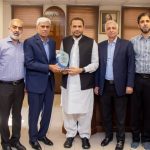
Provincial Adviser for Women Development Dr Rubaba Khan Buledi on Tuesday emphasized that credible data, evidence-based planning and effective institutional coordination were essential for promoting gender equality and ensuring sustainable social and economic development in Balochistan.
Rubaba Buledi emphasizes for credible data, evidence-based planning to advance gender equality

QUETTA, Nov 03 (APP): Provincial Adviser for Women Development Dr Rubaba Khan Buledi on Tuesday emphasized that credible data, evidence-based planning and effective institutional coordination were essential for promoting gender equality and ensuring sustainable social and economic development in Balochistan.
Addressing a two-day training workshop on the National Gender Parity Indicators Framework (NGPIF) in Quetta, Dr Rubaba Buledi said women must be provided equal opportunities in education, healthcare, employment, economic empowerment and participation in decision-making processes.
The workshop was organized jointly by the United Nations Population Fund (UNFPA), the Women Development Department of the Government of Balochistan, the National Commission on the Status of Women (NCSW) and UNICEF for relevant stakeholders from across the province.
She said that achieving gender equality required more than policy announcements, stressing the need for authentic statistics, evidence-based policymaking and concrete institutional measures.
According to her, the National Gender Parity Indicators Framework serves as an important tool for identifying disparities between women and men, measuring progress and making policymaking more effective and actionable.
Dr Rubaba Buledi noted that the framework would help systematically assess the status of gender equality across various sectors, including education, health, economic opportunities, political participation, leadership and decision-making. She added that reliable gender-disaggregated data was particularly important for Balochistan, where women continue to face significant social, economic and educational challenges.
Highlighting regional disparities within the province, she said policies should reflect ground realities by taking into account the differences between urban and rural areas, districts and social groups, enabling women to benefit from equal development opportunities in practical terms.
Referring to official statistics, the adviser said that according to the Pakistan Bureau of Statistics Labour Force Survey 2020-21, the labour force participation rate among women aged 15 years and above in Balochistan stood at around eight percent, compared to 43.6 percent for men.
She said the figures reflected a substantial gap in economic participation and underscored the need for stronger interventions to improve women’s inclusion in the workforce.
She further said the Balochistan Gender Equality Report 2024 had also highlighted the need to increase women’s participation in economic activities and expand employment opportunities. To achieve this goal, she stressed the importance of providing vocational training, access to business opportunities, financial resources, safe working environments and women-friendly institutional facilities.
Dr Rubaba Buledi reiterated the provincial government’s commitment to strengthening initiatives aimed at improving women’s access to education, health services, protection and economic empowerment. She said preventing gender-based violence, safeguarding women’s legal rights, ensuring their inheritance rights and increasing their representation in public and administrative institutions were collective responsibilities.
She called for enhanced collaboration among government departments, educational institutions, civil society organizations and development partners to achieve these objectives effectively.
Underscoring the significance of the training workshop, the adviser said capacity-building of officials and stakeholders would improve the collection, analysis and reporting of gender-related data in accordance with national indicators. She said the process would help accurately highlight Balochistan’s situation at the national level, assess the effectiveness of development policies and programmes, and facilitate better allocation of resources.
Appreciating the support of UNFPA, UNICEF and the National Commission on the Status of Women, Dr Buledi said collective efforts by all relevant institutions were crucial for advancing women’s development and empowerment. She reaffirmed the resolve of the Women Development Department to continue its efforts for promoting gender equality, protecting women’s rights and ensuring their effective participation in the province’s and country’s development process.