ederal Minister for Information Technology and Telecommunication, Shaza Fatima Khawaja Monday said that the responsible use of Artificial Intelligence (AI) in the judicial system was need of the hour. However, ensuring authentic data, digitization of court records, cybersecurity, data privacy and human oversight is essential to make the delivery of justice faster, more transparent and effective, she said.
AI integration in Judiciary requires trust, transparency, data security, human oversight: Shaza
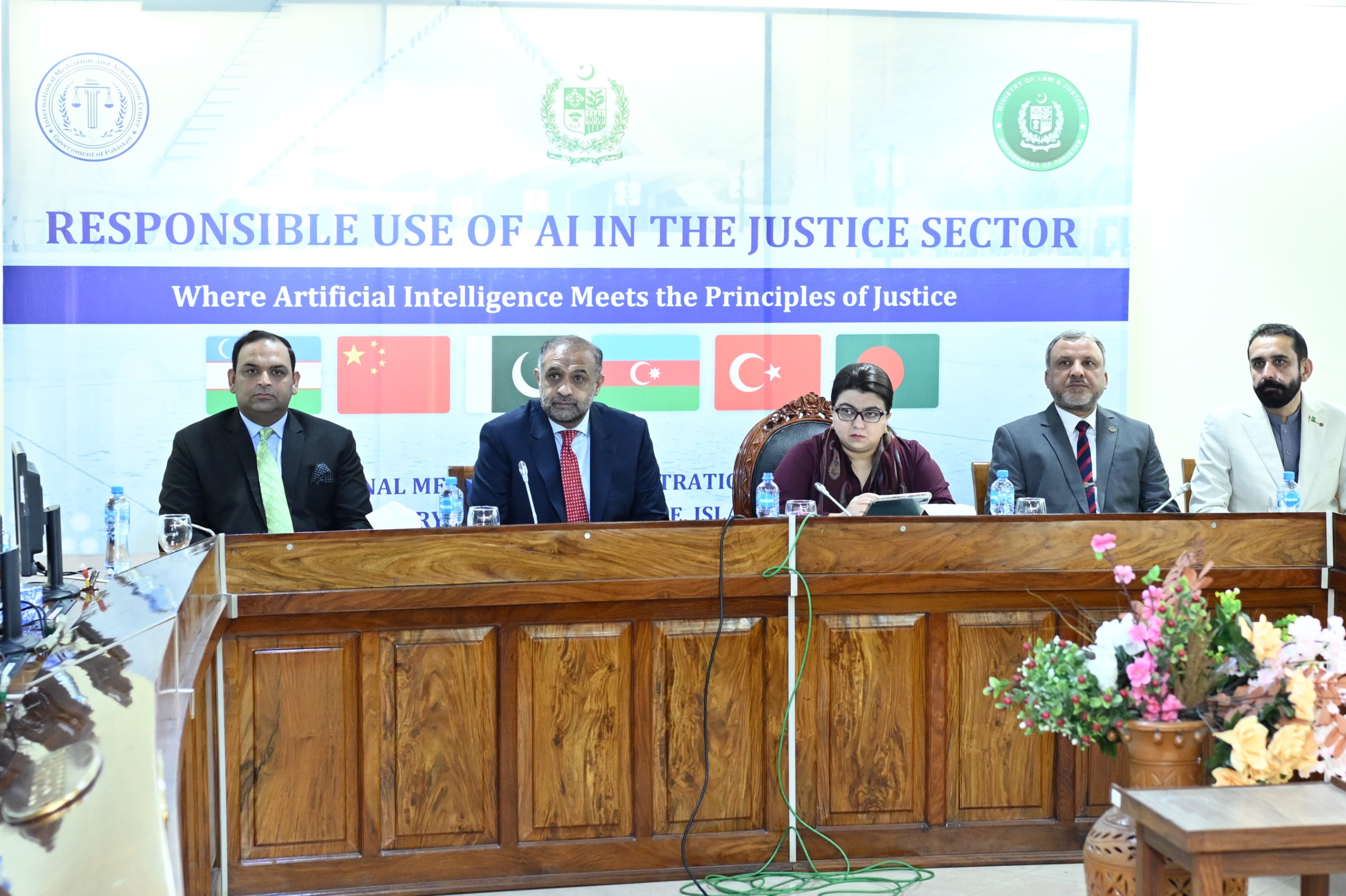
ISLAMABAD, Nov 02 (APP): Federal Minister for Information Technology and Telecommunication, Shaza Fatima Khawaja Monday said that the responsible use of Artificial Intelligence (AI) in the judicial system was need of the hour. However, ensuring authentic data, digitization of court records, cybersecurity, data privacy and human oversight is essential to make the delivery of justice faster, more transparent and effective, she said.
Addressing an international conference on AI and the Judiciary in Islamabad, the federal minister highlighted that Pakistan enacted the Digital Nation Pakistan Act to drive digital transformation. This legislation provides a comprehensive framework to transform governance, economy, and society through technology, she added.
She said that the Pakistan Digital Authority was established under this Act to define standards for digital transformation. In collaboration with the Ministry of Law and Justice, she said the Pakistan Digital Authority has published standards for machine-readable legislation, converting traditional PDF legal documents into machine-readable formats to provide authentic legal data and a linguistic corpus for AI integration.
The federal minister emphasized the imperative to digitize legacy court records, pending cases, laws, and other legal documents according to established standards. She remarked that AI cannot yield reliable results based on unstructured data and paper-based records.
Commending the role of the Ministry of Law and Justice, the Law Minister and the Law Secretary, she appreciated the judicial sector’s proactive cooperation in driving the digital transformation process.
Elaborating on the progress made in digitizing the judicial ecosystem, Shaza Fatima Khawaja shared that the National Information Technology Board (NITB) had signed two (MoUs) with the Supreme Court of Pakistan.
“An E-Office system has been introduced at the Supreme Court, while digital systems have been deployed to make the administrative affairs of the Supreme Court of Pakistan and the Law and Justice Commission of Pakistan paperless.
She added that significant progress has been achieved in digitizing the Case Management System. A dashboard has been provided to the higher judiciary, and the Case Management System is active, integrated, and interoperable with provincial courts”.
The minister pointed out that with approximately 2.2 million cases pending in Pakistan during 2025, even incremental improvements in efficiency through technology could play a vital role in reducing the judicial backlog.
Stressing the importance of Alternative Dispute Resolution (ADR), arbitration and mediation, she commended the Ministry of Law and Justice for taking key initiatives to mainstream these mechanisms to support the traditional court system.
Discussing AI applications in the legal domain, the Minister mentioned that several startups in Pakistan, including Munshi and Lawbot Pakistan, are actively working to provide tech-driven and AI-based legal assistance to lawyers and citizens.
She cautioned that trust was paramount in using AI. Since Large Language Models (LLMs) can occasionally generate inaccurate or unverified outputs, keeping a “Human in the Loop” is strictly necessary within the judicial framework.
The minister added that effective AI implementation in the legal sector required creating dedicated, secure databases comprising authenticated court judgments, statutes, case laws, court records and relevant international legal research. Alongside this, robust cybersecurity, data privacy, and accountability mechanisms must be strictly guaranteed, she added.
She highlighted that collaboration between tech developers and legal practitioners was indispensable for promoting legal tech. AI-powered solutions will only prove effective if technology experts understand judicial needs and legal professionals acquire AI skills.
Shaza Fatima Khawaja also lauded the national guidelines issued by the National Judicial Policy Committee in April 2026 regarding AI usage in the judiciary as a landmark milestone.
Quoting UNESCO data presented at the event, she mentioned that only 9 percent of countries globally had issued guidelines for using AI in their judicial systems, underscoring the urgent need for clear national policies, codes of conduct, and regulatory frameworks.
The federal minister urged the participating nations to exchange best practices and develop their respective national guidelines for the responsible deployment of AI in judicial systems, fostering global cooperation.
She noted that citizens were already leveraging digital platforms for healthcare, education, finance and government services; hence, the justice delivery system must evolve at the same pace to meet modern expectations.
She remarked that leveraging technology and AI can deliver legal assistance and access to justice directly to citizens’ doorsteps, saving time and resources while boosting judicial transparency and efficacy.
The minister re-emphasized the need for large-scale capacity building and training. Tech experts must grasp legal complexities, while legal experts need AI training so both domains can jointly develop pragmatic solutions tailored to operational needs.
In her concluding remarks, the federal minister expressed her gratitude to the IMAC team, Project Director, Ministry of Law and Justice, Federal Judicial Academy, Farabi Center for AI and Cybersecurity, Pakistan Digital Authority, National Information Technology Board (NITB), and the National Center for Artificial Intelligence (NCAI) for their efforts.
Welcoming international delegates to Islamabad, she reaffirmed that through mutual exchange, cooperation, and collective endeavors, a secure, trustworthy, and interconnected judicial ecosystem can be built to benefit all nations and their citizens