The National Cyber Crime Investigation Agency (NCCIA) has arrested over 20 suspects in a nationwide crackdown on cybercrime reported during the past 24 hours, with financial fraud and extortion cases involving around Rs 66 million, while recovering Rs 5.99 million in Rawalpindi and returning the money to an affected citizen.
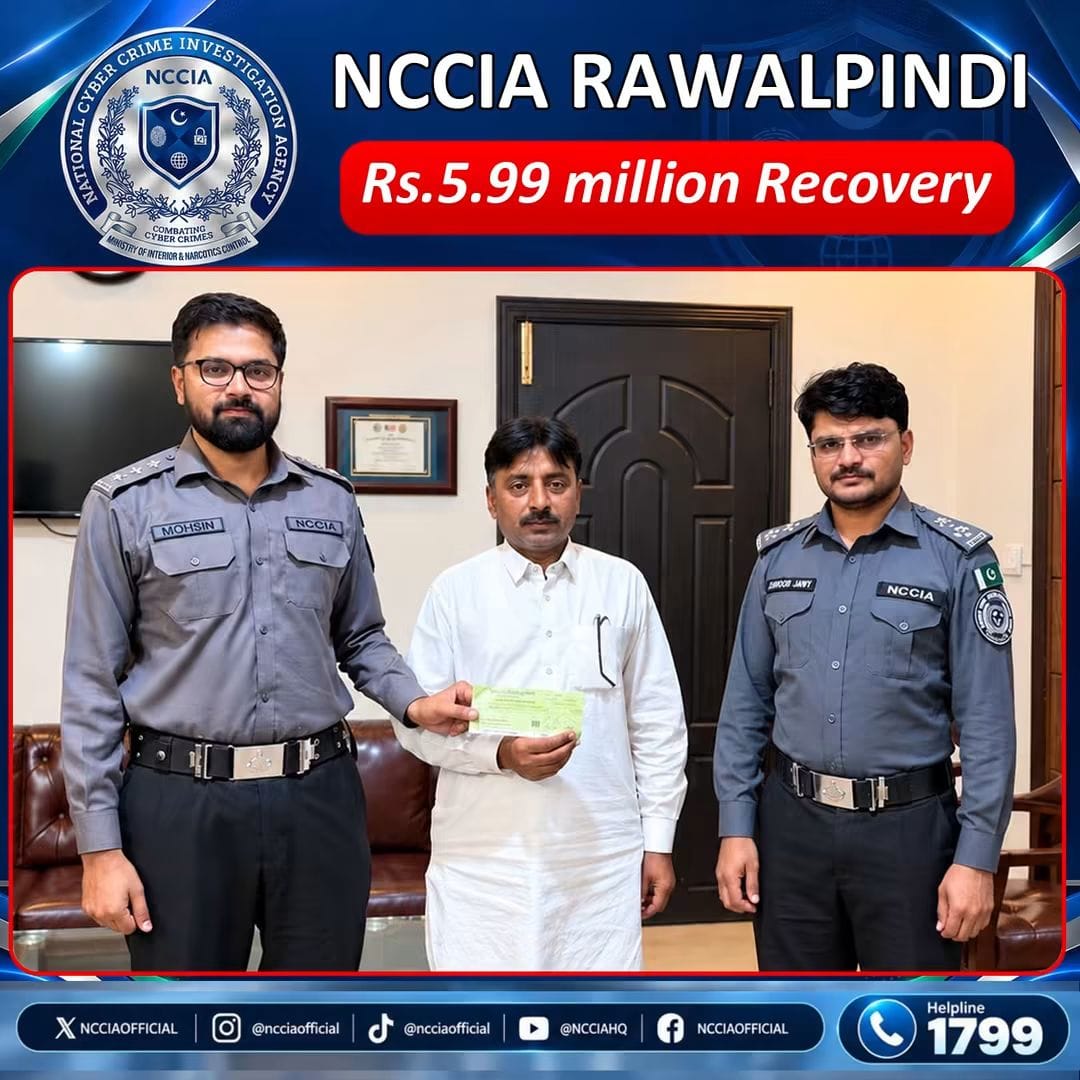
ISLAMABAD, Nov 01 (APP): The National Cyber Crime Investigation Agency (NCCIA) has arrested over 20 suspects in a nationwide crackdown on cybercrime reported during the past 24 hours, with financial fraud and extortion cases involving around Rs 66 million, while recovering Rs 5.99 million in Rawalpindi and returning the money to an affected citizen.
According to details compiled by APP, NCCIA teams in Islamabad, Rawalpindi, Lahore, Karachi, Peshawar, Gujranwala, Multan, Abbottabad and Dera Ismail Khan took action against suspects allegedly involved in online financial fraud, fake investment schemes, social media harassment, blackmailing and other cybercrimes.
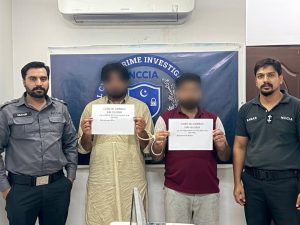
In Islamabad, NCCIA arrested four suspects allegedly running a fake travel agency through WhatsApp groups. The suspects offered visa and air ticket services, collected money from citizens and provided fake visas and tickets. Two cases were registered under the Prevention of Electronic Crimes Act (PECA) 2016 and the Pakistan Penal Code (PPC).
In separate operations, the Islamabad team arrested several suspects allegedly involved in harassing and blackmailing women through social media. The suspects allegedly threatened to share private photographs and videos online and demanded money from the victims.
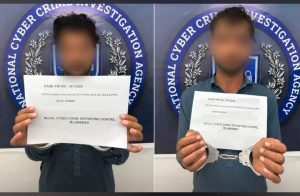
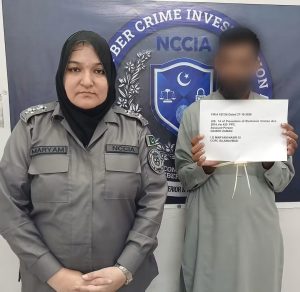
In one case, two suspects, identified as Bilal Ahmed and Nasir Nazir, were arrested for allegedly uploading objectionable photographs and videos of a complainant’s daughter on social media. Mobile phones and other digital evidence were also seized.
The Islamabad team also arrested a suspect accused of defrauding a widow of Rs 1.8 million. In another case, NCCIA registered an FIR against suspects allegedly cheating InDrive drivers through fake bookings, false claims of being government officials and requests for money on the pretext of emergencies.
In Rawalpindi, NCCIA recovered Rs 5.99 million from a financial fraud case and handed the amount over to the complainant. In another case involving an alleged fraud of Rs 6.05 million, the agency registered an FIR after an inquiry found suspected misuse of mobile phones and online banking services. Five individuals are suspected of involvement.
In Gujranwala, NCCIA arrested four suspects allegedly cheating citizens by creating fake social media accounts in the names of their relatives. Six mobile phones containing fake accounts, applications used for fraudulent calls and tools for preparing fake bank payment receipts were recovered.
In Karachi, NCCIA arrested a suspect for allegedly defrauding a woman of Rs 4.45 million through false promises of marriage on an online matrimonial application. The suspect also allegedly threatened to share edited photographs of the woman to demand more money.
In Peshawar, NCCIA arrested a suspect allegedly involved in a Rs 30 million fraud through fake marriage and investment offers. The suspect reportedly used fake social media identities to win the trust of victims. A mobile phone, seven SIM cards, 18 blank cheques and Rs 300,000 in cash were recovered.
In another Peshawar case, a suspect was arrested for allegedly taking Rs 5.7 million from a citizen by threatening to share private videos. The agency also arrested two suspects in Shangla for allegedly running illegal online loan applications and harassing citizens through threatening calls. More than 30 laptops and mobile phones, along with data belonging to thousands of citizens, were recovered.
The Peshawar team also arrested a suspect in Timergara, Lower Dir, for allegedly sharing defamatory material online and issuing death threats.
In Dera Ismail Khan, NCCIA arrested Muhammad Hasnain, a wanted suspect allegedly involved in cheating citizens through fake online investment schemes. The suspect was wanted in a case registered in 2021.
In Abbottabad, NCCIA arrested a key suspect in an alleged Rs 18 million financial fraud case. Investigations revealed the suspected use of bank accounts belonging to 24 individuals, while six suspects had already been arrested in the case.
In another Abbottabad operation, NCCIA recovered money taken from a citizen through cyber financial fraud and returned it to the complainant.
Similarly, NCCIA Multan recovered money obtained through online financial fraud and handed it back to the affected citizen. The complainant thanked NCCIA official Abid Jan for his efforts in recovering the amount.
In Lahore, NCCIA arrested a suspect, Hussam Shahid, from Okara for his alleged involvement in producing and storing child sexual abuse material. A mobile phone and other digital evidence were seized.
In another operation in Pakpattan, the Lahore team, in coordination with Sahiwal, arrested Kashif Ali for allegedly blackmailing a citizen through an objectionable video and demanding money. Two mobile phones were recovered during the operation.
The latest operations are part of NCCIA’s ongoing nationwide campaign under the supervision of Director General Syed Ali Nasir Rizvi to control cybercrime, recover money taken through online fraud and protect citizens from digital harassment.
According to an earlier one-month performance report issued after Rizvi assumed charge, NCCIA arrested 1,129 suspects, registered 272 cases and recovered Rs 105.3 million, which was returned to affected citizens.
Besides taking action against cybercriminals, the agency has also been conducting awareness programmes in different cities to educate citizens about online fraud, fake social media accounts, cyber harassment and safe internet use.
NCCIA advised citizens not to share their bank account details, ATM PINs, passwords or one-time passwords (OTPs) with anyone. Citizens were also urged to report suspicious online activities and financial fraud through the NCCIA helpline 1799.