Speakers at a seminar organized by the Forum of Information Group Secretaries (FIGS) on Saturday called for greater unity and defence cooperation among Muslim countries, cautioning that escalating tensions involving Iran, the United States and Israel could trigger a wider regional confrontation with implications for Pakistan’s foreign policy and security.
Speakers call for Muslim unity, caution against wider regional conflict at FIGS seminar
ISLAMABAD, Oct 24 (APP):Speakers at a seminar organized by the Forum of Information Group Secretaries (FIGS) on Saturday called for greater unity and defence cooperation among Muslim countries, cautioning that escalating tensions involving Iran, the United States and Israel could trigger a wider regional confrontation with implications for Pakistan’s foreign policy and security.
Addressing the seminar, the Iranian Ambassador to Pakistan Dr Reza Amiri Moghadam traced the confrontation between Iran and the United States to decades of hostility, sanctions and disagreements over Tehran’s nuclear programme and regional policies.
He said Iran had faced sustained pressure since the 1979 Islamic Revolution, including sanctions, terrorism and an eight-year war with Iraq.He also recalled Pakistan’s support for Iran during that period
The ambassador maintained that Iran’s nuclear programme was peaceful and said Tehran had cooperated with the International Atomic Energy Agency (IAEA) since 2003. He argued that the US withdrawal from the Joint Comprehensive Plan of Action (JCPOA) in 2018 had intensified the crisis surrounding Iran’s nuclear programme.
Dr Moghadam said Iran remained committed to pursuing its independent policies despite external pressure and sanctions.
He also highlighted the Palestinian issue and Iran’s opposition to Israeli policies as important factors shaping the regional confrontation.
Former ambassador Ashraf Jahangir Qazi highlighted the diplomatic challenges Pakistan could face over Iran’s possible inclusion in the proposed Makkah Joint Defence Agreement.
He said Pakistan could find itself in a difficult position if the arrangement were perceived as directed against Iran and Tehran’s offer to join it was not accepted, given Islamabad’s relations with both Iran and Arab countries and its role in regional diplomacy.
Ambassador Inam-ul-Haq called for expanding Muslim countries’ defence cooperation to include Iran and other Muslim states, arguing that greater collective engagement could help address regional security challenges and prevent conflicts among Muslim countries.
He urged Pakistan to pursue a balanced foreign policy, strengthen its domestic resilience, and carefully assess its strategic commitments in view of its economic constraints and security challenges.
He also stressed the importance of Pakistan’s relations with China while calling for a reassessment of its approach to relations with the United States in the context of changing international alignments.
Lieutenant General (retd) Khalid Naeem Lodhi said the United States and Israel had failed to achieve their principal objectives in the conflict with Iran, including regime change and halting Iran’s nuclear enrichment programme.
Describing the conflict as having reached a military stalemate, he cautioned that further escalation could widen the confrontation and carry serious implications for regional and international security.
He urged Pakistan to maintain good relations with Iran and carefully evaluate the implications of its existing agreements to avoid being drawn into multiple security fronts.
He also highlighted the strategic importance of the Strait of Hormuz and the changing geopolitical landscape.
The speakers emphasised the need for Muslim countries to strengthen cooperation, address differences through diplomacy, and avoid developments that could deepen divisions within the Muslim world.
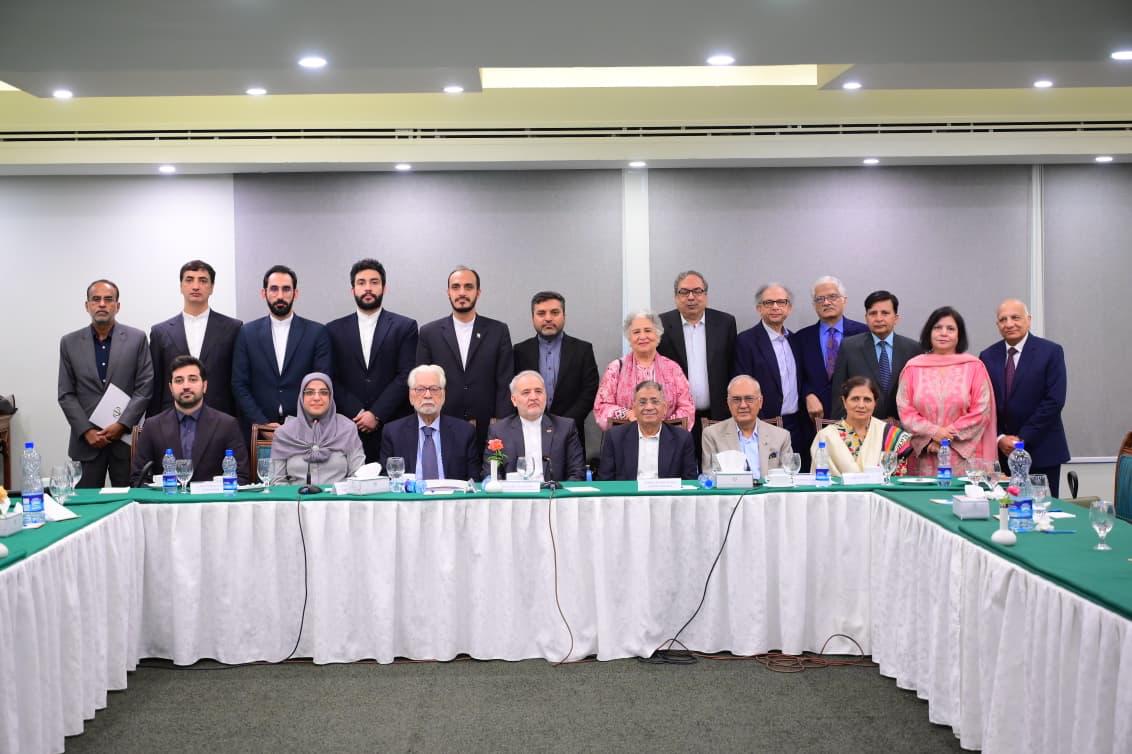
The seminar was moderated by former Federal Secretary for Information and Broadcasting Ashfaq Ahmed Gondal and coordinated by Shafqat Jalil, Executive Director of the Forum of Information Group Secretaries (FIGS).
It was attended by parliamentarians, officers of the Information Group, civil servants, diplomats, and media representatives.