By: Shams Abbasi SAMARKAND,Oct 23 (APP):The World Summit on Investing in Children’s Wellbeing concluded in Samarkand with the adoption of the Samarkand Declaration on Investing in Children’s Wellbeing, outlining a shared commitment to strengthening child protection, improving access to essential services and increasing investment in children as a foundation for sustainable and equitable development. The declaration was adopted on last day at the conclusion of the two-day summit held on …
By: Shams Abbasi
SAMARKAND,Oct 23 (APP):The World Summit on Investing in Children’s Wellbeing concluded in Samarkand with the adoption of the Samarkand Declaration on Investing in Children’s Wellbeing, outlining a shared commitment to strengthening child protection, improving access to essential services and increasing investment in children as a foundation for sustainable and equitable development.
The declaration was adopted on last day at the conclusion of the two-day summit held on October 21–22 under the theme “Investing in Children’s Wellbeing: A Path Toward Sustainable and Just Development for Future Generations.”
Organized by Uzbekistan in collaboration with the Special Representative of the United Nations Secretary-General on Violence Against Children, UNICEF, the World Health Organization (WHO) and the World Bank, the summit brought together First Ladies, ministers responsible for social protection, health, education and finance, representatives of governments and international organizations, civil society, academia, the private sector, as well as children and young people.
The declaration reaffirms the participating states’ commitment to the Convention on the Rights of the Child and the principle that the best interests of the child must guide decisions affecting children. It recognizes that children constitute around one-third of the world’s population and that investment in their wellbeing generates long-term benefits in health, education, productivity, social cohesion and peace.
Under the declaration, participating states committed to advancing policies and measures suited to their national circumstances, priorities and capacities, with particular emphasis on social protection, child safety, healthcare, education and opportunities for young people.
The document calls for strengthening social protection systems and expanding benefits for children and families, particularly during crises. It also emphasizes the need to reinforce mechanisms protecting children from violence, abuse and exploitation, including risks arising in the digital environment.
Early childhood development, inclusive education and access to healthcare are identified as key priorities, alongside efforts to address childhood cancer and improve support for children with diverse needs. The declaration also highlights assistance for parents and caregivers to prevent the unnecessary separation of children from their families.
Preparing young people for the changing global economy is another priority, with an emphasis on green and digital skills, decent employment and inclusive opportunities, including for young people with disabilities.
For financing children’s wellbeing,the declaration places particular emphasis on financing, urging governments to steadily increase public investment in children and make national budgets more transparent and responsive to their needs.
It also calls on international financial institutions, development partners, philanthropic organizations and the private sector to scale up financial support, especially for low- and middle-income countries and those affected by conflict, climate change and natural disasters.
The document recognizes that commitments to children’s wellbeing require adequate resources, effective policies and accountability. Implementation is envisaged through national policies and budgets, with countries setting their own timelines and undertaking regular progress reporting.
The participating states also agreed to reconvene to review progress, while the organizations co-hosting the summit were invited to support governments in translating the declaration into practical action.
Children and adolescents are recognized in the document as rights holders and agents of change. The declaration underscores the importance of ensuring their safe and meaningful participation in decision-making, including in the implementation of the commitments adopted at the summit.
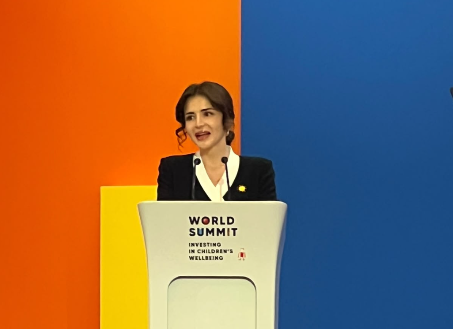
Addressing the summit on protecting children’s present and future, Shakhnoza Mirziyoyeva, First Deputy Director of Uzbekistan’s National Agency for Social Protection, stressed that protecting children must begin with ensuring their safety, dignity and wellbeing today.
“We often say that ‘children are our future’. But after I became a mother, I began to understand these words differently. For parents, a child is not the future. A child is today. Today we care about their health, their safety and whether they feel loved,” she said.
She emphasized that discussions on child protection must begin with a fundamental question: what happens to a child when there is no adult available to protect them?
Mirziyoyeva said every child should have the right to seek help and feel supported, stressing the need for a zero-tolerance approach to violence against children and unconditional respect for their rights and dignity.
She noted that the digital environment, global instability and emerging risks were creating new challenges for children and families, which no country could address alone. Cooperation among governments, businesses, civil society and international organizations was therefore essential.
“Today their happiness, health and safety are in our hands. Tomorrow, the future of our countries and of the whole planet will be in theirs,” she said, emphasizing that protecting children’s present was essential before discussing their future.
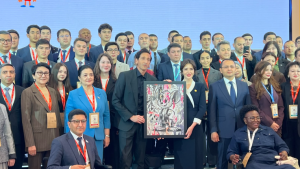
Participants also expressed gratitude to the people and Government of Uzbekistan for hosting the summit in Samarkand, describing the historic city as a “crossroads of civilizations.” The summit’s outcomes were summarized by Academy Award-winning actor Adrien Brody, who also presented Mirziyoyeva with a painting he had created himself.
On the sidelines of the summit, the IMKON centre was inaugurated in Samarkand in the presence of Uzbekistan’s First Lady Ziroat Mirziyoyeva, other First Ladies and high-level international guests.
Operating within the system of the National Agency for Social Protection under the President of Uzbekistan, the centre integrates preschool education, specialized educational support and comprehensive rehabilitation services tailored to individual children’s needs. It also provides parents with professional guidance to help reinforce their children’s development at home.
The preschool department has a capacity of 150 children and includes 10 specialized groups for children aged two to seven. Its outpatient department can serve approximately 100 children aged two to 18 each month through rehabilitation courses.
Services include therapeutic exercise, speech and fine-motor development, sensory integration, physiotherapy and other forms of treatment. The multidisciplinary team includes doctors in seven specialties, special-needs teachers, speech therapists, psychologists and rehabilitation specialists.
The Samarkand facility expands the IMKON network, which also operates centres in Nukus, Qibray, Karshi and Zarafshan. In 2025, facilities across the network delivered more than 546,000 treatments and sessions, while 3,777 children completed outpatient rehabilitation.
Further expansion is underway, with construction of another centre having begun in Fergana and similar facilities planned for Namangan and Nurafshan in the Tashkent region.
The adoption of the Samarkand Declaration, alongside the opening of the IMKON centre, underscored the summit’s central message: investing in children requires sustained political commitment, adequate financing, effective protection systems and coordinated action to ensure that every child can grow up safe, healthy and supported.