Fakhar-e-Alam Peshawar , Oct 18 (APP)::Every morning, mothers send their children to school with a kiss, a prayer and the hope of seeing them return with stories of lessons learned and dreams taking shape. But for the families of 34 children killed in the collapse of Alkhair School in Peshawar’s Dir Colony, one ordinary Thursday morning shattered that promise forever. Among those who never returned home was 11-year-old Sanan Asad, …
Peshawar school tragedy: When a mother’s morning kiss became a final goodbye
Fakhar-e-Alam
Peshawar , Oct 18 (APP)::Every morning, mothers send their children to school with a kiss, a prayer and the hope of seeing them return with stories of lessons learned and dreams taking shape. But for the families of 34 children killed in the collapse of Alkhair School in Peshawar’s Dir Colony, one ordinary Thursday morning shattered that promise forever.
Among those who never returned home was 11-year-old Sanan Asad, whose dream of becoming a police officer ended beneath the rubble of a three-storey building that collapsed at around 8:45 a.m.
His schoolbag, books and uniform remain painful reminders of a future that will never unfold, while his mother struggles to comprehend the loss of a son she expected to see again within hours.
“Sanan was a very obedient son. I would call him just once in the morning for school and he would immediately say, ‘Okay, Mama,’” she told APP, tears rolling down her face. “He always dreamed of becoming a police officer and watched police movies that motivated him.”
The tragedy also claimed the lives of four of Sanan’s cousins: seven-year-olds Mubasshir Naeem, Amir Mangal and Haleema Haleem and eight-year-old Romaisa Ismail.
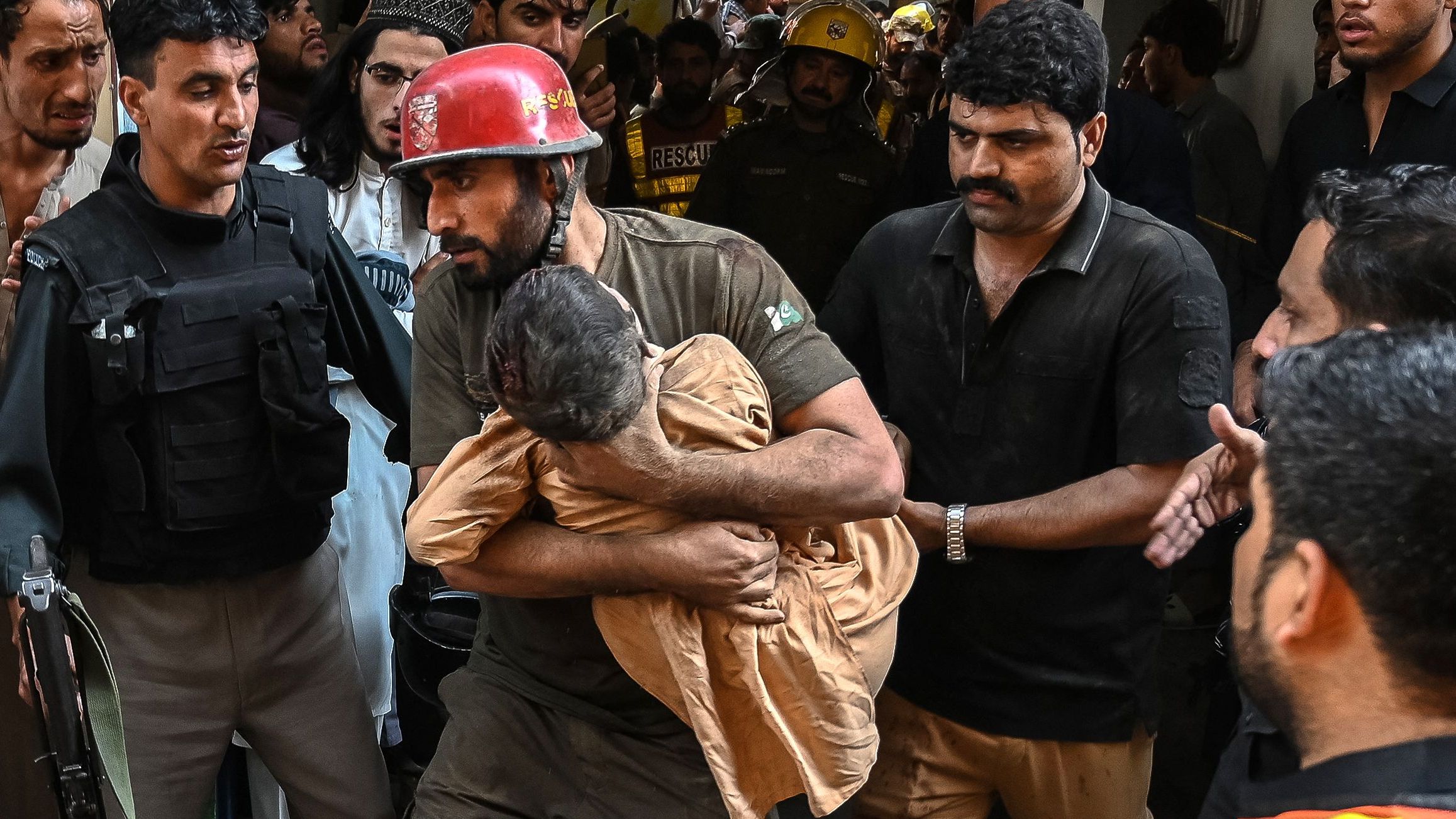
Their uncle, Tauseef Ahmad, rushed to the school after receiving news of the collapse. As he approached the building, he heard children crying beneath the rubble.
“I suddenly saw Sanan’s body being recovered by the rescue officials from the debris,” he recalled.
At the family hujra, relatives and neighbors now gather to offer condolences following the funeral prayers and Qul for the five children.
Yet their words cannot fill the silence that has descended on a home once alive with children’s laughter.
“The children who would laugh and scream, who would say, ‘We need this thing, I am going to school tomorrow,’ and ‘It is late and the school van arrives’ they are no longer alive,” Tauseef said.
“Their voices and their talk have ended forever.”
He recalled opening his window at night and finding the entire neighborhood unusually quiet. For Sanan’ s mother, ordinary household moments have become unbearable reminders of her loss.
Beyond the grief, the collapse has raised urgent questions about the safety of educational institutions across Khyber Pakhtunkhwa.
An initial police investigation identified the building’s age and poor construction quality as major factors. The preliminary report submitted by SSP Operations to the Capital City Police Officer, Peshawar, intensified concerns about structural inspections and enforcement of building standards.
Professor Dr Ibrahim Khan, former director of education, said the children had barely begun their lives.
“They had dreams in their eyes. Their parents sent them to school in the hope that education would give them a better future. Sadly, they went to school to receive education, not to lose their lives,” he told APP.
Questioning whether repeated incidents could continue to be treated as isolated accidents, he cited figures suggesting nearly 300 children had died in similar incidents over three years.
He questioned whether education officials were fulfilling their responsibilities to inspect school buildings, ensure children’ s safety and enforce the law, stressing that negligence and abuse of authority must have consequences where established.
Following the tragedy, the Khyber Pakhtunkhwa Elementary and Secondary Education Department ordered immediate safety assessments, prioritizing schools identified as potentially dangerous through complaints, media reports and other credible sources.
Authorities have been directed to suspend classes immediately in buildings declared unsafe and relocate students to nearby schools or other secure locations. Classes may resume only after necessary repairs and certification by the relevant technical authority.
Districts have also been instructed to submit reports covering inspections, unsafe buildings, relocation arrangements and corrective measures by noon on October 21.
Education Adviser Dr Syed Amir Abdullah said a province-wide review had been launched. Private schools are to be assessed through district authorities, while unsafe public-school buildings will be repaired, vacated or closed as necessary.
The government has also announced financial assistance for bereaved families. Deputy Commissioner Peshawar Afaq Wazir distributed compensation cheques worth Rs21 million among families of the deceased children on the directives of Governor Khyber Pakhtunkhwa Faisal Karim Kundi.
Families who traveled to their native districts for the burials will receive assistance upon their return, officials said.
The deputy commissioner also confirmed that the school owner had been arrested and an FIR registered.
For families like Sanan’ s, however, no compensation can measure the value of a child.
No cheque can restore a son who dreamed of wearing a police uniform and no official statement can bring back the laughter that once filled their home.
Pakistan has witnessed too many tragedies in which children have paid the ultimate price for negligence and failures of oversight.
Condolences are offered, inquiries ordered and promises made, but grieving parents must live with their loss long after public attention fades.
The Dir Colony tragedy must therefore become a turning point. Every public and private school in the province needs a credible structural safety assessment, verifiable safety certification and regular inspections.
Where negligence or criminal misconduct is established, accountability must follow without political or administrative pressure.
Sanan, Mubasshir, Amir, Haleema and Romaisa will never return to their classrooms. Their deaths must not become another statistic forgotten with time. Behind every inspection report is a child’s life, and behind every school gate is a parent’s trust.
The nation must turn its grief into action so that no mother ever again sends her child to school with a loving kiss in the morning, only to receive a lifeless body in return.