Pakistan on Friday strongly condemned the latest Houthi attack on King Khalid International Airport in Riyadh and reaffirmed its commitment to Saudi Arabia’s sovereignty, territorial integrity and security, including under the Makkah Agreement for Joint Defence.
Pakistan condemns Houthi attack on Riyadh Airport, reaffirms defence commitment to Saudi Arabia
ISLAMABAD, Oct 16 (APP):Pakistan on Friday strongly condemned the latest Houthi attack on King Khalid International Airport in Riyadh and reaffirmed its commitment to Saudi Arabia’s sovereignty, territorial integrity and security, including under the Makkah Agreement for Joint Defence.
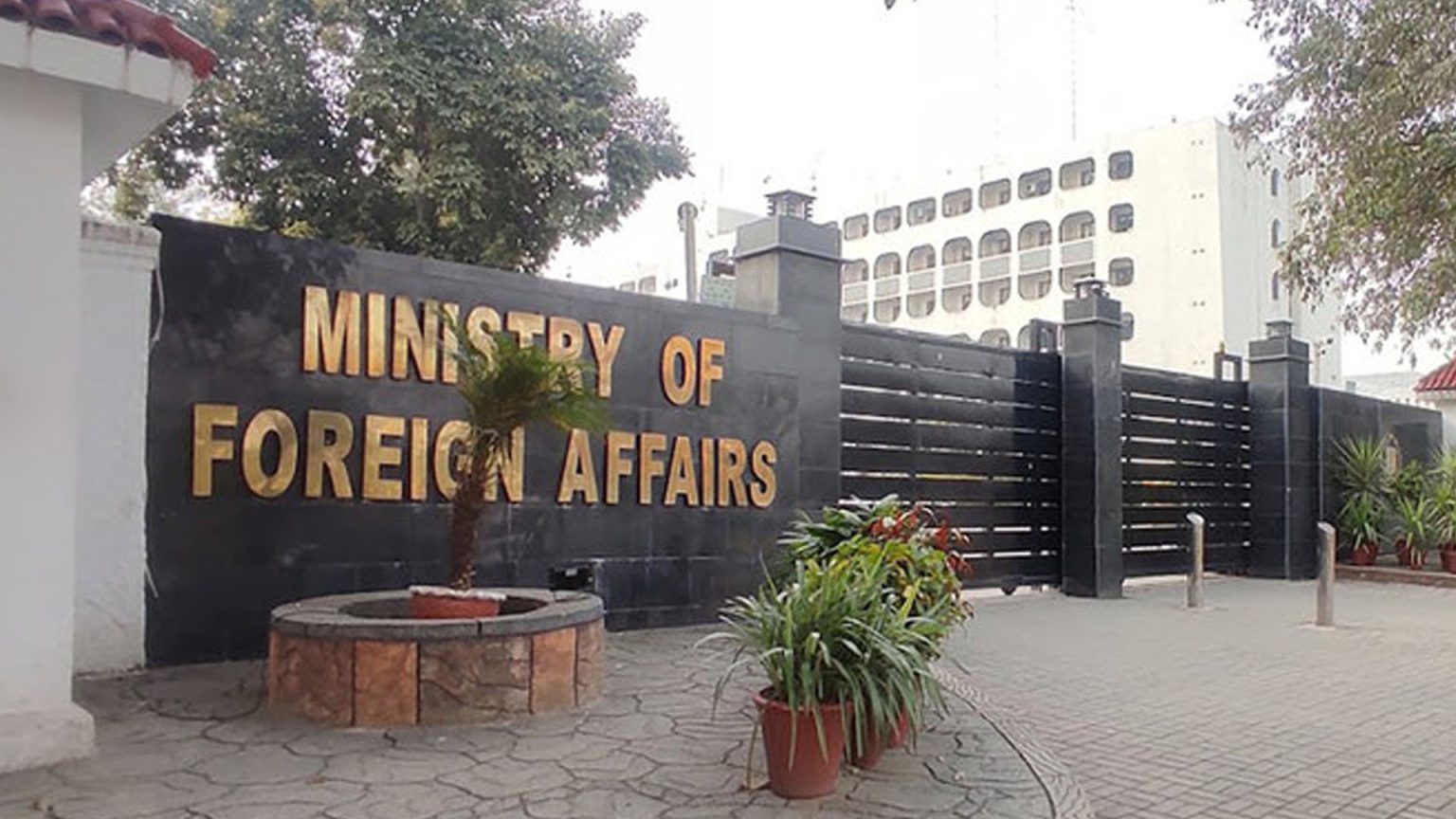
Addressing his weekly media briefing at the Ministry of Foreign Affairs, Foreign Office Spokesperson Ambassador Sajjad Haider Khan said Pakistan remained deeply concerned over the continuing attacks against the Kingdom.
“Pakistan strongly condemns the latest terrorist attack by the Houthi militia,” the spokesperson said, extending condolences to the bereaved families and sympathies to the injured. He said attacks on civilian populations and critical infrastructure were unacceptable and posed a grave threat to regional peace and security.
The spokesperson noted that on October 11, Pakistan joined Saudi Arabia, Egypt and Turkey in a joint statement under the R4 group framework, condemning the Houthi attacks. The four countries expressed solidarity with Riyadh, supported its legitimate measures to protect its territory and population, and called for an immediate and unconditional end to the attacks.
The spokesperson said a Pakistani national was killed and others were injured in the attack on Riyadh airport. He added that a Pakistani driver was killed in Yemen last week.
Pakistan, he said, is a member of the Makkah Agreement for Joint Defence and is fully on board. It will fulfil its obligations under the pact, and Saudi Arabia has the right to defend itself and its sovereignty. He said Pakistan is in full agreement with Saudi Arabia and Turkey on the agreement.
Asked about a possible military response under the agreement, the spokesperson said such matters fall within the domain of the security institutions. On the practical aspects of the pact, he said the ISPR and the headquarters established in Riyadh would be better placed to provide guidance.
On Yemen, he said Pakistan’s position was consistent and clear: the conflict can only be resolved through dialogue. Pakistan wants regional disputes resolved peacefully.
On the Palestinian issue, the spokesperson said Pakistan joined the foreign ministers of 18 other countries in condemning Colombia’s inauguration of its embassy in Jerusalem. The move, he said, was contrary to relevant UN Security Council resolutions and detrimental to the two-state solution.
He said Pakistan would continue to support the Palestinian people and an independent Palestinian state based on the 1967 borders. Pakistan also condemned obstacles placed in the way of Palestinians returning to their homeland and supported their inalienable right to self-determination.
On bilateral engagements, the spokesperson said Omani Foreign Minister Sayyid Badr bin Hamad bin Hamoud Al-Busaidi visited Pakistan from October 13 to 14 at the invitation of Deputy Prime Minister and Foreign Minister Senator Mohammad Ishaq Dar.
The two ministers co-chaired the eighth session of the Pakistan-Oman Joint Ministerial Commission and agreed to enhance cooperation in trade, investment, energy, maritime connectivity, information technology, workforce mobility and other sectors. Five agreements and MoUs were signed, along with a protocol recording the commission’s proceedings, he added.
The deputy prime minister met Russian Interior Minister Vladimir Kolokoltsev on October 14 at the Foreign Ministry, the spokesperson said. Interior Minister Mohsin Naqvi and Minister of State for Interior Talal Chaudhry also attended. The sides reviewed the trajectory of bilateral ties, discussed cooperation in trade, investment, culture, tourism and people-to-people exchanges, and stressed continued coordination at multilateral forums, including the Shanghai Cooperation Organisation, he added.
On October 10, the Deputy Prime Minister spoke by telephone with the Maldivian foreign minister to discuss preparations for the forthcoming visit of the Maldivian president to Pakistan, he said, adding that both sides agreed to remain in close coordination to ensure a “substantive and productive visit.”
On October 15, he said DPM Dar held separate telephone conversations with Egyptian Foreign Minister Dr Badr Abdelatty and Turkish Foreign Minister Hakan Fidan. In his talk with the Egyptian minister, he emphasised dialogue and diplomacy and reaffirmed support for de-escalation efforts. With the Turkish minister, he discussed Gaza and Palestine, as well as the agenda and strategy for the upcoming OIC Council of Ministers meeting in Iraq.
The spokesperson said Pakistan strongly rejected the provocative statement of the Indian defence minister. Pakistan, he said, is ready to defend its territorial sovereignty and integrity and to give a befitting response to any aggressor. He recalled that last year’s Indian military provocation was met with an effective response, and said Pakistan would fully defend its security in the event of any aggression.
The spokesperson said India’s actions of August 5 in Indian-occupied Kashmir were illegal and unilateral. He said Jammu and Kashmir remains a disputed matter at the United Nations, and its future will be decided in line with UN resolutions and the wishes of the Kashmiri people.
He expressed concern over Indian human rights violations in the occupied territory and said Prime Minister Shehbaz Sharif had raised the issue. He said Kashmiris were even prevented from offering Friday prayers, and called on India to desist from such violations.
The spokesperson said the Deputy Prime Minister addressed an international conference on counter-terrorism, the TTP, cross-border threats and regional security, organised by the Institute of Strategic Studies Islamabad on October 12.
He added that the deputy prime minister reaffirmed Pakistan’s resolve to combat terrorism in all its forms and called on the Afghan authorities to take “concrete, verifiable and irreversible action” against elements operating from Afghan soil. He also highlighted the threat posed by Indian-sponsored terrorist groups, including those operating from Afghanistan.
He outlined Pakistan’s counter-terrorism measures, including the National Action Plan, Operation Azm-e-Istehkam and enhanced intelligence coordination, and paid tribute to the armed forces and law enforcement agencies.
Responding to questions, the spokesperson said terrorist attacks in Pakistan, including in Balochistan and Khyber Pakhtunkhwa, originate from Afghan soil, and that Indian proxies are involved. He said Pakistan faces a major terrorism challenge and is in contact with the international community, friendly countries and multilateral forums on the issue.
Pakistan wants an assurance that Afghan territory will not be used against it, he said, but Kabul is not ready to give one. Pakistan’s single demand is that anti-Pakistan activity from Afghan soil be verifiably stopped, and talks with Afghanistan cannot be unconditional. He said Pakistan is not wary of talking to Afghan representatives and wants security and stability in Afghanistan.
He said Pakistan would welcome any positive effort by friendly countries on Afghanistan. Pakistan’s special representative for Afghanistan was recently in Moscow, and Pakistan values contacts with Russia on Afghanistan and regional security, but is not aware of any formal Russian mediation effort. Asked about Murad Saeed, he said he had no information about his presence in Afghanistan.
On allegations against Iran, the spokesperson said Pakistan could not comment on mere allegations. Iran is a brotherly country, he said, and its leadership has appreciated Pakistan’s role in the Islamabad understanding and thanked Pakistan for its efforts. Asked about reports of a hijab ban and protests in Azerbaijan, he said he had no information.
On October 13, he said DPM Dar met European Commissioner for Internal Affairs and Migration Magnus Brunner in Islamabad. The two sides discussed enhancing cooperation on migration and mobility under the Pakistan-EU Strategic Engagement Plan.
The deputy prime minister highlighted Pakistan’s efforts against irregular migration, migrant smuggling and human trafficking, and said these should be matched by greater legal migration opportunities for Pakistani skilled workers and professionals. The commissioner appreciated Pakistan’s progress and acknowledged the potential to expand legal pathways, he added.
The spokesperson said Pakistan’s measures had led to a 64 per cent reduction in irregular migration to Europe. He added that several institutional steps had been taken against human trafficking, and that Pakistan remained committed to strengthening its partnership with the European Union.
The spokesperson said the International Atomic Energy Agency’s International Physical Protection Advisory Service (IPPAS) mission to Pakistan concluded successfully on October 9. The mission reviewed Pakistan’s legal and regulatory framework for nuclear security, and the IAEA team appreciated Pakistan’s cooperation, transparency and professionalism, he added.
He described it as the first-ever IPPAS mission to Pakistan, reflecting the country’s commitment to nuclear security and international cooperation on the peaceful use of nuclear technology for socio-economic development.
The spokesperson said DPM Dar witnessed the signing of an MoU between the Foreign Ministry, the Higher Education Commission and the Inter-Boards Coordination Commission on integrating databases. The initiative aims to streamline attestation and verification of educational documents, improve transparency and expand digital services, reducing delays and the need for physical visits for Pakistanis at home and abroad.
He said an e-attestation system for educational documents had been launched for the convenience of Pakistanis in the country and overseas.
Responding to a question on alleged financial irregularities in document attestation, he said a departmental inquiry was underway. The inquiry committee, he said, comprises members from outside the Foreign Ministry and is continuing its work.
The spokesperson said the Special Investment Facilitation Council (SIFC) had been set up to promote investment, and that Pakistan wants investment in its resources from across the world. He said all countries should work together for peace and stability.
On the race for UN secretary-general, he said six candidates are in the running and have visited Pakistan on various occasions. The selection proceeds in stages, he said, and it is too early to say which candidate Pakistan will back.
Finally, the spokesperson said Ambassador Asim Iftikhar Ahmed called on the Deputy Prime Minister on October 12 after formally assuming charge as foreign secretary. He added that the deputy priume minister appreciated his contributions as Pakistan’s permanent representative to the UN in New York and wished him success.