Speakers at a national consultative workshop on Thursday said that Pakistan’s expanding solar capacity, surplus grid electricity and a growing market for electric cooking appliances offer a practical route to clean cooking, but that policy support, financing and affordable products suited to local cooking habits are needed to scale it up.
ISLAMABAD, Oct 15 (APP):Speakers at a national consultative workshop on Thursday said that Pakistan’s expanding solar capacity, surplus grid electricity and a growing market for electric cooking appliances offer a practical route to clean cooking, but that policy support, financing and affordable products suited to local cooking habits are needed to scale it up.
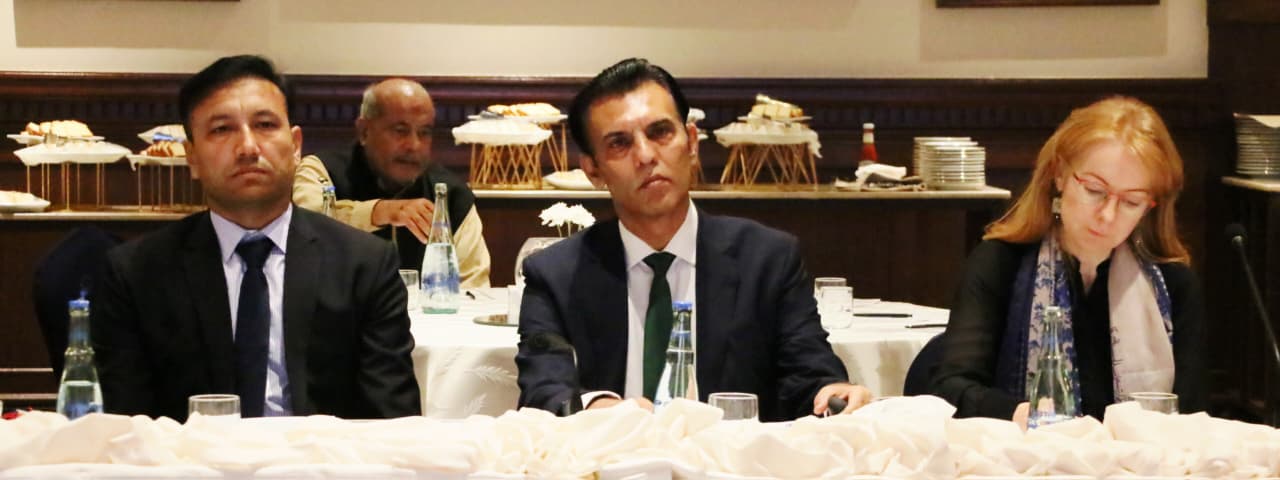
The workshop on “Scaling E-Cooking Access in Pakistan” was jointly organised by the National Energy Efficiency and Conservation Authority (NEECA) and the Sustainable Development Policy Institute (SDPI). It was supported by the United Nations Economic and Social Commission for Asia and the Pacific (UNESCAP), the Modern Energy Cooking Services (MECS) programme and UK International Development, said a press release.
Delegates from public and private sector bodies, civil society, academia, and the media took part in the consultation, which reviewed the outcomes of an SDPI-NEECA-ESCAP project on developing Pakistans National E-cooking roadmap and sought stakeholder input for policy recommendations.
In his opening remarks, SDPI Executive Director Dr Abid Qaiyum Suleri said most Pakistani rural households still rely on biomass for cooking, exposing them to carbon monoxide and other hazardous gases and limiting women’s ability to take up other productive activities.
He said urban areas also face gas shortages. “Gas load management has been routine in big cities like Karachi and Lahore for years,” he said, adding that high LNG prices had compounded the problem.
Dr Suleri said Pakistan was bound by contracts requiring payments to independent power producers (IPPs) even when their electricity is not purchased, and that consumers had quietly shifted to solar power in recent years. Combined, these factors made a strong case for electric cooking, he said, as it would reduce reliance on imported gas, provide certainty when gas supply is unreliable and give even non-solar households a better winter option.
He said affordable electric stoves currently lack safety measures and labeling schemes suited to domestic needs. He urged private sector entrepreneurs to develop products suited to local culinary preferences, and suggested that industrial clusters such as Gujranwala could assemble or replicate available technologies locally.
Dr Suleri also called on the government to offer incentives for electricity use in winter, as it has done before, which would save foreign exchange spent on LNG imports. SDPI had only piloted the project, he said, and NEECA and other agencies could now take it forward. He assured SDPI’s support in advocacy, engagement with legislators and community-level work.
Fadia Ahmadi, Economic Affairs Officer at the UNESCAP Energy Division, said clean cooking had long received less policy attention than electricity access. In Asia and the Pacific, access to clean cooking reached about 79 per cent in 2023, but nearly one billion people in the region still lack it. Three-quarters of them live in just six countries, including Pakistan, she said.
She said household air pollution is linked to 2.9 million premature deaths annually, with women and children disproportionately affected. Time spent collecting fuel and cooking also reduces opportunities for education and income generation, she added.
Ms Ahmadi said ESCAP has supported SDG7 roadmaps since 2019 and has worked on clean cooking in Bhutan, Nepal, Lao PDR, Fiji, Tajikistan and Pakistan.
Moderating the opening plenary, Engr Ubaid ur Rahman Zia, Head of the Energy Unit at SDPI, said strong market signals were now emerging for electric stoves, similar to those seen earlier for solar PV. He said SDPI, with ESCAP and under NEECA’s guidance, had completed a market study showing that new products, both locally built and newly assembled, were entering the market.
He recalled that the process began when ESCAP, together with the Private Power Infrastructure Board under the Ministry of Energy and SDPI, launched Pakistan’s SDG7 Roadmap. Pakistan has since made significant progress in both electricity access and clean cooking, he said.
Alicia Butterfield, Global Manager of the Global Electric Cooking Coalition (GECCO) Secretariat, based with the MECS team at Loughborough University in the UK, said electric cooking was the most efficient and effective cooking technology and was often cheaper than other fuels. The MECS programme, funded by the UK’s Foreign, Commonwealth and Development Office (FCDO), has been running since 2018.
She said the focus was now shifting from pilots to large-scale rollout, and that behaviour change would be essential. GECCO, formed in 2023, has 37 members and 13 member countries, and its funding is secured until 2030.
Ms Butterfield said Pakistan’s installation of about 50 gigawatts of solar PV capacity could be harnessed to kickstart the transition. Cooking accounts for an estimated 2 per cent of global emissions, she said.
Dr Jamsheed Ali, Joint Director Policy at the National Energy Efficiency and Conservation Authority (NEECA), has called for stronger policy interventions, improved financing mechanisms and better coordination between federal and provincial stakeholders to expand access to clean cooking in Pakistan.
Presenting an analysis of clean cooking trends, Dr Jamsheed said Pakistan’s access to clean cooking stood at around 51 per cent, compared with more than 80 per cent in India and 92.8 per cent in Bhutan. He noted that although Pakistan had made progress, the pace remained insufficient to match its potential and regional performance.
Comparing Pakistan’s progress with India, he said both countries had similar levels of access to clean cooking in 2000, but India moved ahead significantly after 2011. He urged researchers and policymakers to investigate the factors behind India’s progress and Bhutan’s performance to identify lessons that could be adapted to Pakistan’s needs.
Dr Jamsheed emphasised that bridging the clean cooking gap required a conducive policy environment, financing opportunities and collaboration among government institutions, businesses, financial institutions and development partners.
Giving the vote of thanks, SDPI Senior Policy Advisor Noor Ahmed thanked all partner organisations and the federal and provincial departments that participated. He said the experts had offered practical takeaways and had discussed the economics of the sector.
He said the main remaining challenge was market rollout of clean cooking equipment, and that promoting e-cooking was a noble cause that would improve the lives of ordinary people.