Interior Minister Mohsin Naqvi on Thursday said the federal government had continued negotiations with the opposition and the Khyber Pakhtunkhwa (KP) government until the last moment in an effort to resolve outstanding issues and avoid the imposition of emergency and governor’s rule.
Govt. preferred negotiations until last moment to avoid emergency, governor’s rule: Mohsin Naqvi
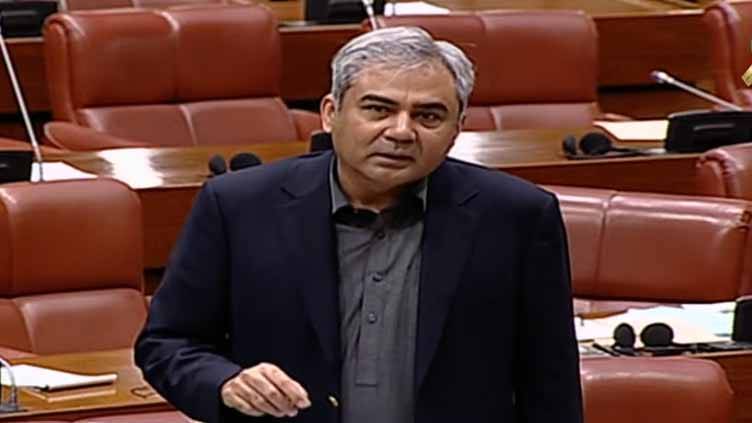
ISLAMABAD, Oct 15 (APP): Interior Minister Mohsin Naqvi on Thursday said the federal government had continued negotiations with the opposition and the Khyber Pakhtunkhwa (KP) government until the last moment in an effort to resolve outstanding issues and avoid the imposition of emergency and governor’s rule.
Speaking during the joint sitting of Parliament, he urged lawmakers from both sides who had participated in the negotiations to verify the facts, saying the federal government had neither walked out of the talks nor imposed any unreasonable deadline on the other side.
Naqvi said the federal delegation had waited for hours while the other side held consultations in a separate room.
He added that the government had repeatedly engaged in dialogue and made efforts to move the process forward.
Referring to a document containing the points discussed during the negotiations, the interior minister said the federal government had attempted to accommodate the other side’s demands.
He stressed that the negotiations had never been a matter of ego for the federal government, as it remained willing to facilitate an agreement.
Naqvi also highlighted the federal government’s efforts to address the financial concerns of the KP government, saying he had personally accompanied the provincial chief minister to meetings with the finance minister and the prime minister to resolve outstanding matters.
He said federal ministers, including Ahsan Iqbal, had participated in discussions aimed at addressing the province’s financial concerns.
The interior minister said political differences between the government and the opposition were natural, but the facts surrounding the negotiations should not be misrepresented.
He maintained that the federal government had continued its efforts until the final 24 hours, when it became apparent that the negotiations had failed.
Even then, he said, attempts had been made to prevent the situation from reaching that point.
Naqvi said the federal government had wanted the provincial leadership to work jointly with security forces to tackle terrorism.
He questioned how an effective counterterrorism strategy could be implemented if political leaders were unwilling to stand alongside security personnel for fear of political repercussions.
Emphasising the federal government’s responsibility to combat terrorism, he said it would continue to fulfil that obligation.
Naqvi said the federal government had urged the provincial administration to take the lead in the fight against terrorism, as maintaining law and order was primarily the responsibility of the provincial government, with support from the army,
Frontier Corps (FC) and other security agencies.
He said the federal government had remained willing to extend all possible assistance and had not sought to evade its responsibilities.
The interior minister rejected suggestions that terrorism had been used for political purposes, saying counterterrorism had been the central focus of discussions between federal and provincial representatives.
Naqvi said efforts to engage the KP leadership had been underway well before September, including attempts to arrange meetings between opposition leaders and the prime minister to discuss the situation.
He added that further efforts had been made after political leaders, including Bilawal Bhutto Zardari, called for dialogue and the prime minister agreed to pursue negotiations.
Naqvi, said the federal government had continued waiting for progress on a key point of the proposed understanding and made a final telephone call late at night, urging the other side to resolve the outstanding matter.
He said the federal government had not wanted to take the measures under discussion, but repeated attempts to reach an agreement had failed to produce the desired outcome.
Naqvi said the federal government had made several concessions during negotiations with the opposition, including facilitating medical examinations and family visits to the founder of the Pakistan Tehreek-e-Insaf (PTI), but the process had failed to reach a successful conclusion.
He said the government had held detailed discussions on health-related concerns and arranged briefings by doctors for opposition representatives, including Raja Nasir Abbas and other lawmakers.
Naqvi said the government had taken medical concerns seriously and facilitated hospital visits whenever health-related issues arose.
He added that arrangements for family meetings had also been agreed.
He maintained that the government had demonstrated flexibility on several issues and remained willing to pursue political dialogue, but meaningful progress required cooperation and the implementation of commitments by all sides.
Naqvi said the National Action Plan against terrorism had been approved by the PTI government and accepted by all political parties.
Counterterrorism cooperation in Khyber Pakhtunkhwa, he added, had been part of the proposed agreement.