By Abdul Samad Tariq ICELAND, Oct 14 (APP):Federal Minister for Climate Change Dr. Musadik Malik has called for global cooperation to develop practical climate solutions, proposing a virtual green university, a dedicated fund for green start-ups and shared access to publicly funded information technology to strengthen climate resilience. Addressing the Arctic Circle Assembly 2026 in Iceland, the minister highlighted the devastating impact of glacial melting and climate-related disasters on vulnerable …
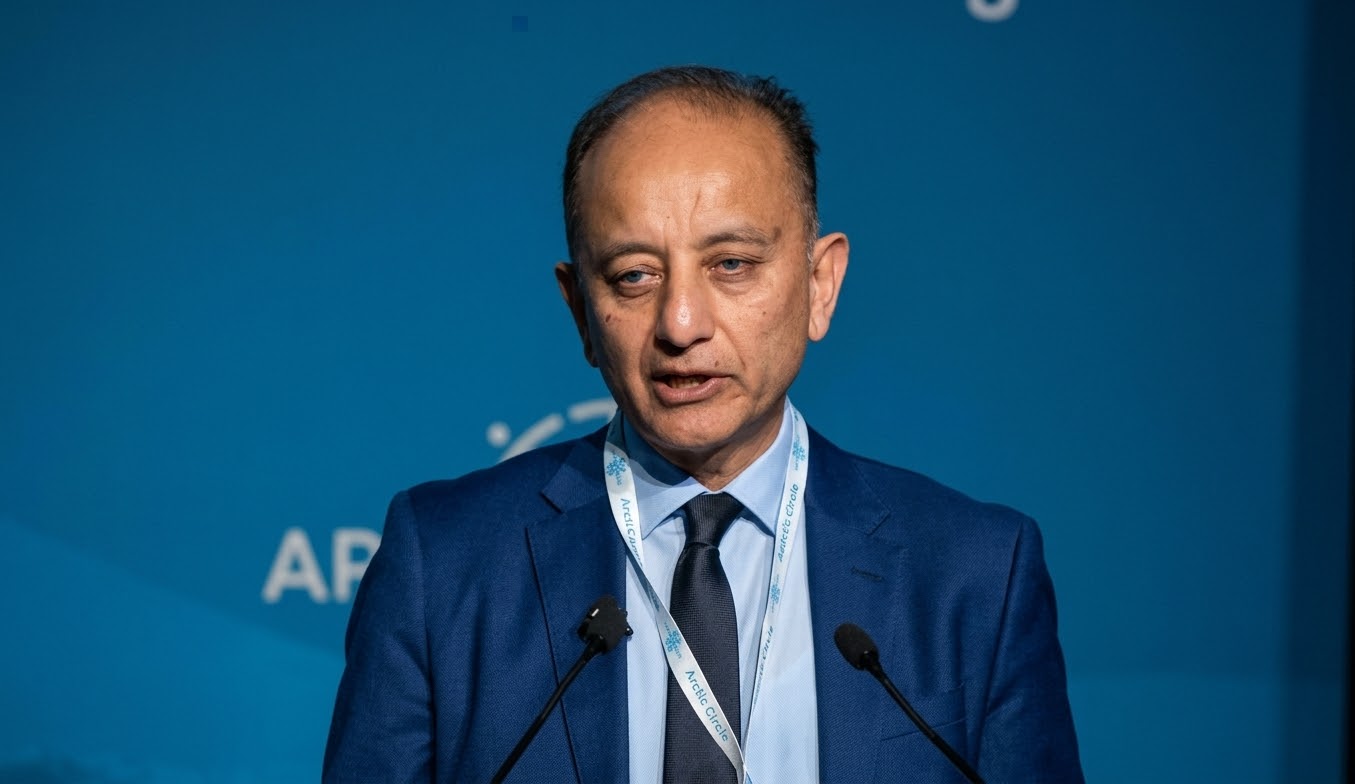
By Abdul Samad Tariq
ICELAND, Oct 14 (APP):Federal Minister for Climate Change Dr. Musadik Malik has called for global cooperation to develop practical climate solutions, proposing a virtual green university, a dedicated fund for green start-ups and shared access to publicly funded information technology to strengthen climate resilience.
Addressing the Arctic Circle Assembly 2026 in Iceland, the minister highlighted the devastating impact of glacial melting and climate-related disasters on vulnerable communities, particularly in Pakistan’s northern mountain regions, and urged the international community to move beyond commemorating environmental losses towards developing practical solutions.
Recalling the death of a glacier in Iceland in 2019, which was commemorated with a plaque, he said the final line of the inscription — “Only you know if we did it” — raised questions about collective responsibility for environmental destruction.
“In my mountains, glaciers don’t die quietly,” he said, describing how falling boulders and torrents of water could devastate valleys and leave communities facing loss and destruction.
The minister recounted the experience of Zara, a resident of Hassanabad in Hunza, whose community had lived in the area for around 400 years or more. He said the Shisper Glacier, which supported local livelihoods, farming, water supplies and food security, broke after temperatures rose and a lake formed behind it in May 2022.
Zara’s husband was working in the fields when the glacier broke. As the ground trembled and boulders came down, he rushed home and helped his wife and children escape, saving their lives, the minister said.
However, their house, livestock and essential community facilities, including schools and clinics, were lost, leaving the family and other residents facing renewed poverty.
Dr. Musadik Malik said it had taken generations for such families to emerge from poverty, while a single glacial disaster could reverse that progress. He said around 1,000 households in the affected areas of Nagar and Hunza’s Hassanabad valley were wiped away within a month.
Recalling his visit to the affected area, he said a young girl had taken him to the rubble of her house and told him that her child was buried somewhere beneath it.
Quoting Zara’s account of the psychological impact on children, he said: “My children used to look at these mountains with wonder. Now they look at this mountain with fear.”
Drawing a comparison with Nepal, the minister referred to a glacial disaster there in August, saying the water level rose by nine metres, or 27 feet, within half an hour, sweeping away bridges, roads, hospitals and other infrastructure.
He cited 600 deaths and said that, according to some estimates, the toll had exceeded 1,000 since the disaster.
The minister said the experiences of communities in Hunza and Nepal reflected a shared climate challenge, expressing solidarity with affected populations across the region and elsewhere in the world.
Highlighting Pakistan’s experience of climate-related disasters, he said the country had faced five major floods over 15 years, resulting in 6,000 deaths, 19,000 injuries or disabilities and the displacement of 40 million people. He also recalled that a single flood had displaced 33 million people.
He said the consequences extended beyond immediate deaths and physical destruction to include infant and maternal mortality, loss of livelihoods and disruption to education. Half of the 40 million displaced people, he said, were of school-going age, adding that three months of displacement would amount to 1.8 billion lost school days.
The minister emphasised the disparity between Pakistan’s contribution to global emissions and its exposure to climate-related losses.
“We only emit 1% of the carbon but we bear 100% of our national grief,” he said, arguing that communities contributing little to the problem were bearing a disproportionate human cost.
Explaining why Pakistan’s experience was relevant to an assembly focused on the Arctic, he said the glaciers in the country’s mountains and the ice systems in Greenland and other polar regions were interconnected parts of the same global cryosphere.
He said he had been told that 80% of the original old ice had melted since the 1980s, while Greenland had lost hundreds of billions of tonnes of ice. He acknowledged that his figures might not be precise but stressed the shared nature of the challenge.
Dr. Musadik Malik urged policymakers and researchers to listen to communities living in mountain and polar regions, saying their experiences could provide valuable insights into environmental changes affecting their lives.
Rather than continuing to write obituaries for disappearing glaciers, he called for joint research and practical interventions to strengthen resilience.
As part of his proposals, he suggested establishing a virtual green university through which researchers could share infrastructure and collaborate on understanding changes in mountain environments. He said the mountains were the first places where the cryosphere experienced the impacts of warming and that studying these changes could help researchers model potential wider consequences and develop resilience measures.
The minister also announced that his ministry had established a $10 million fund for start-ups focused on innovative climate solutions.
He called for the development of a green innovation ecosystem that would support young entrepreneurs and researchers working on practical, resilient solutions, distinguishing it from commercially driven start-up platforms.
In a further proposal, he suggested making information technology developed with public-sector taxpayers’ money available through a shared digital cloud to young innovators in Iceland and elsewhere, enabling them to use existing publicly funded resources to develop solutions.
Bringing the three proposals together, he outlined a framework built around a green university, a green innovation platform and a shared digital cloud.
Concluding his address, the minister urged participants to translate their discussions into action before leaving the assembly, saying the future should not be left to determine whether the world had responded adequately to the climate crisis.