BEIJING, Oct 14 (APP):Chinese dairy producer Feihe is exploring opportunities to enter Pakistan’s market and establish cooperation across the dairy industry’s supply chain, a senior company executive has said, highlighting potential avenues for China-Pakistan collaboration in dairy processing, food technology and agricultural development. “We will explore Pakistan’s market and look for opportunities to cooperate across the complete supply chain,” Li Nan, General Manager of Feihe (Ningxia) Biotechnology Dairy Co., Ltd., …
Chinese dairy giant Feihe eyes Pakistan market, explores full supply chain cooperation
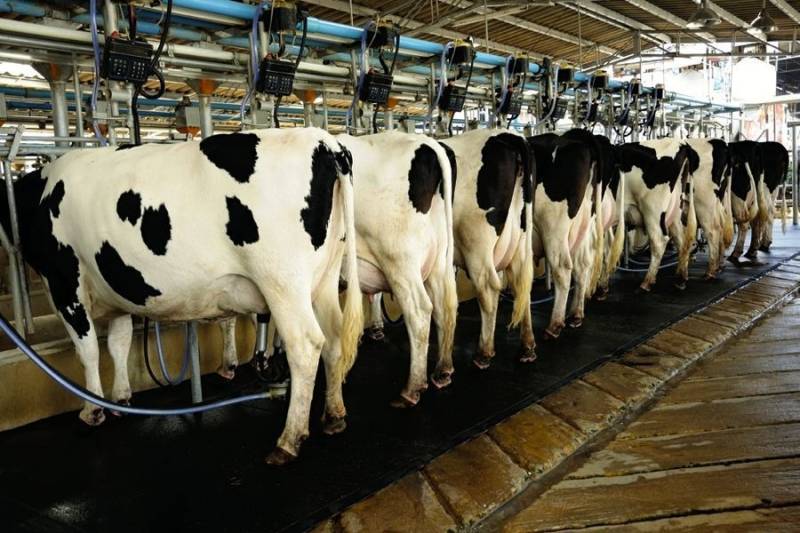
BEIJING, Oct 14 (APP):Chinese dairy producer Feihe is exploring opportunities to enter Pakistan’s market and establish cooperation across the dairy industry’s supply chain, a senior company executive has said, highlighting potential avenues for China-Pakistan collaboration in dairy processing, food technology and agricultural development.
“We will explore Pakistan’s market and look for opportunities to cooperate across the complete supply chain,” Li Nan, General Manager of Feihe (Ningxia) Biotechnology Dairy Co., Ltd., told APP during the visit to the company’s intelligent dairy processing base in Lingwu, Ningxia.
He said the proposed engagement could open new opportunities for Pakistan and China, where the livestock and dairy sectors play an important role in the agricultural economy and rural livelihoods. Cooperation in modern processing technologies, milk quality management, cold-chain logistics and high-value dairy ingredients could help strengthen Pakistan’s dairy value chain, subject to future business arrangements.
Located in Ningxia’s Lingwu Modern Industrial Park, the Feihe facility represents an investment of about 600 million yuan ($84 million). Designed to process up to 1,000 tonnes of fresh milk daily, the plant incorporates automated production lines, research and development facilities, a microbiology laboratory and modern warehousing infrastructure.
The facility is part of Feihe’s broader expansion into high-value dairy ingredients beyond its established infant formula business. Founded in 1962, the company operates across infant nutrition and milk-protein processing, developing ingredients such as whey protein, casein, lactoferrin and lactose for applications in the food and nutrition industries.
GM said that Feihe has established three dairy deep-processing bases in Heilongjiang, Inner Mongolia and Ningxia, with a combined designed capacity to process 3,000 tonnes of fresh milk per day. The company says these facilities are intended to strengthen domestic production of specialized dairy ingredients and expand supplies to industrial customers.
He added that the Lingwu project uses automated production systems and advanced separation and purification technologies to manufacture a range of dairy ingredients. Its planned product portfolio includes demineralized whey powder, casein powder, lactoferrin, lactose and cream, alongside infant formula production.
Chinese experts believe for Pakistan, potential cooperation could extend beyond finished dairy products to technical knowledge, equipment, research collaboration and supply-chain development. Pakistan’s dairy industry faces challenges in milk collection, refrigeration, quality control and processing, making international experience in integrated dairy production potentially relevant to its modernization efforts.
Feihe’s stated international ambitions include expanding its milk-protein ingredient business and supplying customers in overseas markets. Its operations cover the wider process from milk sourcing and processing to ingredient development and product sales.
Li’s remarks indicate that Pakistan is among the markets the company intends to explore, although no specific investment, export agreement or timetable for entering the Pakistani market was announced during the visit.
For China and Pakistan, the prospective engagement offers a possible avenue to extend bilateral economic cooperation into agricultural technology and food processing, complementing established collaboration in infrastructure, trade and industrial development.
Experts added that any future partnership would need to translate this interest into practical arrangements, including identifying local partners, assessing market requirements and determining where Chinese technology and Pakistani agricultural resources could deliver mutual benefits.