ISLAMABAD, Oct 13 (APP):Pakistan will continue to "diversify its funding sources," Finance Minister Muhammad Aurangzeb said, hinting that his government could issue more Chinese yuan-based bonds and tap the Japanese market for samurai bond issuances. Aurangzeb spoke to Nikkei Asia on Monday on the sidelines of the annual meetings of the International Monetary Fund and World Bank, which kicked off in Bangkok on the same day. In mid-May, Pakistan issued …
Pakistan continue to diversify its funding sources: Aurangzeb
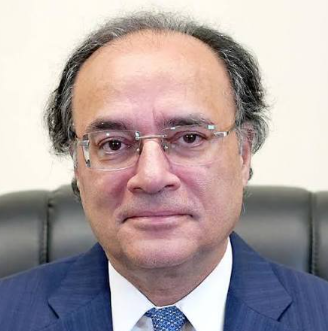
ISLAMABAD, Oct 13 (APP):Pakistan will continue to “diversify its funding sources,” Finance Minister Muhammad Aurangzeb said, hinting that his government could issue more Chinese yuan-based bonds and tap the Japanese market for samurai bond issuances.
Aurangzeb spoke to Nikkei Asia on Monday on the sidelines of the annual meetings of the International Monetary Fund and World Bank, which kicked off in Bangkok on the same day.
In mid-May, Pakistan issued its first panda bond worth 1.75 billion yuan ($261 million) as part of a 7.2 billion yuan program, with the Asian Development Bank and the Asian Infrastructure Investment Bank providing partial guarantees. A panda bond is a yuan-denominated bond issued by a foreign entity to raise money in China’s domestic bond market.
Aurangzeb said the recent panda bond will not be a “one-time issuance” and that Pakistan intends to “keep going back and be a repeat issuer,” given how China is the “second largest and deepest capital market in the world.”
Emerging economies such as Pakistan and Indonesia have tapped the panda bond market in a bid to expand their investor base and diversify funding sources.
According to S&P Global, panda bond issuance reached roughly 160 billion yuan ($23.8 billion) in the first half of 2026, surging 68% year on year. Foreign issuers have increased, accounting for 50% of the pie compared to 39% last year.
“We do not want to increase the quantum of our external debt,” said Aurangzeb, while expressing interest in ways to further diversify funding sources, including the issuance of yen-denominated samurai bonds.
Samurai bonds “would make sense,” and are “something which we should think through,” he said, adding: “We need to do more homework.”
In addition to diversifying external borrowing, Pakistan is accelerating efforts to attract foreign direct investment by increasing competitiveness in key industries, including the automobile sector. Last year, the country unveiled a five-year National Tariff Policy (NTP), which gradually reduces import tariffs in key sectors.
“We will not make any compromise on the national tariff policy,” Aurangzeb said. “It’s not only about the auto industry — it’s about industries in general.”
In the past, the government has given protection without sunset clauses. “That has not worked for Pakistan,” he said. “We want to make our industry competitive.” He believes the NTP can help exports, “especially for raw materials and intermediate goods.”
Aurangzeb noted that ASEAN reduced tariffs in the late 1990s to generate various upsides. “This can very much be a Southeast Asia moment for Pakistan,” he said.
Pakistan is seeking cabinet approval for a revamped auto policy that will support the adoption of electric vehicles as part of the country’s energy transition and climate change strategies. Islamabad wants 30% of new vehicles to be electric by 2030.
The policy’s strict export targets for automakers, however, have caused a stir, and some observers have said they favor Chinese new energy vehicle makers.
Chinese EV players have already been attracted to Pakistan, including BYD, which has started assembling locally.
Aurangzeb said Pakistan welcomes Chinese automakers — “all of them.”
China is Pakistan’s largest bilateral lender. The two countries marked the 75th anniversary of diplomatic relations in May, underscoring a partnership that spans economic, defense and geopolitical cooperation.
Since becoming an IMF member in 1950, Pakistan has entered over two dozen IMF programs. Currently in its 25th arrangement, Pakistan is one of the most frequent users of IMF financial assistance.
“We are in good shape with respect to the program itself, which in turn helps us with our discussions with rating agencies and investors,” Aurangzeb said. This program has a “structural reform agenda” that will “lead to sustainability,” he said.
Pakistan will graduate from IMF assistance, he said, once the “rest of the world becomes convinced that we don’t need the lender of last resort.”