ISLAMABAD, Oct 13 (APP):Regional telecom leaders on Tuesday unveiled a roadmap to promote digital inclusion across the Asia-Pacific region, focusing on high-speed internet, satellite networks, affordable smartphones and emerging technologies. The three-day Asia-Pacific Telecommunity (APT) Symposium on Digital Transformation and Universal Service Fund (USF) opened in Islamabad. The Ministry of Information Technology and Telecommunication (MoITT) and USF Pakistan co-hosted it, in collaboration with the APT Secretariat. The symposium brings together …
Regional telecom leaders unveil roadmap for digital inclusion
ISLAMABAD, Oct 13 (APP):Regional telecom leaders on Tuesday unveiled a roadmap to promote digital inclusion across the Asia-Pacific region, focusing on high-speed internet, satellite networks, affordable smartphones and emerging technologies.
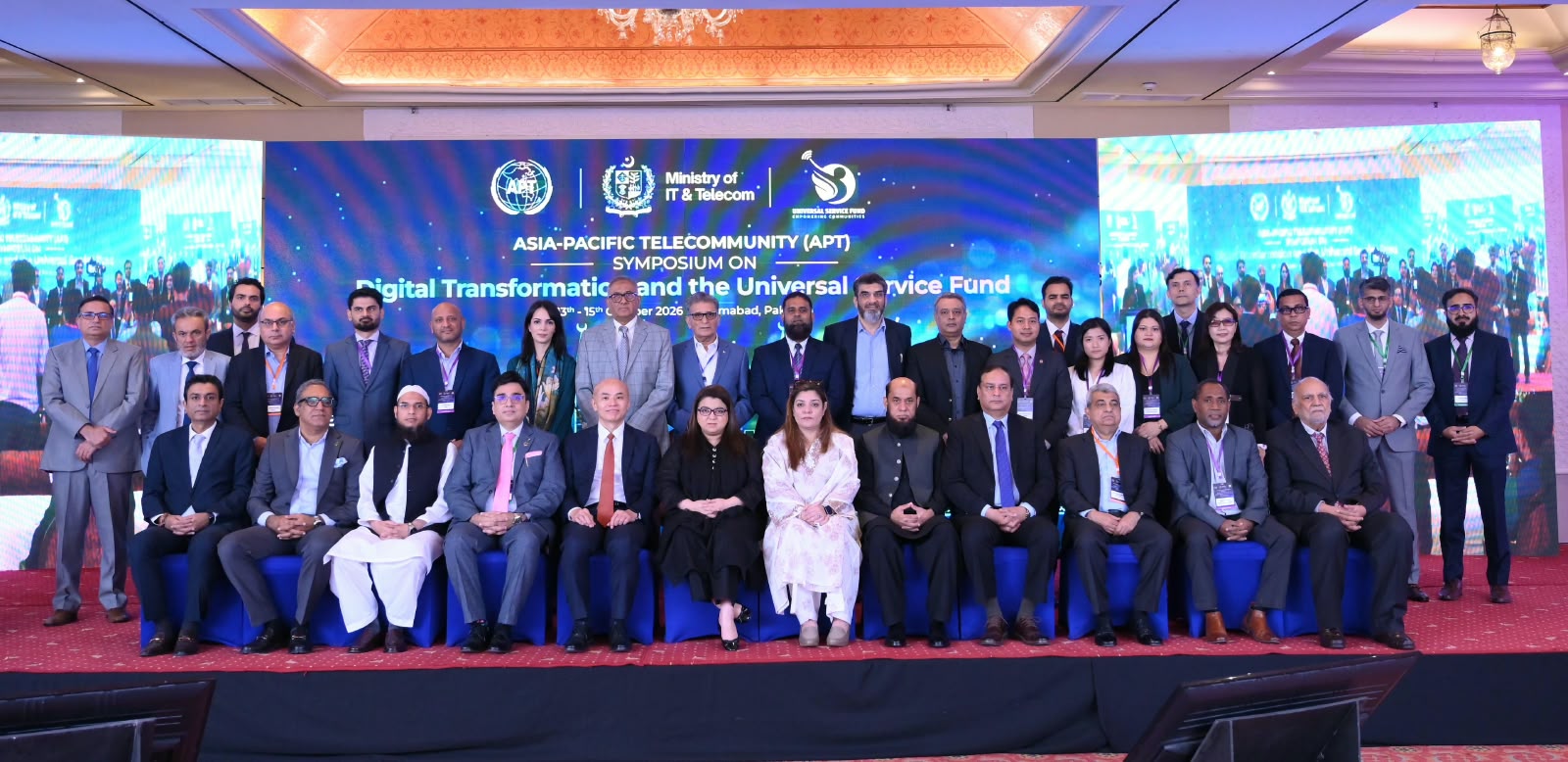
The three-day Asia-Pacific Telecommunity (APT) Symposium on Digital Transformation and Universal Service Fund (USF) opened in Islamabad.
The Ministry of Information Technology and Telecommunication (MoITT) and USF Pakistan co-hosted it, in collaboration with the APT Secretariat.
The symposium brings together ministers, telecom regulators, industry executives and delegates from across the Asia-Pacific region to discuss ways to improve digital connectivity and modernise universal service policies.
Discussions focus on expanding high-speed fibre networks, using satellite technology, making smartphones more affordable, and developing local artificial intelligence (AI) infrastructure in rural areas.
Addressing the inaugural session as chief guest, Federal Minister for Information Technology and Telecommunication Shaza Fatima Khawaja said Pakistan was committed to building an inclusive, secure and sustainable digital economy.
She stressed that bridging the gap in internet usage was as important as expanding network coverage. Digital access had become an important driver of economic empowerment and social development, she added.
Under the APT Tokyo Statement 2025, Pakistan was updating its policies to improve high-speed fibre connectivity, make smartphones more affordable and develop local AI computing facilities, the minister said.
She also announced that the Universal Service Fund Pakistan had crossed $1 billion in contracted subsidies, reaching $1.054 billion.
She described the milestone as a significant contribution to digital transformation and the expansion of connectivity across the country.
In his inaugural address, APT Secretary-General Dr Masanori Kondo said digital transformation was reshaping economies and societies, changing how governments delivered public services, businesses operated and people learned, worked and communicated.
He said the Asia-Pacific region was rapidly moving towards 5G, satellite constellations and artificial intelligence. However, digital exclusion was no longer limited to a lack of physical network coverage. It also involved the quality of connectivity, access to technology and people’s ability to use digital services.
Universal Service Funds needed to evolve into flexible, results-oriented frameworks, he said, adding that regional cooperation and harmonised regulations were essential to ensure that remote communities and island nations were not left behind.
In his welcome address, USF Pakistan Chief Executive Officer Ch Mudassar Naveed said universal service funds had traditionally been measured by the number of telecom towers installed in remote areas.
However, meaningful connectivity now required high-speed fibre networks, infrastructure sharing and measures to help people access and use digital services, he added.
He said the symposium would discuss frameworks for buy-now-pay-later (BNPL) smartphone financing, lower right-of-way (ROW) charges and resilient middle-mile networks to improve connectivity in areas facing economic and geographical challenges.
Aligned with the prime minister’s Digital Pakistan vision and under the guidance of the federal minister, USF Pakistan was extending connectivity to areas where commercial operators had limited incentives to invest, he said.
The organisation had completed 158 of the 185 projects awarded to it, using more than Rs169 billion in subsidies and directly benefiting over 38.4 million people, he added.
The event was attended by senior government officials, parliamentarians, international delegates and telecom industry representatives.
Among the prominent participants were Palwasha Khan, chairperson of the Senate Standing Committee; Sabheen Ghoury, Parliamentary Secretary for IT and Telecommunication; Rafique Ahmed Buriro, additional secretary at MoITT; APT Secretary-General Masanori Kondo; and Pakistan Telecommunication Authority (PTA) Chairman Maj Gen (retd) Hafeez Ur Rehman.
PTA members Muhammad Naveed and Dr Khawar Siddique Khokhar also attended the event. The ministry was represented by Member Digital Economy and Technology Asfandyar Khan and Member Telecom Muhammad Jahanzeb Rahim.
International delegates included Moshiur Rahman of Bangladesh, Warren Suti of Papua New Guinea, Tshering Dema of Bhutan, Mohd Akmal Radzuan of Malaysia and Cecily Jemaima Iakopo of Samoa.
Telecom industry representatives included Naveed Khalid Butt of Pakistan Telecommunication Company Limited (PTCL), Shan Ul Haq of Pakistan Mobile Telecommunications Limited (PTML), Shahid Razzaq of CMPak (Zong), Ahmed Bilal Masud and a deputy chief executive officer of Huawei, along with other industry executives.
Building on the APT Tokyo Statement 2025 and the APT Strategic Plan, the symposium aims to reposition Universal Service Funds as instruments of socio-economic development.
The discussions centre on four key areas: expanding gigabit broadband through fibre backhaul and last-mile connectivity; using emerging technologies, including AI, low-Earth orbit (LEO) satellites, 5G and 6G, cloud computing and the Internet of Things (IoT); promoting sustainable funding and transparent governance through smartphone financing and streamlined right-of-way policies; and strengthening cooperation among governments, regulators, fund administrators, telecom operators, technology providers and local communities.