Federal Minister for Information Technology and Telecommunication Shaza Fatima Khawaja on Monday called for global laws to protect children from the harmful effects of the internet.
Shaza calls for global laws to protect children from online threats
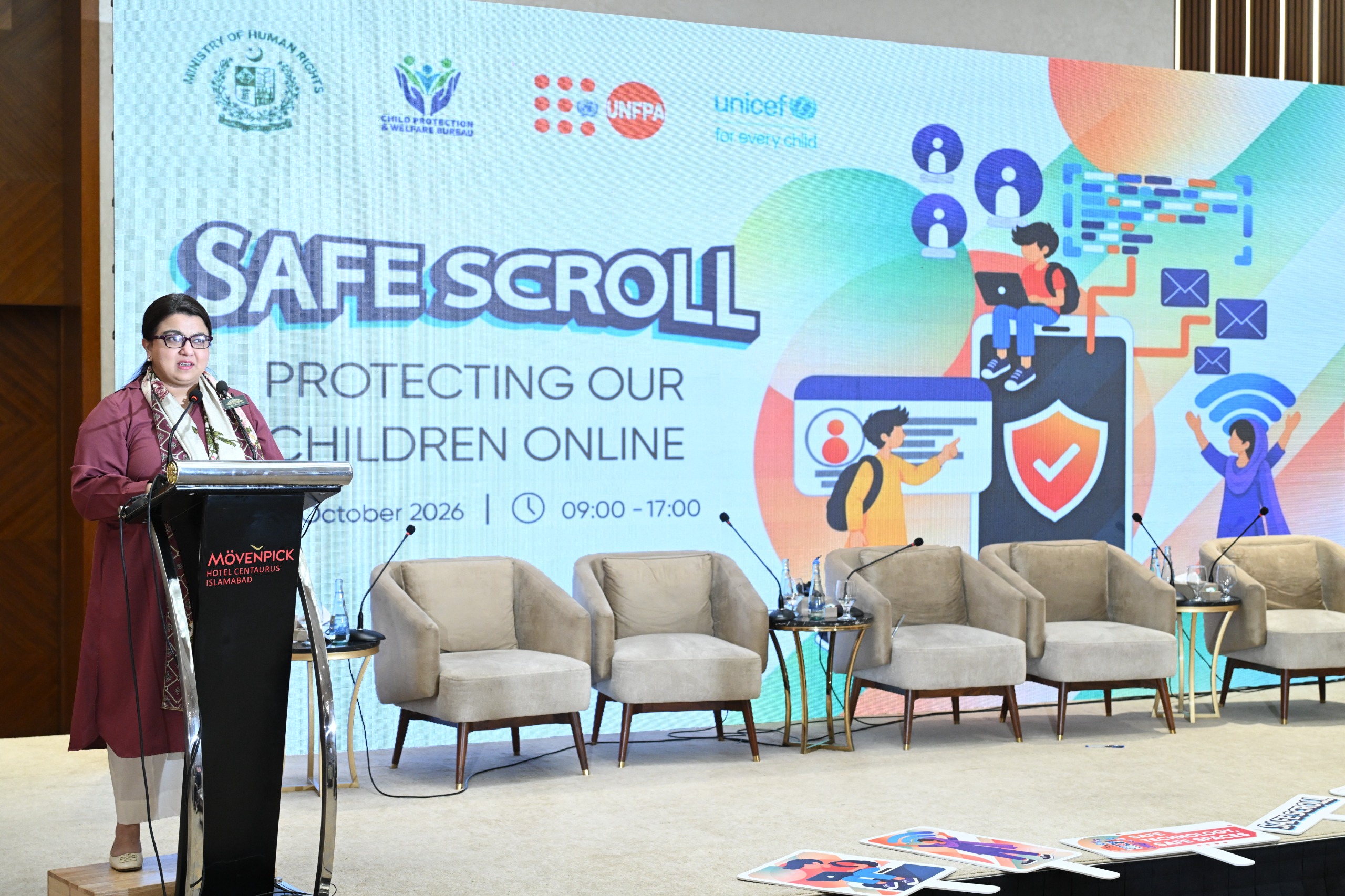
ISLAMABAD, Oct 12 (APP): Federal Minister for Information Technology and Telecommunication Shaza Fatima Khawaja on Monday called for global laws to protect children from the harmful effects of the internet.
Addressing the “Safe Scroll: Protecting Our Children Online” event, she said children’s interest in information technology was growing worldwide, with even young children achieving major milestones in the field. Children could not be kept away from information technology, she added.
Shaza Fatima said there was a need to determine the appropriate level of internet access and screen time for children and establish clear limits.
She said several countries, particularly 20 to 25 member states of the Organisation for Economic Co-operation and Development (OECD), were considering frameworks and laws to regulate children’s use of social media and the internet.
Australia, Malaysia and Thailand were among the countries taking steps in this direction.
The minister said governments alone could not verify the age of every child online or fully monitor their activities.
Therefore, major technology companies and digital platforms also needed to take responsibility for age verification and content monitoring through artificial intelligence (AI) and other advanced tools.
Highlighting awareness initiatives, she said the Ministry of IT had launched the “Safe Raho” programme in collaboration with Google, focusing on parental controls and family safety.
She said 12,500 students, teachers and parents had received digital safety training in 100 public schools through a joint initiative involving Telenor and the National Cyber Crime Research Centre (NCRC).
She added that progress had also been made in collaboration with Meta to introduce stricter AI-based controls for children’s accounts.
Meanwhile, the “Junior Cyber Heroes” initiative, launched in collaboration with PK-CERT and UNICEF, was raising awareness among children about online safety.
Regarding legislation, Shaza Fatima said the proposed Personal Data Protection Bill and the National Cyber Security Policy prioritised the protection of children’s data and privacy, as well as the establishment of a framework for parental digital consent.
She said these measures aimed to prevent the misuse of children’s personal information and photographs.
The minister said around 25 million children in Pakistan were out of school, adding that internet access and digital tools could help provide modern education and teach science, technology, engineering and mathematics (STEM) subjects.
She warned that completely shutting down modern digital platforms would make it difficult to meet future educational needs.
She said Pakistan must equip children to become creators in technology, artificial intelligence and mathematics. Otherwise, the country would struggle to preserve its cultural identity, language and narrative at the global level.
Shaza Fatima urged educational institutions and parents to reduce unnecessary screen time in primary schools and revive civic education and moral training.
She stressed that addressing cyber threats required not only legislation but also improvements in the social environment.
She said the government was working seriously to address cyber-related issues in the country.
The minister said the Pakistan Telecommunication Authority (PTA) and other government institutions were taking steps to promote cyber awareness and education.
She emphasised the need to teach children to use the internet responsibly and protect them from its harmful effects.
She added that parents and society must play their part in guiding children towards the positive use of digital platforms and developing a sense of
responsibility among them.
A balanced approach was needed to ensure children’s safety in the digital world while allowing them to benefit from technological advancements, she said.