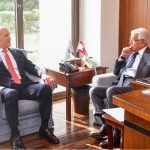
The Senate Standing Committee on National Heritage and Culture on Monday reviewed plans for the establishment of the National Museum of Pakistan in Islamabad, including the allocation of 20 acres of land for the project at Bhara Kahu, and called for the early opening of the main chamber of Mazar-e-Quaid in Karachi to the general public.
Senate body reviews National Museum Project, stresses early opening of Quaid-e-Azam Mazar’s main chamber

ISLAMABAD, Oct 12 (APP): The Senate Standing Committee on National Heritage and Culture on Monday reviewed plans for the establishment of the National Museum of Pakistan in Islamabad, including the allocation of 20 acres of land for the project at Bhara Kahu, and called for the early opening of the main chamber of Mazar-e-Quaid in Karachi to the general public.
The meeting, chaired by Senator Hidayatullah Khan at Parliament House, was attended by Senators Bushra Anjum Butt, Rubina Khalid, Waqar Mehdi and Shahadat Awan, Federal Minister for National Heritage and Culture Aurangzeb Khan Khichi, the secretary of the ministry, the chairman of the Capital Development Authority and relevant officials. The Resident Engineer of the Quaid-e-Azam Mazar Management Board participated virtually.
The committee took up a question, raised by Senator Shahadat Awan, regarding the existing laws and legal framework for the protection and preservation of heritage sites across the country.
At the senator’s request, the committee deferred the item until its next meeting, as the compliance report on recommendations made during the previous meeting had not been received.
The Ministry of National Heritage and Culture briefed the committee on progress towards establishing the National Museum of Pakistan in Islamabad.
It informed the committee that the original plan envisaged an eight-acre site at Shakarparian, of which the CDA had provided three acres, while the remaining five acres were still pending.
The project was being undertaken in collaboration with the Korea Heritage Agency under a Korean Grant-in-Aid programme worth US$6.79 million. However, following detailed discussions with the Federal Minister for Interior and the CDA chairman, it was decided to develop the museum as part of a larger museum complex near Bhara Kahu rather than proceed with the original site at Shakarparian.
The CDA chairman informed the committee that the proposed 160-acre complex near Bhara Kahu would house museums dedicated to the Army, Navy and Air Force, along with a dedicated facility for the National Museum of Pakistan.
He said the CDA would provide 20 acres of land for the national museum and undertake construction of its building, while the Ministry of National Heritage and Culture would be responsible for its maintenance and operations.
Reviewing the shift from the original eight-acre site to a 20-acre allocation within the larger complex, the committee emphasised that the museum building should meet national museum standards.
The federal minister also raised the issue of financial penalties imposed due to project delays and sought their waiver or adjustment, citing delays in land allocation and handover.
The CDA chairman clarified that all financial transactions and land allocations for the museum would be carried out strictly on a government-to-government basis.
The committee also reviewed the report of its sub-committee on issues concerning Quaid-e-Azam Mazar and its surrounding areas in Karachi, along with the status of implementation of the sub-committee’s recommendations.
The committee was informed that the ministry and the Quaid-e-Azam Mazar Management Board were actively pursuing the recommendations, which included the removal of solid waste from the surrounding areas, installation of CCTV cameras, exemption from water and sewerage charges, improvement of water supply and implementation of a beautification plan for all entry points.
Expressing satisfaction with the progress, the committee stressed the need for immediate arrangements to open the main chamber of Mazar-e-Quaid to the general public.
It also strongly recommended that the ministry approach all provincial governments to seek regular contributions towards the mausoleum’s upkeep and maintenance.
The committee decided to visit Taxila in the last week of October to assess the conservation work carried out by the
Archaeology Department of Punjab.