The Sindh government has proposed a $9.15 million climate-resilient floating agriculture project to develop 400 hectares of flood resilient cropland across 100 waterlogged and flood prone villages in lower Sindh by 2029, aiming to improve food security by 30%, train 10,000 farmers and strengthen the livelihoods of communities vulnerable to floods and prolonged waterlogging.
Sindh proposes $9.15m floating farming project for 100 villages
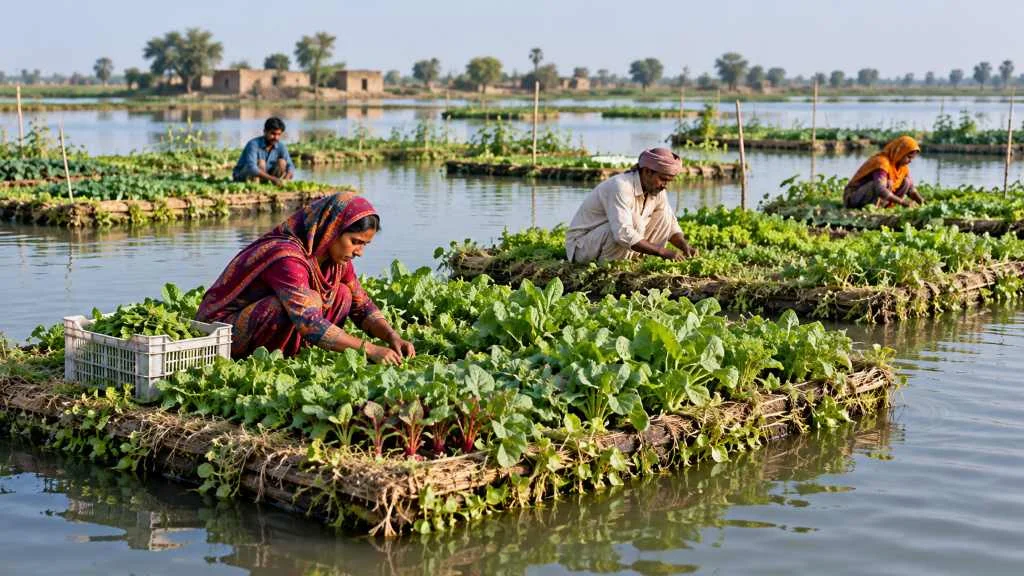
ISLAMABAD, Oct 11 (APP):The Sindh government has proposed a $9.15 million climate-resilient floating agriculture project to develop 400 hectares of flood resilient cropland across 100 waterlogged and flood prone villages in lower Sindh by 2029, aiming to improve food security by 30%, train 10,000 farmers and strengthen the livelihoods of communities vulnerable to floods and prolonged waterlogging.
According to official documents available with Wealth Pakistan, the project, titled Climate Resilient Floating Agriculture Systems for Waterlogged and Flood Prone Areas of Lower Sindh, seeks to introduce floating farming techniques using organic rafts to grow vegetables, herbs and grains in areas where conventional cultivation is constrained by excessive water.
The proposed initiative is expected to benefit 12,500 people directly and 50,000 indirectly, offering an alternative farming model to communities facing recurring agricultural losses and livelihood disruptions due to floods and waterlogged land.
Under the programme, 10,000 farmers would receive training in floating agriculture and climate-l smart, flood resilient farming techniques, while women are expected to make up 20% to 30% of the targeted trainees.
The project also envisages supporting women-led farmer groups through training and seed capital to expand livelihood opportunities and strengthen household food security.
Its key interventions include establishing floating cultivation systems, promoting climate resilient agricultural practices and providing targeted support to vulnerable farming communities.
The Environment, Climate Change and Coastal Development Department (ECC&CDD) of Sindh has been designated as the executing entity, while the United Nations Development Programme (UNDP), National Agriculture Research Centre, Sindh Agriculture University Tandojam and Sindh Agriculture Department are listed as supporting organisations.
The project aims to establish 400 hectares of resilient cropland and extend floating agriculture to 100 villages by 2029, with improved food security and more sustainable livelihoods among its principal objectives.
The proposed initiative is among the projects processed for inclusion in the World Bank Country Partnership Framework for Pakistan for fiscal years 2026–2035.