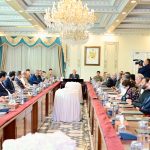
Political unity, institutional coordination and a comprehensive strategy are essential for combating terrorism and ensuring sustainable, lasting peace and development in Khyber Pakhtunkhwa (KP), experts said.
Fakhar-e-Alam
PESHAWAR, Oct 11 (APP):Political unity, institutional coordination and a comprehensive strategy are essential for combating terrorism and ensuring sustainable, lasting peace and development in Khyber Pakhtunkhwa (KP), experts said.
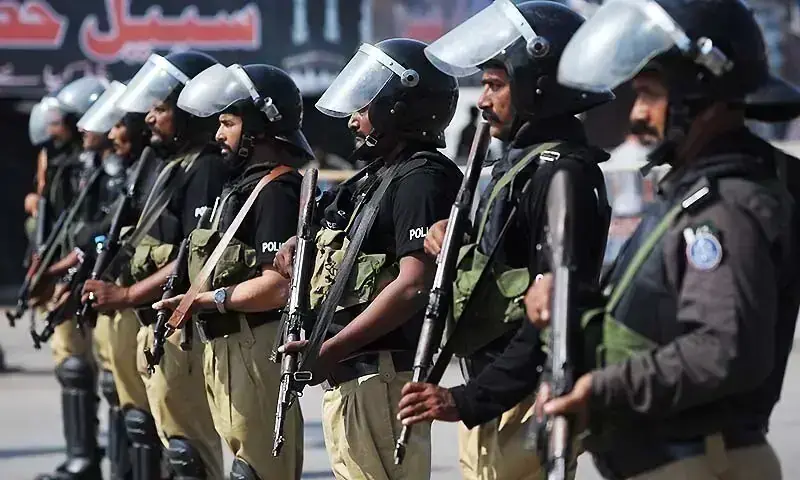
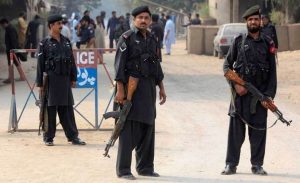
They stressed that the security challenges facing the province required close cooperation between the federal and provincial governments, police, security, intelligence agencies and civil society to protect citizens and strengthen public confidence.
MPA Malik Tariq Awan said combating terrorism should remain a shared priority beyond political differences.
“The issue between the state and Khyber Pakhtunkhwa is not politics but combating terrorism,” he said, emphasizing
that political activities and public gatherings could continue alongside collective efforts to maintain peace and
security.
Talking to APP, he said around 6,200 terrorism-related incidents had occurred in KP over the past two years, claiming nearly 1,200 lives. He also claimed that 37 suicide attacks had involved Afghan nationals, including 14 during the current year. These figures require verification from official records.
Tariq Awan highlighted the importance of strengthening the provincial Counter-Terrorism Department (CTD) through improved human resources, training and operational capacity.
He also acknowledged the sacrifices of the army, police and other security institutions in combating
militancy.
Former Inspector General of Police Syed Akhtar Ali Shah said counter-terrorism required effective policing, intelligence coordination, prosecution, community engagement and sustained institutional support.
He said Chief Minister Sohail Afridi and the provincial government had an important role in addressing public concerns, protecting fundamental rights and cooperating with federal authorities to prevent terrorist
violence.
Shah emphasized that insecurity affected education, business, tourism, investment and everyday life, making a coordinated response essential for restoring public confidence and supporting economic growth.
He called for a clearly defined counter-terrorism framework supported by practical measures, institutional coordination and regular communication with citizens.
“Effective security policy depends heavily on coordination among federal and provincial governments and state institutions rather than isolated political positions,” he said, stressing that cooperation was necessary for lasting
peace.
Professor Dr Zahid Anwar of the Department of Political Science at the University of Peshawar said statements by political leaders in a terrorism-affected province carried considerable weight and could influence public confidence and relations among institutions.
He said political differences were normal in a democracy, but security required a shared commitment to protecting citizens and strengthening institutional cooperation.
Referring to the chief minister’s reported statement about eradicating terrorism within a month, the discussion highlighted the importance of translating public commitments into practical measures, clear objectives and sustained action.
Anwar said peace was essential for development, investment and tourism, adding that businesses needed predictable conditions and families required safe communities.
Lawyer Noman Bukhari said counter-terrorism efforts should combine security measures with socioeconomic development. Decades of terrorism had deeply affected KP, from the Army Public School tragedy to insecurity in the merged tribal districts.
He acknowledged the gains achieved through military operations and intelligence efforts, while emphasizing the importance of addressing the social and economic conditions that extremist groups could exploit.
Bukhari identified unemployment, educational disparities, economic inequality and social exclusion as challenges requiring sustained attention.
He said access to quality education, employment and essential services could help communities resist extremist recruitment.
He called for educational reforms, improved healthcare, equal opportunities and better public services, particularly for under served communities. He also stressed that educational institutions, including seminaries, should promote tolerance, critical thinking and peaceful coexistence.
Professor Dr Jamil Khan, Director of the Centre for Conflict Studies at the University of Peshawar, said balanced regional development was important for sustainable peace.
He highlighted the need to improve education, employment and infrastructure in remote areas, particularly southern KP and the former Federally Administered Tribal Areas.
“The answer lies in giving these areas priority in development and education,” he said, emphasizing that better public services and economic opportunities could strengthen trust between communities and state
institutions.
Khan added that development projects and educational reforms could provide young people with constructive alternatives to extremist ideologies while strengthening social cohesion.
According to Ministry of Finance documents, the federal government transferred Rs2,347 billion to KP under the National Finance Commission (NFC) Award during fiscal years 2024-25 and 2025-26, including Rs1,103 billion and Rs1,244 billion, respectively.
Under the existing NFC arrangement, KP also receives an additional one per cent of the divisible pool for expenditures related to the war against terrorism.
Ministry of Finance officials said 57.5 per cent of the Federal Board of Revenue’s tax collection was distributed among provinces under the NFC formula, while 42.5 per cent remained with the federal government.
Experts emphasized that effective utilization of available resources could strengthen police capacity, improve public services and support development in vulnerable areas.
They called for a comprehensive strategy combining security operations, institutional cooperation, education, employment and community engagement. They also stressed that political dialogue should support a common approach to counter-terrorism.
The experts welcomed Prime Minister Shehbaz Sharif’s reported offer of dialogue as an important opportunity to strengthen federal-provincial cooperation, urging Chief Minister Sohail Afridi to engage constructively with the initiative to develop a unified strategy for combating terrorism and ensuring lasting peace, stability and prosperity in Khyber Pakhtunkhwa.
They said the success of counter-terrorism efforts would ultimately be measured not merely by operations on the ground, but by safer communities, thriving schools, flourishing businesses and the freedom of citizens to live and work without fear, paving the way for a future defined by peace, prosperity and renewed hope.