Federal Minister for Information and Broadcasting Attaullah Tarar on Saturday said successive Pakistan Tehreek-e-Insaf (PTI) governments had prioritised political agitation and the release of their incarcerated leader over public welfare, development and security in Khyber Pakhtunkhwa during the past 13 and a half years.
Tarar says KP sacrificed to political agitation as PTI neglects governance, security
ISLAMABAD, Oct 10 (APP):Federal Minister for Information and Broadcasting Attaullah Tarar on Saturday said successive Pakistan Tehreek-e-Insaf (PTI) governments had prioritised political agitation and the release of their incarcerated leader over public welfare, development and security in Khyber Pakhtunkhwa during the past 13 and a half years.
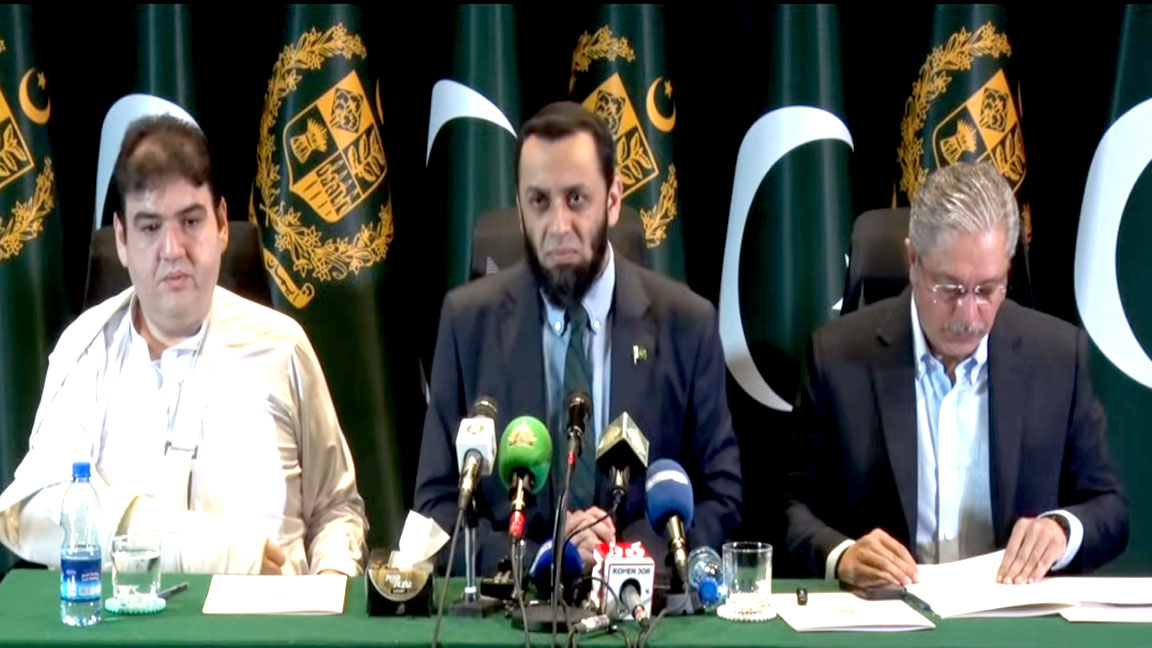
Addressing a press conference alongside Prime Minister’s Coordinator on Information for Khyber Pakhtunkhwa Affairs Ikhtiar Wali Khan and Peshawar Member Provincial Assembly (MPA) Jalal Khan, he said the province, once known for its natural beauty, peaceful environment and tourist attractions, had been deprived of the development and facilities its people deserved.
Comparing the provincial government’s performance with the federal government’s initiatives under Prime Minister Shehbaz Sharif, Tarar questioned how much time Chief Minister Sohail Afridi had devoted to governance.
He cited the inauguration of an IT park as an example of the federal government’s focus on development, saying the facility would support incubation centres, startups and private-sector growth while providing university students with opportunities to acquire technological skills. The project would also contribute to GDP growth and increase Pakistan’s IT exports, he added.
The minister said such initiatives required regular supervision, project reviews, and accountability. He also cited the federal government’s fuel relief scheme, saying more than 10 million people had benefited from it. Following public and media feedback, the government had removed the minimum fuel-purchase requirement and extended the motorcycle eligibility limit from 15 to 20 years. He added that repeat redemptions were counted separately from the number of beneficiaries.
In contrast, Tarar said, the KP government had failed to demonstrate comparable progress in healthcare, education, road infrastructure, and information technology. He asked the KP government to identify major hospitals, universities, highways, IT parks, skills-development centres, or other large-scale projects established for public benefit.
He said the province needed a comprehensive development strategy encompassing modern IT facilities from Lakki Marwat and Mardan to Nowshera and Swat, alongside new educational institutions, improved healthcare, and better roads infrastructure.
“The people of Khyber Pakhtunkhwa cannot be kept hostage to the politics of one individual,” he said, adding that millions of residents should not have to bear the consequences of a political struggle centred on securing the release of an incarcerated leader.
Atta Tarar said poverty, inadequate healthcare, limited educational opportunities, and deficient infrastructure had compounded the difficulties faced by residents, while the deteriorating security situation had further undermined their well-being.
Turning to terrorism, he said the return and resettlement of militants in settled areas following military operations, including Zarb-e-Azb and Radd-ul-Fasaad, had undermined efforts to restore peace. He maintained that militants had been brought back after security forces cleared areas of their presence.
“I have maintained from the beginning that they are the TTP’s B team,” he said, reiterating his position on PTI’s approach towards the banned Tehreek-e-Taliban Pakistan (TTP).
The minister questioned why terrorist attacks continued in Kohat, Hangu, and Dera Ismail Khan, saying the provincial government needed to explain its counterterrorism strategy and strengthen policing, surveillance and law enforcement capabilities.
He said the province had received Rs700 billion through the National Finance Commission (NFC) during the PTI government’s tenure, arguing that greater attention should have been given to public security and police modernisation.
Atta Tarar said the province needed Safe City projects, forensic laboratories, upgraded police facilities, and surveillance cameras at district entry and exit points, particularly in the newly merged districts of KP. A province-wide camera network, beginning with these districts, could improve monitoring and help prevent terrorist activity, he added.
He said other provinces had taken steps to strengthen their security infrastructure, while KP had failed to make comparable progress despite the resources available to it.
Referring to the sacrifices of police personnel and other victims of terrorism, Atta Tarar said the provincial leadership needed to answer to families who had lost loved ones in attacks. He specifically mentioned police constable Faheemullah, who was martyred in Kohat, and questioned what the government could tell his bereaved family.
He also referred to the deaths of children and rescue workers in terrorist incidents, including an incident at Umar Mala Check Post in Dera Ismail Khan, stressing that protecting citizens’ lives should be the government’s foremost responsibility.
The minister further questioned whether the Taliban’s ideology, which restricts women’s participation in public life, should be imposed on the province, noting that it did not provide women with equal opportunities in fields such as cricket.
Comparing provincial administrations, Tarar said the chief ministers of Punjab, Sindh, and Balochistan were actively engaged in development and administrative work. He questioned why the KP government was not devoting comparable attention to governance, adding that meetings focused on political agitation could not substitute for development planning and implementation.
He also criticised the former PTI chairman’s approach to governance, referring to frequent meetings with spokespersons and insufficient engagement with routine economic and administrative matters.
Recalling the former prime minister’s reported remarks about not knowing the exchange rate and relying on television coverage for information, Tarar questioned whether elected leaders were fulfilling their public responsibilities or promoting political confrontation.
He said the province’s financial resources should be directed towards public welfare, counterterrorism, policing, education, healthcare, and infrastructure rather than political protests. The people of Khyber Pakhtunkhwa, he added, deserved improved living standards, economic opportunities, and effective security rather than continued political confrontation.
During the press conference, a short video highlighting the sacrifices made in Khyber Pakhtunkhwa and the prevailing security situation was played.