Prime Minister’s Adviser on Industries and Production Haroon Akhtar Khan on Friday announced that a comprehensive package of actionable recommendations to address the mounting challenges facing Faisalabad’s power-loom sector would be submitted to Prime Minister Shehbaz Sharif within two days while main focus would be put on resolving taxation and electricity-related issues, easing industrial regulations and restoring competitiveness of key textile hub of the country.
Urgent recommendations to be submitted for revival of power loom sector within two days: PM Advisor
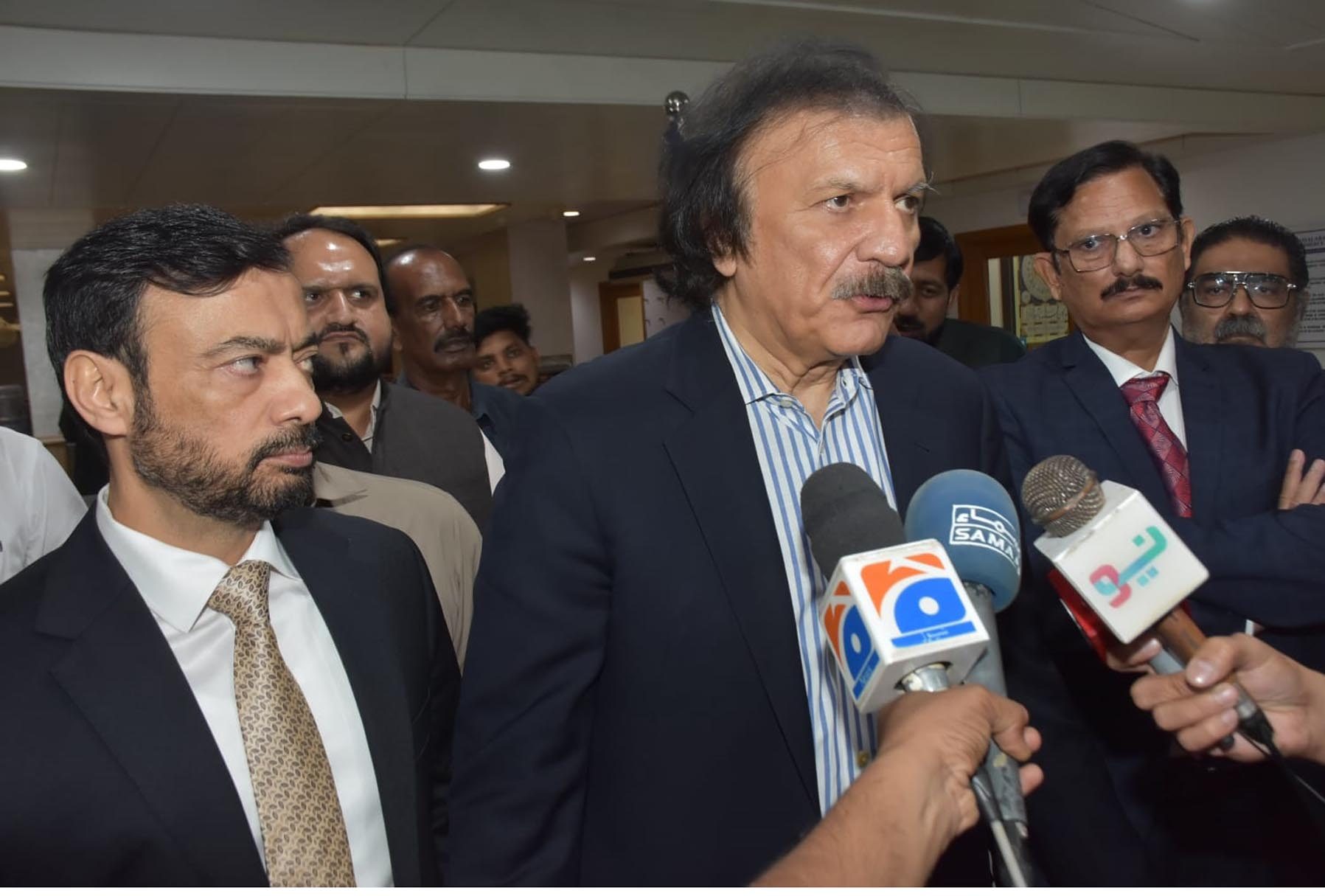
FAISALABAD, Oct 09 (APP): Prime Minister’s Adviser on Industries and Production Haroon Akhtar Khan on Friday announced that a comprehensive package of actionable recommendations to address the mounting challenges facing Faisalabad’s power-loom sector would be submitted to Prime Minister Shehbaz Sharif within two days while main focus would be put on resolving taxation and electricity-related issues, easing industrial regulations and restoring competitiveness of key textile hub of the country.
He was addressing a meeting at Faisalabad Chamber of Commerce & Industry (FCCI). He said that he visited FCCI on the directions of the Prime Minister to identify causes of the power loom sector’s decline and explore immediate measures for its revival.
He held consultations with the industrialists, business leaders and other stakeholders and said that the Prime Minister had specifically tasked him with assessing the deteriorating condition of the power loom sector and preparing practical proposals to bring relief to industrialists.
He said that his immediate priority was not long-term planning alone but identifying workable solutions that could help industries overcome their difficulties, accelerate production and stimulate business activity.
He said that the recommendations would be prepared after taking into account the concerns and proposals of industrialists and other relevant stakeholders and the same would be submitted to the Prime Minister within 48 hours.
He said that Prime Minister Shehbaz Sharif attached importance to listen to all stakeholders and encourage consultation with the business community and the bureaucracy to develop practical solutions.
The same consultative approach would be adopted to address industrial challenges of Faisalabad, he added.
Emphasizing the need to create a business-friendly environment, Haroon Akhtar Khan said that revival of the power loom sector, reform of industrial regulations and facilitation of businesses were top priorities of the government.
He assured the participants that taxation and electricity-related problems faced by power loom operators and other industrial units would be examined and taken up with the relevant authorities for appropriate remedies.
He said that Faisalabad was one of Pakistan’s major industrial and textile centers, making the revival of its manufacturing base particularly important for investment, employment generation and export growth.
The measures to reduce burden of avoidable regulatory hurdles and improve the operating environment for industries could help businesses expand production and compete more effectively in international markets, he added.
He also highlighted the importance of Small & Medium Enterprises (SMEs) and said that their development remained a priority for the Prime Minister.
He said that efforts had been made to make Small & Medium Enterprises Development Authority (SMEDA) a more dynamic and effective institution while significant initiatives in SME development, agricultural financing and housing were also expected.
Referring to the difficulties which the businesses face because of unnecessary inquiries and proceedings by different departments, he said that the government had taken notice of the issue.
The rules and procedures of several public institutions dated back nearly five decades and the same needed to be brought into line with present-day economic realities and industrial requirements, he added.
He said that proposals for regulatory reforms had already been placed before the cabinet, adding that the primary purpose of regulations should be to organize business activity, ensure transparency and improve industrial performance rather than force enterprises to shut down or subject entrepreneurs to unnecessary hardship.
He stressed that Pakistan needed a regulatory framework tailored to its own industrial conditions, business requirements and economic circumstances.
Some procedures had been adopted from European countries in the past, but reforms should now reflect local realities and support sustainable industrial growth, he added.
He said that clear and fair rules for inspections of industrial units were being developed to strike a balance between the powers of government inspectors and the rights of business owners.
Wherever permitted by law, the factories found to have deficiencies or procedural violations should be given reasonable time to make corrections instead of automatically facing immediate and severe legal action, he added.
He said that initiating criminal proceedings in every case was not necessarily the appropriate response and a fair system should allow businesses to rectify shortcomings while ensuring compliance with the law.
He clarified that the proposed approach was not intended to condone violations but to establish a balanced regulatory system that maintained industrial discipline while making it easier for businesses to operate.
A predictable and transparent regulatory environment would encourage entrepreneurs to invest, expand production and create employment opportunities, he added.
He further said that Pakistan’s relatively low-cost labor force had attracted interest from Chinese companies in investment and business activities, presenting opportunities to strengthen industrial base of the country.
He emphasized that improving the business environment would help translate such interest into greater investment and production capacity.
He also referred to his work with Federal Minister Jam Kamal, saying that they had jointly pursued various initiatives and worked on the formulation of several policies.
He said that Prime Minister had additionally assigned him responsibilities relating to a poultry exhibition in Lahore and consultations on the issues confronting the hosiery sector. It is reflecting broader focus of the government on resolving problems across different industries, he added.
He reiterated that the concerns raised by Faisalabad’s industrial community would be consolidated and presented to the Prime Minister, with recommendations for providing immediate relief, improving industrial efficiency and strengthening exports.
FCCI President Arif Ehsan Malik welcomed the PM Adviser and briefed him about the difficulties confronting the industrial and commercial community particularly the power loom industry, which plays a significant role in Faisalabad’s textile-based economy.
Prime Minister’s Coordinator for Commerce & Industries Rana Ehsan Afzal Khan, local traders and industrialists, and representatives and officials of various government departments were also present at the meeting.