The 10th Annual Microfinance Conference (AMC-X) concluded with a call for turning financial inclusion into economic progress by moving beyond financial access towards client progression, resilience and measurable economic outcomes.
KARACHI, Oct 09 (APP): The 10th Annual Microfinance Conference (AMC-X) concluded with a call for turning financial inclusion into economic progress by moving beyond financial access towards client progression, resilience and measurable economic outcomes.
The AMC-X brought together government, regulators, financial institutions, development partners and experts to discuss the next phase of financial inclusion in Pakistan while major conference outcomes were the expansion of the PAIDAR guarantee-based financing facility from PKR 200 million to PKR 4.2 billion and the signing of a PKR 1 billion financing facility between PMIC and NRSP, said a statement issued here on Friday.
Organized by Pakistan Microfinance Network (PMN) in collaboration with the United Nations Industrial Development Organization (UNIDO) under the EU-funded Poverty Alleviation and Inclusive Development Across Rural Sindh (PAIDAR) program, the two-day conference marked a decade of AMC as a national platform for policy dialogue, partnership and industry collaboration.
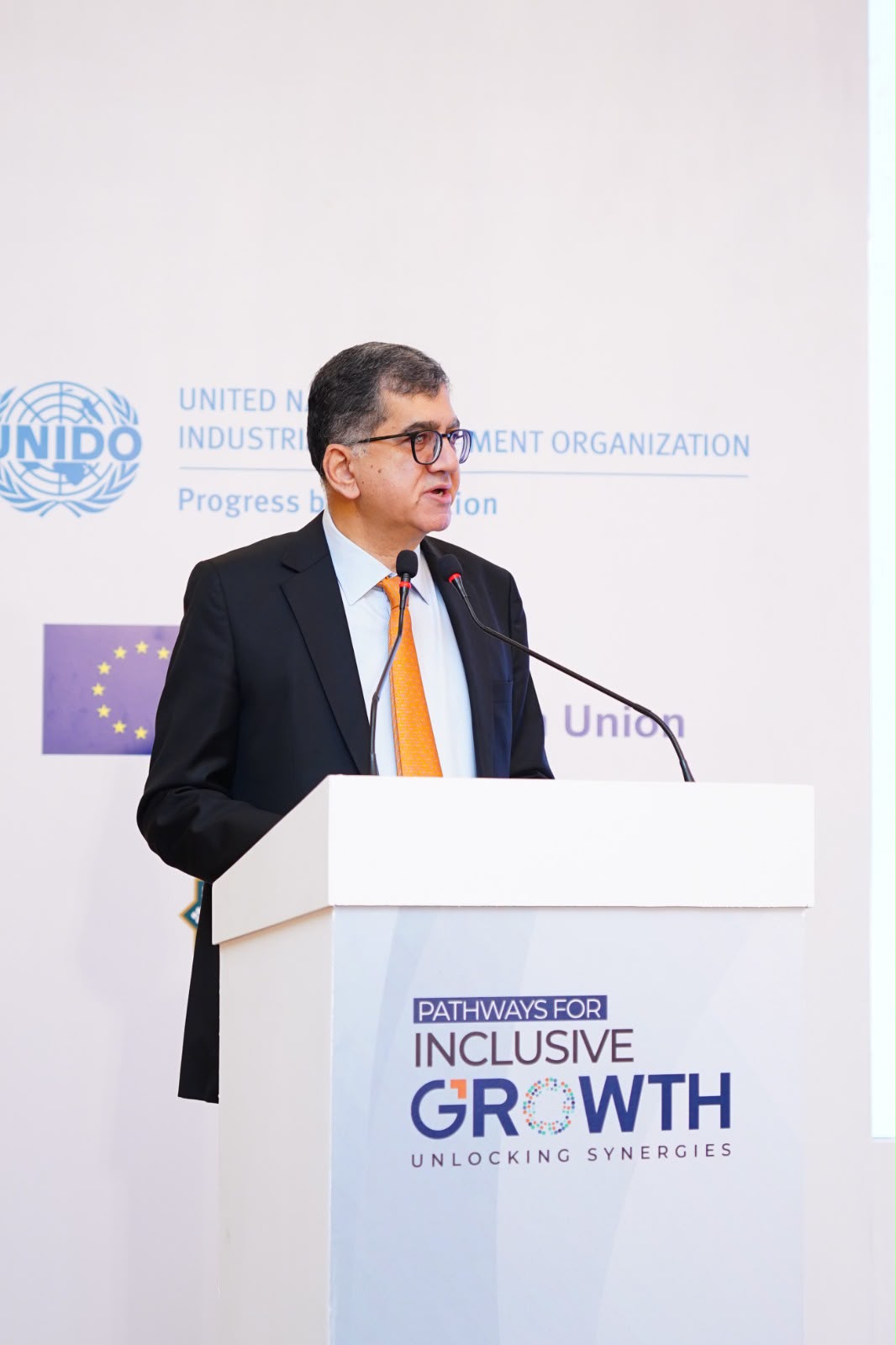
Under the theme “Pathways for Inclusive Growth: Unlocking Synergies,” discussions focused on moving beyond financial access towards client progression, resilience and measurable economic outcomes, particularly for women, farmers, microenterprises and underserved rural communities.
Addressing the conference virtually, Federal Minister for Finance and Revenue Senator Muhammad Aurangzeb, emphasized financial inclusion within Pakistan’s wider transition from macroeconomic stabilization towards sustainable growth, calling for greater use of cash-flow-based lending, digital credit tools and bringing more borrowers into formal finance, particularly in agriculture and SMEs.
“It’s not just how much you lend, how many borrowers, but also start measuring outcomes,” he said, highlighting borrower graduation, job creation and women’s economic participation as important measures of success.
Chairman PMN and President HBL Microfinance Bank, Amir Khan, earlier opening the AMC-X, called for further integration of microfinance into the wider financial system. He stressed that the sector’s next decade should be judged not only by
outreach but by whether clients are able to progress towards stronger businesses, assets and financial independence.
On Day Two, Head of Cooperation of EU Pakistan, Jeroen Willems, in his virtual address to the conference, assured continued collaboration in Sindh’s development journey while Chief Minister Sindh Syed Murad Ali Shah emphasized that financial inclusion must move from mere access to quality and relevance, with products designed around clients’ incomes, seasons and risks.
He highlighted the value of bringing government, lenders and development partners together early to address poverty and enterprise development more effectively and also welcomed the launch of the PAIDAR Innovation Labs, which will bring financial institutions and rural enterprises together to co-design and test products for underserved markets in Sindh.
A major conference outcome was the expansion of the PAIDAR guarantee-based financing facility with the National Credit Guarantee Company Limited (NCGCL). Under Phase II, financing will scale from PKR 200 million to PKR 4.2 billion, while participation will expand from 3 to 8 financial institutions to reach borrowers across Larkana, Badin, Thatta, Sujawal and Tharparkar districts of Sindh, with women targeted for at least 50% of allocated financing.
Another outcome was the signing of a PKR 1 billion financing facility between Pakistan Microfinance Investment Company (PMIC) and National Rural Support Program (NRSP) under the PMIC–KfW Renewable Energy Initiative through Microfinance (PRIME) Program.
Across the two days, AMC-X sessions examined emerging trends in microfinance, women’s access to finance, regulation, artificial intelligence, climate resilience, Islamic microfinance, digital platforms, liquidity and the future of the sector to 2035.
In a fireside discussion, Deputy Governor of State Bank of Pakistan Saleem Ullah, stressed the need for customer-centered innovation, commercial sustainability and a shift from measuring access towards meaningful financial inclusion.
AMC-X also recognized leading institutions through the Pakistan Microfinance Awards 2026 and honored individuals whose leadership has shaped Pakistan’s financial-inclusion landscape. HBL Microfinance Bank was awarded the best microfinance bank, while NRSP was awarded the best in non-banking microfinance company (NBMFC) category.
Dr. Muhammad Amjad Saqib was recognized for pioneering and scaling Akhuwat’s dignity based, interest free model of financial inclusion. Naved A. Khan was recognized for connecting mainstream banking leadership and financial-sector governance with innovative financing for microfinance institutions and underserved communities.