The US administration has accused Microsoft, Adobe and several Indian firms of abusing a US worker visa program and suspended them indefinitely from a longstanding immigration initiative, according to media reports.
US govt suspends Microsoft, several Indian IT firms from sponsoring Green Card over misuse
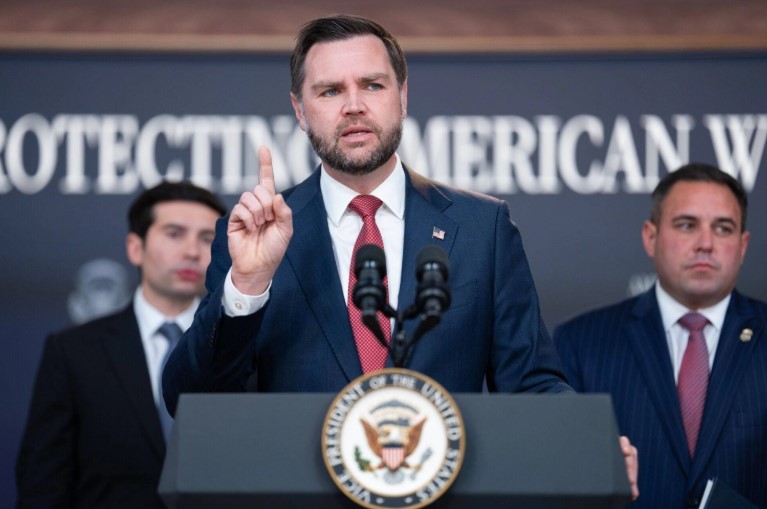
WASHINGTON, Oct 9 (APP):The US administration has accused Microsoft, Adobe and several Indian firms of abusing a US worker visa program and suspended them indefinitely from a longstanding immigration initiative, according to media reports.
The suspensions, announced by US Vice President JD Vance and Labor Secretary Keith Sonderling, also targeted information technology services giants Cognizant Technology Solutions, Infosys, Tata, Wipro, HCL Technologies and Capgemini. Those firms, either based in India or with large operations there, are often called outsourcers for their role in offering contract IT work to other businesses.
Vance was speaking as the U.S. Department of Labor announced it would suspend Microsoft, Adobe and several major Indian information technology companies from its Permanent Labor Certification program, meaning they cannot apply for permanent residency for their employees on H-1 B visas.
Around 70% of H-1B beneficiaries in 2025 were born in India, per official data.
The Indian companies affected by the ban include Cognizant, Infosys, Capgemini, Tata Consultancy Services, Wipro and HCL.
At a briefing in Washington, Sonderling said there were multiple federal investigations underway into the use of a system that allows U.S. employers to sponsor foreign workers for permanent residency.
“There has been no company in the United States, unfortunately, that has abused this system more than Microsoft,” Vance said.
“Microsoft is a great American company, and we have a great relationship with them, they do a lot of important things,” Vance said. “Our message to Microsoft is not that we want to harm your company. It’s that we want your company to thrive, but we want it to thrive by employing and empowering your fellow Americans.”
Silicon Valley’s reliance on foreign workers has long been a flashpoint in the debate over immigration. Since Trump’s return to office last year, the administration has seized on those concerns and pressed technology giants to do more to train and hire U.S. workers.
As part of that effort, Trump has moved to make it harder for companies to use H-1B visas to attract foreign talent, targeting a major source of workers for the industry. The changes have included proposals for $100,000 filing fees for most candidates and tightening the rules of how the H-1B visas are awarded in an annual lottery, giving priority to companies offering the highest salaries.
In his remarks, Vance urged the U.S.-based companies to shift their policies to employ more U.S. workers.
“Stop defrauding the American worker. Stop importing an indentured servant to do a job that an American worker would happily do,” the vice president said.
The moves announced by Vance and Sonderling take aim at the Permanent Labor Certification Program (PERM), which allows companies to sponsor a foreign national who has been working the U.S. under the H-1B and other visa holders to become a legal permanent resident — the first step to becoming a U.S. citizen.
For years, TCS and other Indian outsourcers were among the heaviest users of H-1B visas, regularly drawing fire for taking over the technology operations at major U.S. companies and then bringing in temporary Indian workers at salaries below their American counterparts.