ISLAMABAD, Oct 8 (APP):Deputy Prime Minister and Foreign Minister Mohammad Ishaq Dar and Foreign Minister of the Kingdom of Bahrain Dr. Abdullatif bin Rashid Al Zayani on Thursday discussed ways to further expand bilateral cooperation across areas of mutual interest, particularly in trade, economic and investment relations, as well as through engagement at multilateral fora. During a meeting here at the Ministry of Foreign Affairs, the two ministers reviewed Pakistan–Bahrain …
DPM/FM Dar, Bahrain’s FM discuss ways to expand bilateral ties in multiple sectors
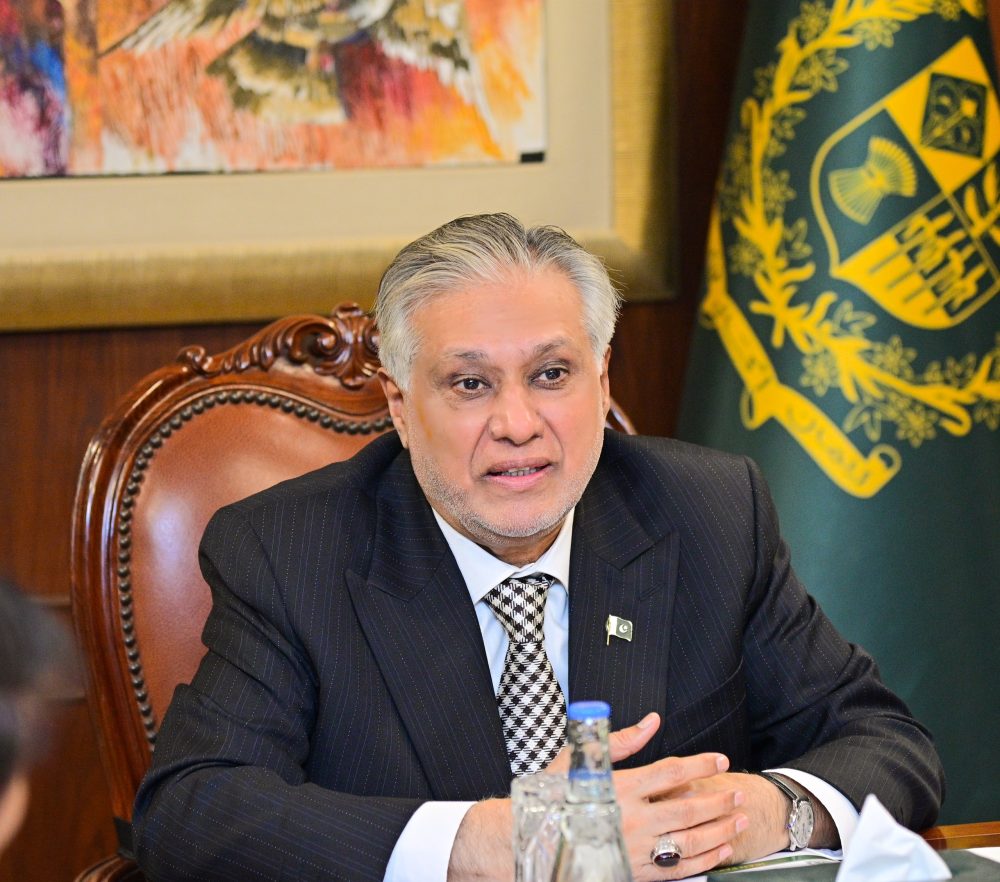
ISLAMABAD, Oct 8 (APP):Deputy Prime Minister and Foreign Minister Mohammad Ishaq Dar and Foreign Minister of the Kingdom of Bahrain Dr. Abdullatif bin Rashid Al Zayani on Thursday discussed ways to further expand bilateral cooperation across areas of mutual interest, particularly in trade, economic and investment relations, as well as through engagement at multilateral fora.
During a meeting here at the Ministry of Foreign Affairs, the two ministers reviewed Pakistan–Bahrain relations and expressed satisfaction at the positive momentum in high-level engagement between the two countries.
The two sides also exchanged views on regional and international developments of mutual interest and underscored that dialogue and diplomacy remain the most viable means of addressing challenges and resolving disputes.
Earlier, in his opening remarks at the third session of the Pakistan-Bahrain Joint Ministerial Commission, Deputy Prime Minister and Foreign Minister Senator Mohammad Ishaq Dar said all bilateral joint working groups under the Joint Ministerial Commission (JMC) had convened and held productive discussions. Recalling the leadership’s target to double bilateral trade to $1 billion within three years, he said one year had already elapsed and stressed the need to accelerate efforts to achieve the target within the remaining period.
Ishaq Dar welcomed progress towards the Gulf Cooperation Council-Pakistan Free Trade Agreement (GCCFTA), saying its conclusion would help both sides expand trade and achieve their economic objectives. He emphasized the need to complement government-to-government efforts with increased business-to-business engagement to promote imports, exports and investment.
The deputy PM/FM also appreciated Bahrain’s recruitment of 1,800 Pakistani personnel, including 30 retired army officers, for the Bahrain National Guard. He also welcomed the June 2026 memorandum of understanding between the Pakistan Coast Guards and Bahrain’s Ministry of Interior, under which 13 Pakistani officers and 37 soldiers joined the Bahraini Coast Guard.
He expressed appreciation for Bahrain’s hosting of around 134,000 Pakistanis, describing them as largely skilled professionals, and welcomed the ratification of the agreement on the transfer of sentenced prisoners in June 2026. He also thanked Bahrain for its continued support to Pakistani nationals.
Bahrain’s Foreign Minister Dr. Abdullatif bin Rashid Al Zayani said the meeting was taking place amid an unresolved regional crisis and threats to navigation through the Strait of Hormuz.
He strongly condemned the October 6 and 7 terrorist attacks on Abha International Airport and King Khalid International Airport in Saudi Arabia, as well as attacks by the Houthi militia on civilians and civilian facilities and assaults targeting Makkah and Madinah. He termed attacks on airports and civilian infrastructure a violation of international law and international humanitarian law.
Dr. Al Zayani said Bahrain considered Saudi Arabia’s security integral to its own and the GCC’s security and expressed full solidarity with Riyadh.
He appreciated Pakistan’s constructive role under Prime Minister Shehbaz Sharif in hosting talks in Islamabad and promoting dialogue and de-escalation. He also highlighted close Pakistan-Bahrain coordination at the UN Security Council, particularly on international law, peace, security, maritime security and freedom of navigation.
He said the JMC meeting provided an opportunity to review progress, follow up on high-level visits and translate the momentum of bilateral relations into practical cooperation.