Federal Minister for Railways, Hanif Abbasi on Wednesday said the Pakistan Tehreek-i-Insaf (PTI)’ stance was contributing to igniting political instability in the country backed by external conspiracy.
PTI imposed on Pakistan under ‘special agenda’ to destabilise country: Abbasi
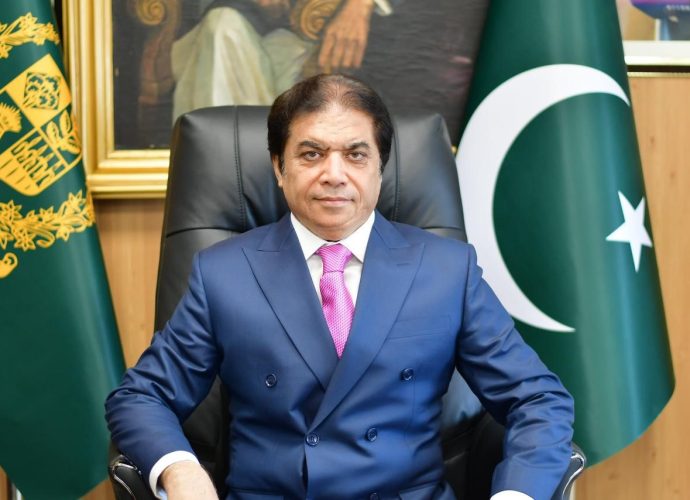
ISLAMABAD, Oct 07 (APP): Federal Minister for Railways, Hanif Abbasi on Wednesday said the Pakistan Tehreek-i-Insaf (PTI)’ stance was contributing to igniting political instability in the country backed by external conspiracy.
Addressing a press conference, Abbasi said those pursuing the agenda knew Pakistan, being a nuclear power, could not be defeated through conventional means and therefore sought to create internal instability and law-and-order problems.
The minister warned political workers against becoming “fuel” for political leaders, saying workers had repeatedly suffered during political confrontations.
Referring to incidents including October 10, 2014, May 9, October 4-5, 2024, and November 26, he questioned whether PTI leaders had remembered the workers who lost their lives or faced imprisonment during such incidents.
“Did they ever go and apologise to their families? Did they make any arrangements for their children or elderly parents?” he asked.
Abbasi said political workers who were jailed after violating the law and Constitution had been left to face their cases on their own.
He urged workers of all political parties to consider whether they were sacrificing their lives for leaders who did not even remember their names.
The minister said political parties had the right to organise campaigns and hold protests, but they must remain within the law and Constitution.
He said some political activities had targeted state institutions responsible for protecting the country and its people.
Abbasi said India and Israel, along with elements based in Afghanistan, were involved in a nexus aimed at promoting terrorism in Pakistan.
He said militants operating from Afghanistan were receiving financial and intelligence support from outside the country and were being used to carry out attacks in Pakistan.
He said terrorism was the main source of livelihood for certain elements in Afghanistan and that militants were being supported to export terrorism into Pakistan.
The minister also questioned the performance of the Khyber Pakhtunkhwa government, asking why the province had not adequately addressed education, healthcare and security issues despite receiving substantial funds.
He urged the people of Khyber Pakhtunkhwa not to allow political interests to divide the country along ethnic or provincial lines.
Abbasi said Rs 8,500 billion had been provided to Khyber Pakhtunkhwa between 2010 and 2025 and questioned how the money had been utilised.
He said the provincial government should explain what it had done with the funds and what responsibilities it had fulfilled.
The minister also criticised the provincial government over the deteriorating security situation.
He said around 6,200 incidents of terrorism had taken place in Khyber Pakhtunkhwa over the past two years, resulting in around 1,200 deaths.
He added that 37 suicide attacks had taken place during the period, including 14 in the first year, and said 97 per cent of the suicide attackers were from Afghanistan.
Abbasi said terrorism had caused deaths, property damage and disruption to businesses in the province.
He questioned why adequate resources had not been allocated to strengthen the provincial police and Counter-Terrorism Department (CTD).
He said the provincial police had demanded Rs 42 billion to strengthen the CTD, establish bulletproof checkpoints and walls, and acquire vehicles, weapons and other equipment.
He said only Rs 1.2 billion had been released despite official papers showing that Rs 42 billion had been spent.
The minister accused the provincial government of failing to prioritise the security of police personnel and said corruption had affected the utilisation of funds.
He said the federal government could not allow a situation in which different groups controlled different areas and “warlords” emerged.
Abbasi urged the people of Khyber Pakhtunkhwa to hold their provincial government accountable for its performance.
He said the federal government would continue to support the people of the province.
Abbasi said the Pakistan Armed Forces represented all ethnic and provincial communities, including Pashtuns, Punjabis, Sindhis, Baloch, Kashmiris and Saraikis.
He also criticised the Khyber Pakhtunkhwa leadership for failing to attend the funerals of police and security personnel killed in terrorist attacks.
He referred to personnel killed on August 16, August 23 and September 14, and questioned whether senior provincial leaders had attended their funerals.
The minister said the KP governor and security officials could be seen attending such funerals, but said other provincial leaders were absent.
Abbasi again appealed to political leaders and workers not to use ethnic and regional identities to advance their political interests.
He warned that attempts to divide Pakistan along provincial or ethnic lines would benefit the country’s enemies.
He said the people of Khyber Pakhtunkhwa, like citizens in other parts of the country, deserved protection, peace and economic opportunities.
He said the armed forces were fighting militants and sacrificing their personnel in the process.
He said Pakistan’s soldiers belonged to every province and ethnic group and were fighting for the security and sovereignty of the country.
He said the provincial government had failed to use available resources effectively to strengthen law-enforcement and counterterrorism institutions. He said the state had a responsibility to protect the lives, property and honour of its citizens.
Abbasi said the government would take whatever steps were necessary to protect citizens from terrorism, adding that the country could not afford further instability.