State Minister for Interior Talal Chaudhry on Tuesday said a consensus on terrorism had been reached during negotiations between the government and the opposition, but the process failed at the final stage after new conditions were presented by the Khyber Pakhtunkhwa (KPK) Chief Minister.
Minister says PTI agreed on terrorism, talks collapsed at final stage after KP CM’s intervention
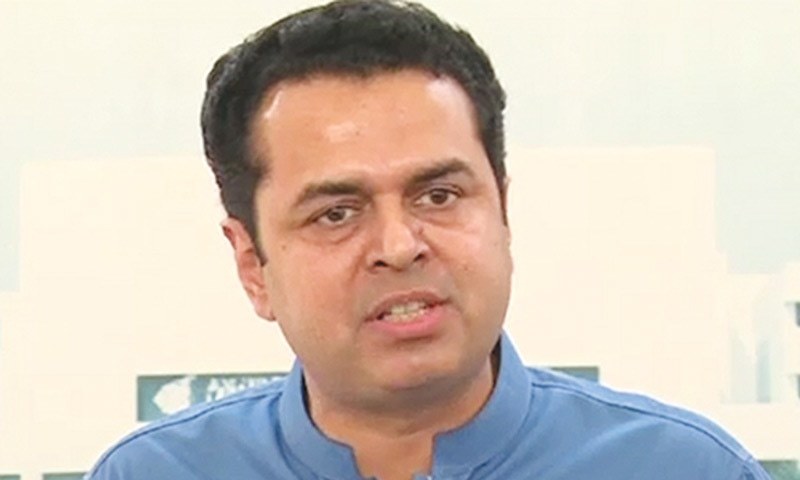
ISLAMABAD, Oct 6 (APP):State Minister for Interior Talal Chaudhry on Tuesday said a consensus on terrorism had been reached during negotiations between the government and the opposition, but the process failed at the final stage after new conditions were presented by the Khyber Pakhtunkhwa (KPK) Chief Minister.
He said the government had agreed to provide political space to the opposition in exchange for full cooperation on efforts to eliminate terrorism.
Addressing a press conference, Talal Chaudhry said negotiations between the government and the opposition had progressed positively on both terrorism and political issues before breaking down at the last moment.
He said discussions began with the government’s position on terrorism, the implementation of the National Action Plan,
and the KP government’s role in supporting counter-terrorism efforts.
Talal said that on the first day of talks, both sides moved forward and agreed on the basic structure of an agreement covering terrorism and political matters. The opposition team later traveled to Peshawar and met the KP Chief Minister, senior party leaders, and ministers. After those consultations, they returned and assured the government that there was complete agreement on the federal government’s position regarding terrorism.
He said Mohsin Naqvi had requested even before the talks that a representative of the KP government, preferably the Chief Minister himself, should participate in the negotiations. However, opposition leaders repeatedly assured the government that they had full authority from the party and the KP government and that any agreement reached would
be accepted by all concerned.
Talal said that after receiving confirmation that there was full agreement on terrorism, Mohsin Naqvi traveled to Lahore
and briefed Prime Minister Shehbaz Sharif. The Prime Minister was informed that PTI and the KP government had agreed to cooperate on terrorism-related matters, he added.
He said the Prime Minister directed the government team to provide the opposition with maximum political space. Talal quoted the Prime Minister as saying that Pakistan’s security and the elimination of terrorism were more important than political gains or losses. He said the Prime Minister emphasized that political parties could gain or lose popularity, but national security must remain the top priority.
He said, terrorism-related issues had already been settled by the second day of negotiations and discussions then focused on political matters. He said agreement was eventually reached on political points as well, and a first draft
of the deal was completed.
Talal described the development as the beginning of a “Charter of Democracy 2” and said the government’s biggest achievement would have been bringing PTI onto a shared national narrative against terrorism.
He said the government viewed cooperation against terrorism as more important than political competition. Referring to
the sacrifices of security personnel, he said government leaders regularly attend funerals of soldiers and officers who
lose their lives in operations against militants. He said these sacrifices made national unity against terrorism a priority.
Talal said the first draft of the agreement was finalized around 9:00 pm. Mohsin Naqvi then met the Prime Minister and
the President to brief them on the progress. He said some amendments were later proposed, consensus was reached again, and differences over a few words were resolved.
However, he said the situation changed during the final phase of the talks. According to him, opposition representatives remained in a separate room for some time while maintaining contact with the KP Chief Minister. When they returned, they informed the government that consensus could not be achieved despite the negotiations being conducted with patience and good faith.
Talal argued that the campaign against terrorism was not the agenda of any one party but a national consensus. He pointed to National Action Plan 1 and National Action Plan 2, saying both were supported and implemented by
governments led by PTI’s own leadership.
During the press conference, Talal also played video clips containing statements from political and military leaders.
The clips stressed concerns over terrorist attacks originating from Afghan territory, called for cooperation against Fitna
al-Khawarij, highlighted support for Pakistan’s security forces, and emphasized action against those involved in terrorism.
He questioned whether the National Action Plan was ever directed against a particular province or ethnic group and
noted that PTI governments themselves had supported and implemented the policy. He further questioned why PTI
political activities continued in areas affected by terrorism while other political parties, journalists, government
employees, civil society members, and ordinary citizens faced security threats.
Talal also raised questions regarding PTI’s opposition to the use of drones in security operations. He argued that
drones are now an important tool in modern warfare, internal security operations, and surveillance, and questioned whether preventing their use would weaken the security forces in the fight against terrorism.
Concluding his remarks, Talal Chaudhry said that once consensus on terrorism had been achieved, the government provided political space to the opposition in line with the Prime Minister’s instructions. He claimed that after receiving those assurances, the opposition had no remaining reason to withdraw from cooperation against terrorism but ultimately chose to walk away from the negotiations.