HYDERABAD, Oct 03 (APP):The land of Hyderabad, Sindh, holds within it many chapters of history that are gradually fading from view as time passes. In some places, the crumbling walls of ancient buildings bear witness to the past; elsewhere, old graveyards preserve the memories of those long gone; and there are historic monuments about which the new generation knows very little. The Miani Mosque, located in the Miani Forest of …
Heritage experts seek special attention to renovate historical Miani Mosque in Hyderabad
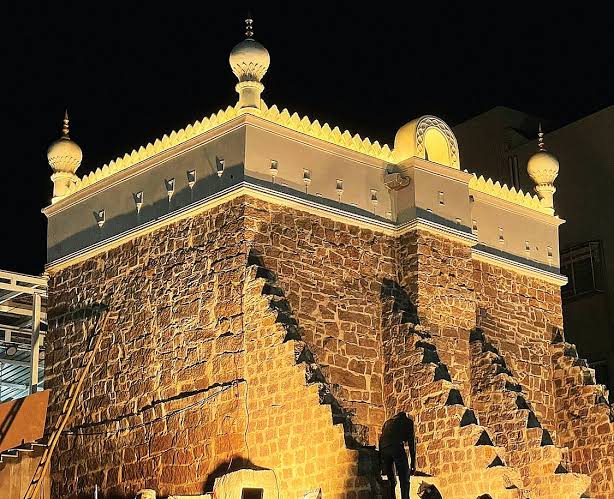
HYDERABAD, Oct 03 (APP):The land of Hyderabad, Sindh, holds within it many chapters of history that are gradually fading from view as time passes.
In some places, the crumbling walls of ancient buildings bear witness to the past; elsewhere, old graveyards preserve the memories of those long gone; and there are historic monuments about which the new generation knows very little.
The Miani Mosque, located in the Miani Forest of Hyderabad, is one such ancient structure that deserves special attention due to its unique architectural style and historic location.
According to a Heritage report on social media, the Miani Mosque features a towering dome, arched gateways, walls made of antique bricks, and the soaring arches of its interior. While the exterior shows the ravages of time and weather, the interplay of light and shadow within the interior accentuates its ancient architectural design.
This building is not merely a place of worship but also a vital means of understanding the historical context of the region.
However, it is impossible to ascertain the exact era of its construction based solely on its outward appearance; a systematic study of the building materials, brickwork, plaster, inscriptions, and historical documents is required.
To determine the historical significance of the Miani Mosque, one must look at the region’s
past.
The name “Miani” holds a prominent place in the history of Sindh, particularly in connection with the events of 1843 when Sindh was ruled by the Talpur dynasty, while the British East India Company was expanding its political and military influence in the region.
Tensions between the two sides escalated, eventually culminating in a decisive battle at Miani on February 17, 1843. Under the command of General Charles Napier, the British army engaged the Talpur forces and emerged victorious.
This victory paved the way for British occupation of Sindh, ushering in a new era in the region’s political history.
Subsequently, on March 24, 1843, a significant battle took place at Dubbo, where the forces of Mir Sher Muhammad Khan Talpur confronted the British army.
Both these engagements hold fundamental importance in the historical sequence of the establishment of British rule over Sindh.
A significant aspect of the historical background associated with the Miani Mosque is the graveyard located nearby.
According to available records of historical heritage, this graveyard is linked to the Talpur soldiers who lost their lives in the Battle of Miani; locally, it is known as the “Graveyard of the Martyrs.” Due to this association, the mosque and its surroundings are viewed within the context of Sindh’s military history. However, it is important to understand that the graveyard’s historical association does not automatically establish the mosque’s date of construction or the identity of its founder.
Similarly, attributing any specific grave within the cemetery to a soldier from the Battle of Miani would require individual historical evidence.
During research into the Miani Mosque, the most critical questions concern its founder and the year of its construction. Currently, available verifiable information does not establish the year the mosque was built, who commissioned it, or who the architect was. While the possibility of a connection to the Talpur era warrants further research, it would be incorrect to declare the patronage of any specific Talpur Mir as a historical fact without authentic evidence.
The presence of the mosque, the graveyard, and the war memorial in this area makes Miani significant for the study of Sindh’s religious, funerary, and political history.
Rather than viewing these sites merely in relation to one another, it would be more beneficial to compile the history of each site based on distinct, authentic evidence.
The preservation of this historic structure also demands special attention.
A heritage inventory published in 2017 noted the dilapidated state of certain sections of the mosque, citing crumbling plaster and damage to the interior.
As this is an older report, a definitive conclusion regarding the mosque’s current condition cannot be drawn from it alone; a fresh on-site inspection is required.
Nevertheless, the report underscores the importance of timely documentation and the implementation of practical measures to safeguard such structures.
The first step toward preserving the Miani Mosque should be a detailed survey of its current condition.
This process should involve measuring the structure, photographing the domes, arches, and walls, identifying the construction materials, and documenting any inscriptions. If repairs to any section become necessary, they should be carried out under the supervision of heritage conservation experts to ensure the original architectural structure remains intact.
The adjacent graveyard and surrounding historical features should also be included in this preservation effort; in this way, not only the building itself but also its associated historical setting can be safeguarded.