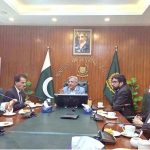
Federal Minister for Planning, Development and Special Initiatives Professor Ahsan Iqbal on Wednesday proposed transforming the CAREC Institute into a trusted regional knowledge clearing house to turn the experience of member countries into practical solutions for shared economic and development challenges.
Ahsan proposes regional knowledge hub to strengthen CAREC cooperation
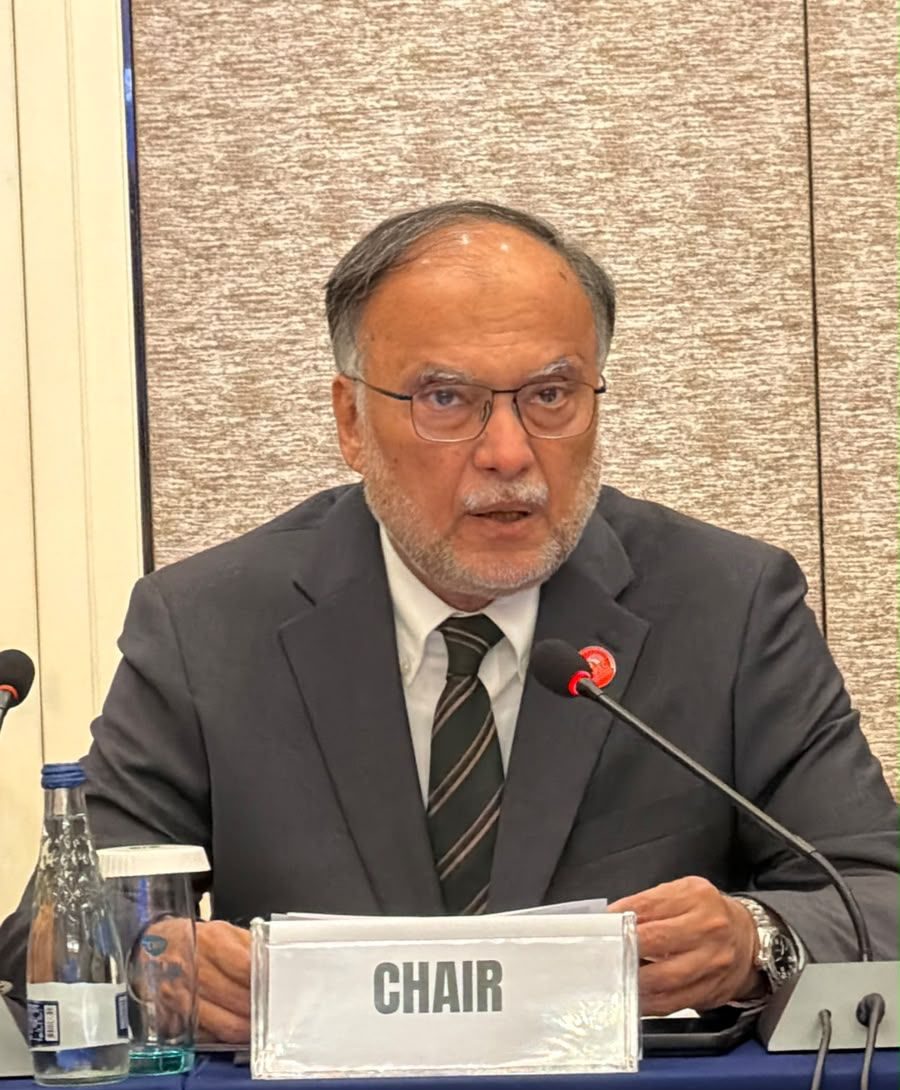
ULAANBAATAR (Mongolia), Sep 30 (APP): Federal Minister for Planning, Development and Special Initiatives Professor Ahsan Iqbal on Wednesday proposed transforming the CAREC Institute into a trusted regional knowledge clearing house to turn the experience of member countries into practical solutions for shared economic and development challenges.
Addressing the Governing Council meeting of the CAREC Institute in Ulaanbaatar, he said that after 25 years of building roads, railways, energy links and trade corridors, the next phase of regional cooperation must focus not only on moving goods and energy but also on sharing knowledge and expertise across borders.
He proposed a living CAREC knowledge platform and expert directory bringing together regional data, policy tools, project evaluations and practical experiences, enabling policymakers to quickly identify what had worked elsewhere and adapt successful approaches to their own challenges.
The minister also proposed establishing a CAREC peer exchange facility to connect officials facing similar challenges, particularly in trade facilitation, digital customs, logistics, renewable energy, disaster response, agriculture and skills development.
He stressed that the Institute’s work should be demand-driven, closely linked to policy decisions and measured by practical impact.
Ahsan Iqbal called for stronger regional cooperation on coordinated border management, interoperable digital trade systems and shared climate-risk information, saying that common challenges required coordinated regional responses.
As Pakistan prepares to assume the CAREC Chairmanship in 2027, he said Pakistan would place knowledge exchange at the centre of its agenda and work with CAREC member countries, the Institute and the Asian Development Bank on economic corridors, trade facilitation, digital connectivity and climate resilience.
He offered Pakistan’s experience with the Pakistan Single Window as an early case for regional peer exchange and said Pakistan would encourage its universities and research institutions to join the CAREC regional knowledge network.
“The first twenty-five years of CAREC showed what we can build together. The next twenty-five should show what we can learn together, and what that learning allows us to achieve,” Ahsan Iqbal said.
He stressed that the CAREC Institute should evolve from being primarily a knowledge producer into a regional hub that gathers, tests, shares and puts knowledge to work, helping member countries translate evidence into practical policy and regional action.