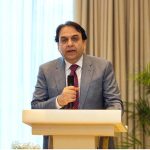
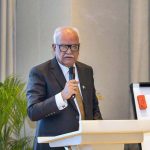
Sindh Chief Minister Syed Murad Ali Shah, while reviewing the proposed state-of-the-art Special Security Unit (SSU) Headquarters and Security Training Academy at Chowkandi, Karachi, aimed at transforming Sindh Police’s specialised security and counterterrorism training capabilities in line with national and international standards, approved the project in principle Rs 9.5 billioin but directed the P&D and Home Departments to review its master plan and submit their recommendations for placing the project …
CM approves Rs 9.5 bln SSU headquarters, security training academy at Chowkandi

KARACHI, Sep 29 (APP): Sindh Chief Minister Syed Murad Ali Shah, while reviewing the proposed state-of-the-art Special Security Unit (SSU) Headquarters and Security Training Academy at Chowkandi, Karachi, aimed at transforming Sindh Police’s specialised security and counterterrorism training capabilities in line with national and international standards, approved the project in principle Rs9.5 billioin but directed the P&D and Home Departments to review its master plan and submit their recommendations for placing the project before the relevant forums for approval.
Presiding over a meeting at the CM House on Tuesday, the chief minister reviewed the comprehensive proposal for the integrated security complex and directed the Home Department, Police Department, Planning & Development Department and Finance Department to expedite all procedural requirements so that Phase-I of the project could commence during the current financial year.
Home Minister Ziaul Hassan Lanjar, Chief Secretary Asif Hyder Shah, Home Secretary Iqbal Memon, Inspector General of Police Javed Alam Odho, Principal Secretary to CM Agha Wasif, Chairman P&D Najam Shah, Finance Secretary Asghar Memon, and senior police officers attended the meeting.
The proposed project seeks to consolidate command, training, accommodation and support infrastructure of the SSU at a single purpose-built campus spread over approximately 29.43 acres at Chowkandi, providing modern facilities for more than 3,000 male and 300 female personnel.
The CM was briefed that existing police training facilities in Sindh were designed for an earlier era and no longer adequately address modern security challenges, particularly specialised commando training, urban warfare preparedness, simulation-based exercises and advanced tactical operations.
The proposed academy will include a dedicated headquarters building, academic and administrative blocks, auditoriums, research and development facilities, libraries, computer laboratories, classrooms, indoor and outdoor firing ranges, tactical training complexes, simulation rooms, combat training zones, K-9 training facilities, a SWAT challenge obstacle course, sports and fitness infrastructure, accommodation blocks, officers’ residences and comprehensive welfare facilities.
Speaking on the occasion, Chief Minister Murad Ali Shah said that strengthening the capacity of Sindh Police remained one of the government’s foremost priorities.
“The nature of security threats has evolved significantly over the years. Our security institutions must be equipped with modern infrastructure, advanced training systems and specialised capabilities to effectively respond to emerging challenges,” he said.
The chief minister observed that the proposed facility would serve as a centre of excellence for specialised security training and would substantially enhance the operational readiness of the SSU.
“This project is not merely about constructing buildings; it is an investment in the long-term security architecture of Sindh. It will strengthen institutional capacity, improve professional standards and ensure sustained preparedness against evolving threats,” he said.
He emphasised that a dedicated training academy would enable SSU personnel to receive continuous professional development through modern simulation-based training and specialised tactical exercises aligned with international best practices.
The meeting was informed that the master plan envisages accommodation facilities for thousands of personnel, dining halls capable of serving 1,000 persons at a time, an indoor sports and training complex with a swimming pool and gymnasium, a medical dispensary, conference facilities, armory storage, driving simulators, parade grounds and secure parking areas.
Special security features including a CCTV command centre, controlled access systems, watch towers and bomb-proof perimeter walls have also been incorporated into the design.
Reviewing the financial framework, the chief minister was informed that the total estimated project cost stands at Rs9.497 billion, while Phase-I, costing approximately Rs4.483 billion, has been proposed for implementation over the next two financial years. The Home Department proposed an initial reappropriation of Rs500 million to commence priority works.
Murad Ali Shah endorsed the phased implementation strategy, observing that it would allow the government to undertake critical development works while maintaining fiscal discipline and safeguarding funding for other priority projects.
“Security and development go hand in hand. We must strengthen our institutions while ensuring prudent management of public resources. The phased approach is a practical way forward,” he said.
The chief minister directed the Finance Department and Planning & Development Department to complete technical and financial scrutiny of the project on priority and report to him.
Concluding the meeting, the chief minister reaffirmed the provincial government’s commitment to building a modern, professional and technologically equipped police force capable of addressing future security challenges.
“The safety and security of our citizens depend on the strength and preparedness of our law-enforcement institutions. This academy will help produce highly trained, mission-ready personnel and further enhance Sindh’s overall security preparedness,” he said.
The chief minister granted in-principle approval to the project and directed the concerned departments to initiate the necessary procedures to commence Phase-I within the current financial year.