Pakistan can significantly strengthen its water security and unlock the full potential of its water resources through improved governance, scientific knowledge, modern technology and stronger institutional capacity, IWMI Country Representative Dr Muhammad Ashraf said.
By Hina Durrani
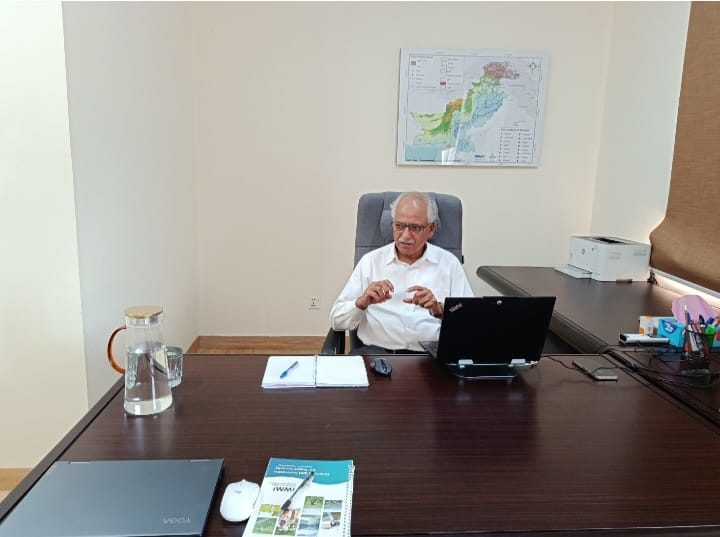
ISLAMABAD, Sep 28 (APP): Pakistan can significantly strengthen its water security and unlock the full potential of its water resources through improved governance, scientific knowledge, modern technology and stronger institutional capacity, IWMI Country Representative Dr Muhammad Ashraf said.
In an interview with APP, he said that water resource development, efficient water management and sound governance were key pillars for ensuring sustainable use of the country’s water resources.
He said Pakistan had considerable opportunities to further develop its water resources through dams, small and mini dams, ponds and groundwater recharge initiatives.
“These resources can support hydropower generation, irrigation, domestic needs, ecological requirements and recreational activities,” he said.
Dr Muhammad Ashraf emphasised that efficient water management could further enhance the benefits derived from existing water resources, particularly in agriculture.
He said modern technologies, including satellite-based information, climate data and sensor-based systems, could help farmers determine crop water requirements and improve irrigation scheduling.
“Technology can tell us whether a crop needs water and how much water it requires,” he said, highlighting the potential of data-driven agriculture to promote efficient water use and improve productivity.
He said efficient management was equally important in the domestic water sector, where better storage, treatment, distribution and consumption practices could help conserve both water and energy.
Highlighting the importance of governance, he said effective water governance provided the foundation for developing and managing water resources in a sustainable manner.
He said good governance required a comprehensive knowledge base, appropriate legal instruments, capable institutions, professional skills and effective implementation mechanisms.
“Knowledge is the foundation of water governance,” he said, stressing the importance of reliable scientific information for informed decision-making.
Referring to groundwater management, Muhammad Ashraf said detailed information about aquifers, groundwater depth, recharge rates, water quality and sustainable extraction capacity could help establish effective licensing and management mechanisms.
He said groundwater regulation could be supported by clear criteria covering tube-well locations, extraction levels, pumping schedules and sustainable recharge, while maintaining adequate reserves could strengthen resilience against drought and climate-related water challenges.
IWMI representative said laws and policies should be aligned with scientific knowledge and evolving water requirements, while institutions responsible for implementation should be equipped with adequate authority, technical expertise and professional capacity.
He said strengthening institutional skills would enable relevant organisations to effectively translate scientific knowledge and legal frameworks into practical water management solutions.
Muhammad Ashraf said coordinated efforts involving government institutions, researchers, technical experts, farmers and communities could contribute to more efficient and sustainable water management.