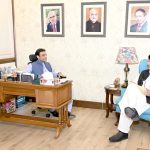
Vice President Pakistan Peoples Party (PPP) Senator Sherry Rehman, on the occasion of World Contraception Day, called for sustained investment in girls’ education, women’s economic participation, quality healthcare and voluntary family planning, stressing that Pakistan’s demographic challenge must be addressed as a critical human capital and development priority.
On World Contraception Day, Sherry Rehman calls for greater investment in family planning, girls’ education

ISLAMABAD, Sep 26 (APP): Vice President Pakistan Peoples Party (PPP) Senator Sherry Rehman, on the occasion of World Contraception Day, called for sustained investment in girls’ education, women’s economic participation, quality healthcare and voluntary family planning, stressing that Pakistan’s demographic challenge must be addressed as a critical human capital and development priority.
Senator Rehman said Pakistan’s current population stood at 259.3 million, with an annual population growth rate of 3.7 percent and a total fertility rate of 3.6 children per woman. She noted that 17.3 percent of couples have unmet family planning needs, while contraceptive use remains at only 34 percent.
She stressed that Pakistan’s rapidly growing population, projected to reach approximately 390 million by 2050, was placing increasing pressure on the country’s resources, public services and human capital. What was once viewed primarily as a potential “demographic dividend” risked becoming a “demographic drag” in the absence of adequate investment in education, healthcare, employment and family planning.
Senator Rehman had strongly endorsed the federal government’s decision in the 2026–27 federal budget to abolish the 18 percent General Sales Tax (GST) on contraceptives, reducing the tax from 18 percent to zero. She said the measure was an important step towards improving the affordability and accessibility of contraceptive commodities for families across Pakistan.
She stressed that contraceptive commodities should be treated as essential health products, adding that financial and other barriers to accessing them must be removed.
“Easy, affordable and quality access to voluntary family planning is essential to reducing unintended pregnancies, improving maternal and child health, and ensuring the well-being of families. The removal of the 18 percent GST on contraceptives is an important step towards making these essential health products more accessible.”
Senator Rehman said Pakistan continues to face significant challenges in maternal and infant health, with approximately 11,000 maternal deaths every year, while 62 infants die before reaching their first birthday for every 1,000 live births.
She noted that increasing contraceptive use from 34 percent to 52 percent could potentially save the lives of approximately 3,800 mothers and 140,000 children, underscoring the importance of ensuring access to voluntary family planning services, information and quality reproductive healthcare.
She further noted that approximately 3.8 million abortions take place annually in Pakistan, with an estimated rate of 66 abortions per 1,000 women, reinforcing the need to reduce unintended pregnancies through accessible, voluntary and quality family planning services.
Turning to Pakistan’s human capital crisis, Senator Rehman said approximately 26 million children are out of school, while poor nutrition and high levels of childhood stunting continue to undermine the country’s development prospects.
She said girls’ education and skills development were particularly important for building human capital and improving family and health outcomes.
“Women’s education and economic empowerment improve family decision-making and health outcomes. A girl who receives an education and a woman who has access to decent employment and economic opportunity are not only better equipped to make informed decisions about their own lives, but also contribute directly to the well-being of their families and the strength of the economy.”
Senator Rehman pointed out that under the current population trajectory, Pakistan would require an additional 104 million jobs, 15.5 million houses and 57,000 primary schools by 2040.
She said these projections demonstrated the scale of the challenge facing Pakistan and the need to integrate population planning with economic and social development.
“Population planning cannot be separated from the larger development agenda. We need more girls in school, more women in the workforce, better healthcare, adequate nutrition and voluntary family planning services. These are interconnected investments in Pakistan’s human capital and future.”
Senator Rehman called for stronger primary healthcare systems, greater public awareness, affordable family planning services and continued removal of financial barriers to contraceptive access.