ISLAMABAD, Sep 24 (APP):Federal Minister for Information Technology and Telecommunication Shaza Fatima Khawaja on Thursday welcomed the establishment of Huawei Pakistan’s Repair Centre GSC in Islamabad, saying the facility would create high-skilled employment, reduce foreign exchange outflows and help Pakistan move from being a consumer to a builder of technology. Addressing the inauguration ceremony of the Huawei Pakistan Repair Centre GSC, she thanked Huawei’s leadership and team for establishing the …
Huawei repair centre to create high-skilled jobs, save forex: Shaza
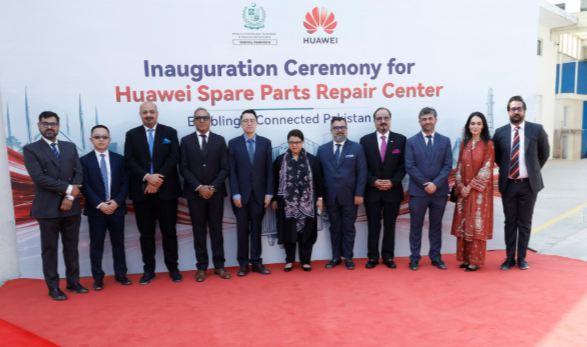
ISLAMABAD, Sep 24 (APP):Federal Minister for Information Technology and Telecommunication Shaza Fatima Khawaja on Thursday welcomed the establishment of Huawei Pakistan’s Repair Centre GSC in Islamabad, saying the facility would create high-skilled employment, reduce foreign exchange outflows and help Pakistan move from being a consumer to a builder of technology.
Addressing the inauguration ceremony of the Huawei Pakistan Repair Centre GSC, she thanked Huawei’s leadership and team for establishing the facility in Pakistan.
She said the government’s policy certainty, along with the support and attention of Prime Minister Muhammad Shehbaz Sharif and the federal cabinet towards the IT and telecom sectors, had helped create an environment encouraging international companies to expand their footprint in Pakistan.
The minister said the newly inaugurated repair centre was the first of its kind in Pakistan, particularly for telecom hardware equipment.
She said Pakistan had made significant progress in software and IT-enabled services, but the establishment of a hardware repair facility represented an important development for the country’s telecom sector.
“Today, the equipment, whether it’s wireless or any other telecom-related equipment, if it’s being repaired here today, and it’s being repaired to international standards, then tomorrow, for the whole world, our children can make this facility available,” she said.
Shaza Fatima said telecom equipment was not merely important for social media or communications but had become a lifeline, particularly during disasters and periods of network downtime.
She said local repair facilities would reduce the time required to send equipment abroad for repairs and bring it back, while also helping save foreign exchange.
The minister said the government wanted Pakistanis to become builders and users of technology rather than remaining only consumers.
“We want that Pakistanis are not just consumers of technology; we should be builders of technology, we should repair, use, and drive. And this is where we’re heading towards now,” she said.
She expressed hope that the centre, which currently has a repair capacity of 10,000 pieces, would be expanded further.
She said the facility currently had the capability to repair around 180 different types of equipment and expressed hope that its scope would continue to grow.
She said the facility could eventually serve not only Pakistan but the wider region, given Huawei’s extensive presence in telecom networks globally.
Talking about Huawei’s role as a technology partner of Pakistan, the minister said the company had been working in the country since 1998, including its contribution to the Karakoram Digital Highway.
She said Huawei had evolved from providing digital infrastructure to supporting equipment repair, maintenance and skills development in Pakistan.
The minister recalled that during the Prime Minister’s first visit to China in 2024, the Pakistani delegation had visited Huawei’s headquarters and requested the company to train young Pakistanis.
She said the training programme was still continuing, with Huawei academies operating in around 230 universities and more than 100 academies providing training.
“This is not just a technology partner, it is an improvement of human resources,” she said, adding that Huawei remained one of Pakistan’s key technology partners.
She said the government valued its partnership with China and sought to further strengthen cooperation in technology, skills development and digitalisation.