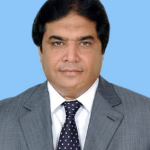
Federal Minister for Finance and Revenue, Senator Muhammad Aurangzeb, on Friday outlined Pakistan’s progress in restoring macroeconomic stability and the government’s priorities for moving towards investment, capital formation, exports and private sector-led growth.
Aurangzeb outlines economic progress at JP Morgan Conference

ISLAMABAD, Sep 18 (APP):Federal Minister for Finance and Revenue, Senator Muhammad Aurangzeb, on Friday outlined Pakistan’s progress in restoring macroeconomic stability and the government’s priorities for moving towards investment, capital formation, exports and private sector-led growth.
The minister was addressing the “Fireside Chat: Pakistan: External Shocks Remain Manageable” at the J.P. Morgan Emerging and Frontier Markets Opportunities Conference in London
The conference saw strong interest in Pakistan from leading global institutional investors and top money managers, with 55 global investment funds engaging with the Pakistani delegation through a number of one-on-one meetings and a full investor session.
The Finance Minister outlined six priorities: strengthening macroeconomic stability; promoting sustainable, productivity- and export-led growth; continuing structural reforms; shifting from aid to trade and investment; expanding access to finance; and preparing Pakistan for the digital economy, including blockchain and Web 3.0.
He said that over the last three years, Pakistan’s overriding task had been to restore macroeconomic stability and rebuild credibility. He noted that significant progress had been made in fiscal consolidation, external sector stability, inflation, debt management and international market access. GDP growth had recovered to 3.7 percent in FY26, while the fiscal deficit had declined to 2.6 percent of GDP, a multi-year low, with the country recording a primary surplus for the third consecutive year.
The Finance Minister said the objective was now to ensure that stability became durable and provided the foundation for a different growth model, one increasingly driven by investment, productivity, exports and private sector activity rather than short-term, consumption-led expansion.
Highlighting improvements in Pakistan’s sovereign debt position, the Finance Minister said the government had pursued active liability management, extended domestic debt maturities and reduced refinancing risks. He said these measures, together with fiscal consolidation, were strengthening the overall sovereign balance sheet and supporting greater confidence in Pakistan’s economic outlook.
Senator Muhammad Aurangzeb said Pakistan had also re-established access to international capital markets through diversified instruments and investor pools.
He referred to the inaugural award-winning Panda Bond issuance and Pakistan’s subsequent record US$3 billion dual-tranche Eurobond transaction, noting strong investor demand for both.
Aurangzeb said privatisation was being pursued as part of a broader restructuring of the role of the State, with progress across PIA, DISCOs, financial institutions, other SOEs and airport operations.
He said access to finance was also being expanded across SMEs, agriculture and housing so that macroeconomic stability could translate into greater credit, investment and productive activity. He stressed that public balance sheets alone could not finance Pakistan’s next phase of growth and that private capital would increasingly have to play a larger role.
On external economic engagement, the Finance Minister said Pakistan was moving decisively from traditional dependence on aid towards stronger trade and investment flows.
On the occasion, the Governor State Bank of Pakistan, Jameel Ahmad, highlighted the strengthening of Pakistan’s external position, noting the improvement in foreign exchange reserves, the quality of reserve accumulation, rising remittance flows and strengthening external-sector fundamentals.
He also highlighted the growing contribution of Roshan Digital Account flows, external sector reforms and the strengthening of financial sector fundamentals.
He noted the progress made in containing inflation over the years, adding that these developments had contributed to greater macroeconomic stability and strengthened the foundations for sustainable growth and investment.