Adviser to the Prime Minister on Privatization and Chairman Privatization Commission Muhammad Ali on Thursday said Pakistan needed to make three strategic moves, change the way it grows, build productive scale and compete globally to translate macroeconomic stability into sustainable and higher economic growth.
Privatization adviser outlines measures to achieve higher economic growth
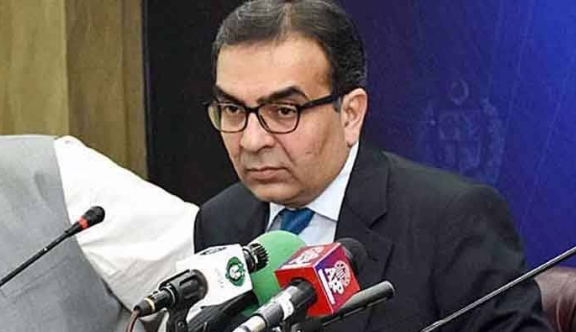
ISLAMABAD, Sep 17 (APP):Adviser to the Prime Minister on Privatization and Chairman Privatization Commission Muhammad Ali on Thursday said Pakistan needed to make three strategic moves, change the way it grows, build productive scale and compete globally to translate macroeconomic stability into sustainable and higher economic growth.
Speaking at the 9th Edition of the Leaders in Islamabad Business Summit, he argued that lower inflation, declining interest rates and currency stability were important achievements, but stability should not be treated as the final objective. Pakistan now needs to focus on building a productive economy capable of meeting the demands of its growing population.
He said the window created by macroeconomic stability should be utilized to build a productive platform for Pakistan of 2050 and beyond, stressing that only a higher growth rate could provide the resources needed to meet the requirements of a rapidly growing population.
He said Pakistan, with a population of around 240 million, was projected to reach about 390 million by 2050, with nearly half of the population expected to live in urban centres. This, he said, would create greater pressure on infrastructure, human resources and other resources required for economic development.
He said the state had fundamental responsibilities, including education, healthcare, security, justice and social protection, all of which required substantial resources. Therefore, every rupee allocated to businesses, infrastructure or financing losses of state-owned enterprises carried an opportunity cost for other public priorities.
The minister said the next phase required a stronger partnership between the state and the private sector, with a different approach to mobilizing capital, managing assets and building productive capacity.
The first move is to change Pakistan’s growth model. Historically, economic growth has relied heavily on government spending, domestic consumption and periodic external financing.
Ali argued that future growth should instead be driven by private investment, productivity, exports and private capital.
Where government ownership remains necessary, public-private partnerships can help bring private expertise and investment.
He cited the privatization of PIA as an example of the need for coordinated government action and investment in an enterprise’s revival.
The second move is to build productive scale. Pakistan has a large domestic market, a young population, entrepreneurs and growing urban centres, but he stressed that scale alone cannot create prosperity without productivity.
He emphasized that the country needs greater investment in education, skills, technology, management, innovation and infrastructure. This is particularly urgent as technologies such as electric vehicles, renewable energy, artificial intelligence, robotics and digital systems rapidly reshape global economies.
He said Pakistan must develop the capacity not only to consume these technologies but also to produce and export them. A skilled workforce and greater participation of women could turn Pakistan’s demographic structure into an economic advantage.
The third move is to become globally competitive.
Ali urged Pakistani businesses to look beyond the domestic market and focus on producing, competing and selling internationally.
Pakistan already has competitive talent, especially in technology and services, but this potential must expand into manufacturing, agriculture, logistics, defence technology and other emerging industries.