State Minister for Finance Azhar Bilal Kiyani reiterated here on Thursday that structural governance reforms, localized resource allocation, and private-sector partnership were critical to breaking Pakistan’s historic boom-and-bust economic cycles and expanding the tax net.
Kiyani links sustainable growth with localized governance, private sector empowerment
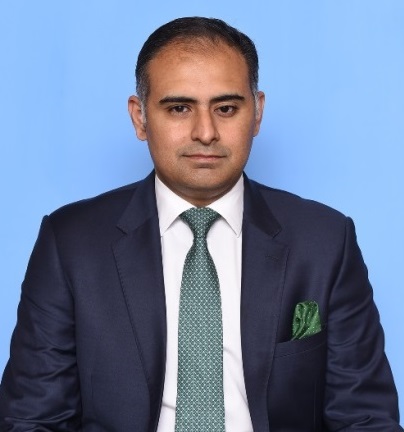
ISLAMABAD, Sep 17 (APP):State Minister for Finance Azhar Bilal Kiyani reiterated here on Thursday that structural governance reforms, localized resource allocation, and private-sector partnership were critical to breaking Pakistan’s historic boom-and-bust economic cycles and expanding the tax net.
Addressing the ‘Leaders in Islamabad Business Summit’, the Minister outlined the government’s multi-pronged strategy to ensure sustainable economic growth, reduce the cost of doing business, and empower small and medium enterprises (SMEs).
Kiyani stressed that sustainable foreign exchange reserves and long-term economic stability depend on aggressively increasing exports.
Highlighting recent budget measures, he noted that the government has consulted extensively with the private sector to create fiscal space, resulting in reduced super-tax burdens for SMEs, lowered advance and minimum tax rates on export proceeds, and the continuation of preferential tax regimes for IT exports.
Furthermore, the government has embarked on an ambitious tariff reduction program to lower raw material input costs and drive technological upgrading.
Addressing structural and governance bottlenecks, Kiyani argued that daily service delivery issues—such as rural infrastructure and local administrative delays—cannot be resolved without decentralizing resources and authority down to the grassroots level.
He noted that regularizing coordination between federal and provincial development allocations was essential for optimizing public spending.
On the critical issue of documentation and tax expansion, the minister highlighted a newly designed, simplified Aasan Tax Scheme co-created alongside retail trade representatives.
Acknowledging that approximately 3.5 out of 4.5 million retailers remain outside the tax net, Kiyani stated that enforcement alone cannot achieve scale without stakeholder ownership.
The new framework introduces progressive penalties for non-compliance while fostering direct marketplace engagement between federal revenue officials and trade leaders to drive voluntary registration.
Kiyani reaffirmed that empowering the private sector, agriculturalists, and SMEs through enhanced access to credit remains front and centre in the government’s agenda to unlock broad-based national prosperity.