PESHAWAR, Sep 13 (APP):The Garhi Chandan plantation, launched in 2014 under the ambitious Billion Tree Tsunami project, has gradually transformed the once-barren landscape into a thick green forest, with the number of trees increasing from around three million saplings to an estimated 30 million trees in 12 years. The remarkable growth of the plantation has increased forest cover, provided habitat for wildlife and birds, created livelihood opportunities for local communities …
Garhi Chandan plantation transformed from 3m plants into 30m tree forest in 12 years
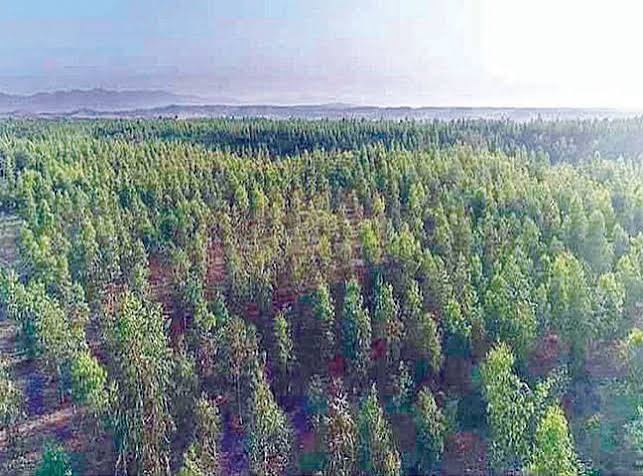
PESHAWAR, Sep 13 (APP):The Garhi Chandan plantation, launched in 2014 under the ambitious Billion Tree Tsunami project, has gradually transformed the once-barren landscape into a thick green forest, with the number of trees increasing from around three million saplings to an estimated 30 million trees in 12 years.
The remarkable growth of the plantation has increased forest cover, provided habitat for wildlife and birds, created livelihood opportunities for local communities and contributed to environmental improvement in the area.
Divisional Forest Officer (DFO) Peshawar, Muhammad Shakeel said the transformation was result of sustained plantation, protection, community involvement and proper management of the forest over the years.
He said the survival and natural regeneration of trees had significantly increased the overall tree population at Garhi Chandan, turning the plantation into a mature forest.
Sharing details of the initiative, he said around 30 lakh saplings were planted over 2,800 hectares (around 56,000 kanals) of barren land under the project, which had now grown into an estimated 30 million trees.
The forest is surrounded by a population of around 30,000 people, including nearly 9,000 residents of Garhi Chandan and 15,000 to 20,000 people from the Azhakel and Mattani areas. The plantation land is owned by local communities, he added.
Shakeel said the Garhi Chandan site was completely barren when it was selected for plantation as local people were neither using the land for agriculture nor growing grass there.
He said an innovative approach was adopted during the plantation by sowing seeds of indigenous tree species, particularly in open spaces between the planted saplings, which helped promote natural regeneration.
He said the biggest challenge faced by the Forest Department after establishing the plantation was ensuring its long-term sustainability.
After four years of maintenance by the Forest Department, Village Development Committee were formed and a 10-year sustainability plan was developed in consultation with local community.
Under the sustainability plan, local communities were provided technical training in pruning and de-branching of trees to create space for further growth and regeneration.
Shakeel said an earning of Rs.12.5 million was generated through pruning and de-branching of trees, of which 20 percent was reserved by the community for a Resource Development Fund to finance activities aimed at improving and maintaining the forest.
He said the expected revenue from the forest this year was around Rs.70 million, of which Rs.10 million would be allocated to the Resource Development Fund for maintenance and development activities.
The remaining Rs. 60 million would be distributed among community members on a per-family basis, he added.
The DFO said income generated from the forest was improving the livelihoods of local communities while also creating a financial incentive for them to protect and sustain the plantation.
He said after expiry of the 10-year sustainability plan, a new agreement would be signed with local communities for continued protection and management of the forest.
Apart from providing livelihood opportunities, the forest had also reduced local communities’ dependence on firewood purchased from markets, Shakeel said.
He said around 30,000 people in the surrounding areas previously purchased firewood from local markets at Rs.700 to Rs. 800 per 40 kilograms, whereas their firewood requirements were now being met from the forest, providing an additional source of income for the community.
“Growing forests and creating livelihood opportunities for local communities are among the key objectives of the Forest Department, and the Garhi Chandan initiative has demonstrated the practical implementation of these goals,” Shakeel said.