ISLAMABAD, Sep 10 (APP):The Pakistan Red Crescent Society (PRCS), in collaboration with the German Red Cross (GRC), has equipped more than 30 journalists and field reporters from Pakistan’s climate vulnerable regions with advanced skills in climate science, data driven reporting, mobile journalism and human centred storytelling through a two day national training workshop in Islamabad, aimed at strengthening the quality, credibility and impact of climate journalism in the country. Organised …
Red Crescent train journalists for stronger climate reporting
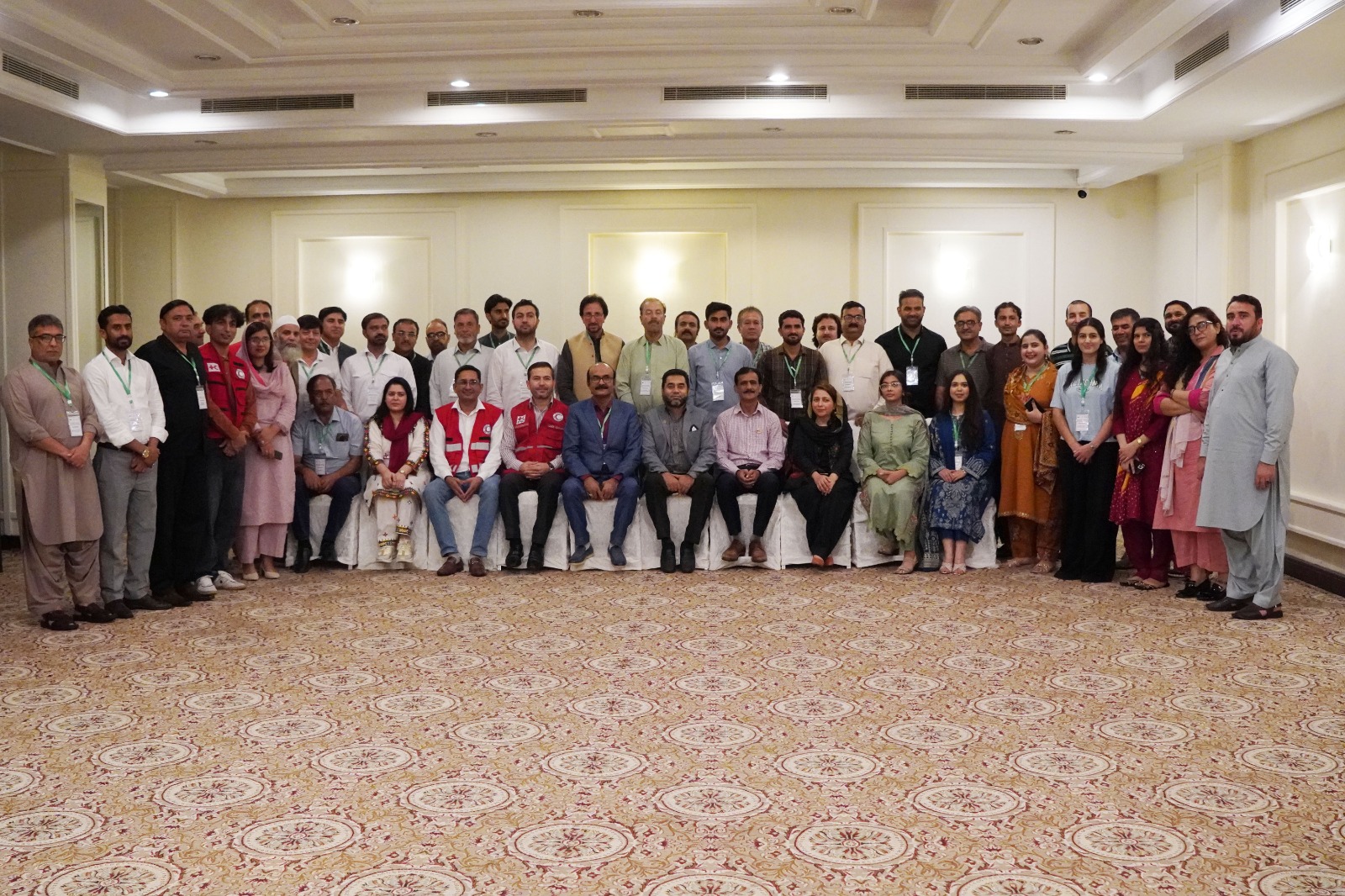
ISLAMABAD, Sep 10 (APP):The Pakistan Red Crescent Society (PRCS), in collaboration with the German Red Cross (GRC), has equipped more than 30 journalists and field reporters from Pakistan’s climate vulnerable regions with advanced skills in climate science, data driven reporting, mobile journalism and human centred storytelling through a two day national training workshop in Islamabad, aimed at strengthening the quality, credibility and impact of climate journalism in the country.
Organised by the PRCS Climate Change Adaptation and Media & Communication departments in collaboration with the GRC, the workshop brought together journalists from Gilgit-Baltistan, Azad Jammu and Kashmir, Punjab, Sindh and Khyber Pakhtunkhwa regions which are increasingly exposed to floods, extreme weather, environmental degradation and other manifestations of a rapidly changing climate.
The initiative sought to bridge the gap between complex climate realities and public understanding by enabling journalists to transform scientific evidence, climate data and community experiences into compelling, accessible and consequential stories.
The training commenced with an overview of its objectives by Sajjad Ali Kandhir and Ghulam Murtaza of the PRCS Climate Change Adaptation Programme.
German Red Cross Transition Delegate in Pakistan Asif Aman and Programme Coordinator Ghulam Rasool Farooqui welcomed the participants and underscored the pivotal role of the media in shaping public discourse, informing communities and amplifying the urgency of climate action.
Head of PRCS Media & Communication Sher Zaman provided an insight into the Red Cross and Red Crescent Movement, tracing the history, mandate and humanitarian scope of the PRCS.
The session was facilitated by Assistant Director Media & Communication Rehan Ali.
Climate and environmental journalist Uneeba Waqar led intensive sessions on climate science, contemporary reporting approaches, story development and climate policy.
Participants were encouraged to move beyond conventional disaster reporting and explore the deeper social, economic and human dimensions of climate change.
The sessions placed particular emphasis on solutions journalism, encouraging reporters to spotlight locally driven responses, resilience-building initiatives and practical interventions alongside the challenges confronting vulnerable communities.
On the second day, broadcast journalist and mobile journalism trainer Abdul Razak Khatti conducted a dedicated session on mobile journalism, demonstrating how smartphones and digital platforms can be harnessed to capture powerful visuals, produce credible field reports and rapidly bring climate stories to audiences.
The workshop also explored climate data journalism, identifying hidden climate angles in everyday news, developing compelling human centred narratives and cultivating credible sources.
Through practical exercises, participants developed story ideas, presented their work and received editorial feedback designed to sharpen their reporting, strengthen narrative structure and improve factual rigour.
The participating journalists warmly appreciated the PRCS and German Red Cross for organising a timely, professionally structured and highly relevant initiative, particularly at a time when climate change is reshaping communities and transforming the nature of news reporting.
Participants commended the PRCS team for its meticulous coordination, engaging training methodology and strong emphasis on practical journalism.
They said the workshop went well beyond conventional classroom lectures by equipping reporters with hands on techniques to decode climate science, interpret data, identify compelling story angles and produce credible, solutions oriented narratives.
The journalists particularly praised the PRCS Climate Change Adaptation and Media & Communication teams for creating an interactive and intellectually stimulating learning environment that encouraged critical thinking, constructive dialogue and the exchange of field experiences.
They said the combination of technical knowledge, practical exercises and expert guidance significantly enhanced the value of the training.
Participants also appreciated the inclusion of experienced professionals in climate reporting and mobile journalism, saying the sessions had given them new perspectives and practical tools to strengthen their field reporting and storytelling.
They said the workshop had broadened their understanding of climate journalism and would help them move beyond event driven reporting towards deeper, evidence-based stories that capture the human consequences of climate change while also highlighting resilience, innovation and locally driven solutions.
The journalists further lauded the PRCS for bringing together media professionals from diverse and climate sensitive regions of the country, describing the workshop as a valuable platform for exchanging experiences and understanding the distinct climate challenges confronting communities across Pakistan.
They expressed particular appreciation for the leadership and vision of the PRCS management and the dedication of the organising team, describing the initiative as a significant investment in strengthening Pakistan’s climate journalism landscape.
They hoped the programme would evolve into a sustained platform for capacity building, professional networking and stronger collaboration between humanitarian organisations and the media.
PRCS Chairperson Farzhana Naek in her message said climate action must be rooted in solutions that reflected the realities of communities on the frontline of climate change.
“Journalists have an important role in bringing these solutions to the forefront, highlighting practical actions and giving greater visibility to communities that are already responding to climate challenges,” she said, appreciating the PRCS and German Red Cross for equipping journalists with the skills to report climate issues in ways that could contribute to meaningful action at the local level.
MS Naek said informed journalism could help elevate community voices, illuminate workable solutions and foster greater public understanding of the climate crisis.
PRCS Secretary General Muhammad Abaidullah Khan said the consequences of climate change are no longer a distant threat but a growing reality affecting communities, livelihoods and lives across Pakistan.
“Strengthening the capacity of journalists to understand climate issues and translate them into clear, relevant and compelling stories can help connect communities, decision makers and stakeholders with the actions and solutions needed on the ground,” he said.
The workshop underscored the increasingly strategic role of journalism in Pakistan’s climate response, where credible reporting can serve not merely as a channel of information but as a catalyst for accountability, preparedness, resilience and informed climate action.
The initiative also reaffirmed the PRCS’s commitment to strengthening partnerships with the media and investing in professional capacity building to ensure that the voices, experiences and solutions of climate vulnerable communities receive the sustained attention they deserve.