he Khyber Pakhtunkhwa Education Department is placing special emphasis on bringing out-of-school children back into the formal education system and alongside expanding the capacity of existing schools is also focusing on creating alternative learning opportunities through distance learning and Non-Formal Education (NFE).
KP govt focusing on alternative learning opportunities to bring back out-of-school children
PESHAWAR, Sep 04 (APP):The Khyber Pakhtunkhwa Education Department is placing special emphasis on bringing out-of-school children back into the formal education system and alongside expanding the capacity of existing schools is also focusing on creating alternative learning opportunities through distance learning and Non-Formal Education (NFE).
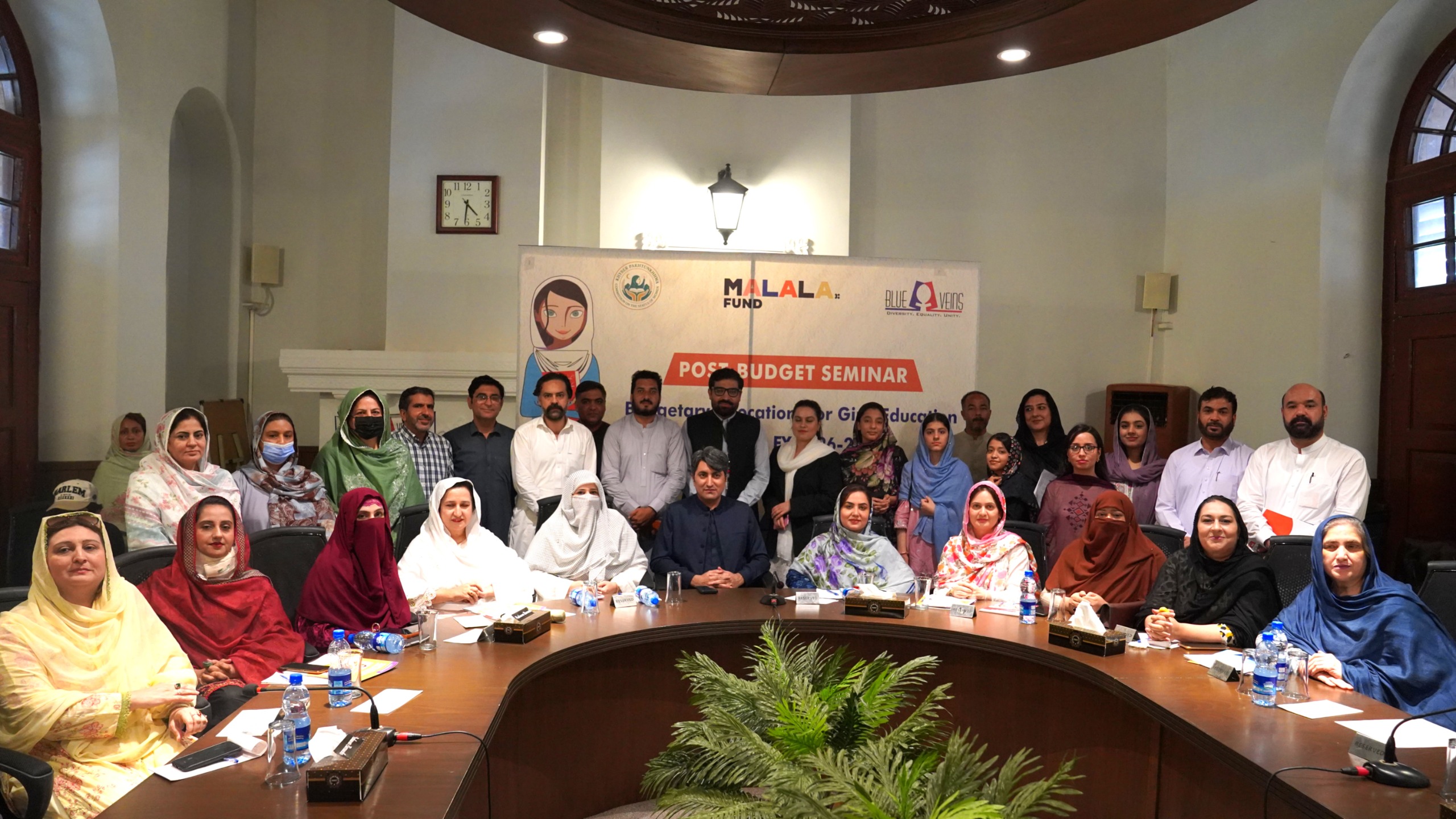
This was stated by Muhammad Ejaz Khalil, Procurement Specialist, Elementary and Secondary Education Department KP, while addressing a post-budget seminar on girls’ education organized by the Khyber Pakhtunkhwa Commission on the Status of Women (KPCSW) in collaboration with Blue Veins Organization here Thursday.
The seminar was attended by Secretary Khyber Pakhtunkhwa Assembly, Syed Wiqar Shah, parliamentarians, representatives of the Education Department, civil society and media.
Speaking on the occasion, Ejaz Khalil said various schemes had been launched under the 2026 budget to increase student enrolment, with a special focus on girls’ education.
He said 73 new projects had been included in the Education sector for fiscal year 2026-27 at a total cost of Rs125,142.348 million, with an allocation of Rs. 3,893.582 million for the first quarter.
He said the government was working on construction of around 10,000 additional classrooms to enhance the accommodation capacity of existing educational institutions.
Similarly, he said, work was underway to convert 50 mosques into government primary schools, enabling children in the respective areas to access formal education through existing religious institutions.
Around 300 Accelerated Learning Programme (ALP) centres have also been established across Khyber Pakhtunkhwa to provide educational opportunities to out-of-school and over-age children through the Elementary and Secondary Education Foundation (ESEF) and partner organizations, he added.
Ejaz Khalil further said that, in collaboration with the World Food Programme (WFP), a monthly stipend of Rs. 500 for each female student had been restored in the merged districts to encourage girls’ enrolment and retention in schools.
He said that, in pursuance of the directives of former Chief Minister Ali Amin Gandapur, work was also underway to increase the stipend from Rs.500 to Rs.1,000 per month.
Earlier, in her welcome address, Chairperson KPCSW Dr. Sumera Shams said the objective of the seminar was to discuss budgetary allocations for fiscal year 2026-27, development schemes and the implementation of initiatives related to girls’ education.
She said that, following concerns raised by stakeholders and representatives of civil society organizations, the government had increased the Education budget by around 11 percent during the current fiscal year.
“However, our responsibility is to monitor the utilization of the allocated funds to ensure effective implementation of the schemes and ensure that their benefits reach students, particularly girls,” she added.
Programme Manager Blue Veins Qamar Naseem highlighted the importance of increasing enrollment in Khyber Pakhtunkhwa in view of the large number of children remaining out of school.
According to the 2023 population census, around 4.9 million children are out of school in the province, of whom approximately 2.9 million are girls, he said.
He said around 52 percent of girls aged 5 to 16 were not attending school, while among those enrolled, around 60 percent did not reach secondary level.
Qamar Naseem said bringing the estimated 4.9 million out-of-school children into the education system would require construction of around 15,000 new schools, which could take a considerable period of time. Even with full availability of resources, he added, the provincial government could construct only around 300 schools annually. He welcomed the Education Department’s announcement of a Multi-Sectoral Response policy involving different stakeholders to increase student enrollment.
He also cited the public-private partnership policy of the Sindh government under which private schools are engaged to provide additional space for students, suggesting that similar approaches could help address the challenge in KP.
Speaking on the occasion, Secretary KP Assembly Syed Wiqar Shah appreciated the efforts of KPCSW and Blue Veins for bringing together relevant stakeholders to discuss girls’ education.
He called for measures to ensure implementation of the minimum wage in private schools, where teachers, particularly women, are often paid low salaries, saying the practice could negatively affect their performance.
Syed Wiqar Shah also offered the office of the Speaker of KP Assembly to MPAs and other stakeholders for raising issues related to girls’ education and submitting suggestions for improving the education system.