
Adviser to the Prime Minister on Privatization and Chairman, Privatization Commission Muhammad Ali on Friday said that the public-private partnerships (PPPs) and privatization were critical instruments for the future economic growth of the country.
PPPs, privatization critical to Pakistan’s future economic growth: Muhammad Ali
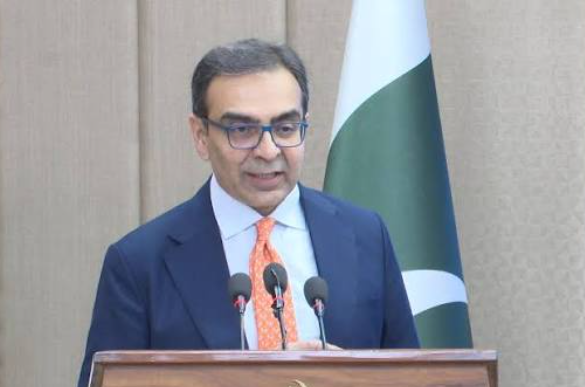
ISLAMABAD, Sep 4 (APP):Adviser to the Prime Minister on Privatization and Chairman, Privatization Commission Muhammad Ali on Friday said that the public-private partnerships (PPPs) and privatization were critical instruments for the future economic growth of the country.
Addressing Mobilizing Private Capital: National Strategic Dialogue on PPPs and Privatization, which was organized by the Asian Development Bank, the Adviser stressed the need for massive investment, management discipline, skilled human resources and innovation.
The country needed massive investments in infrastructure and basic human needs, skilled human resources, management discipline and innovation to remain relevant in the future global economy, he said adding that local infrastructure requirements would increase significantly as the population was projected to rise from around 230 million currently to approximately 390 million by 2050, with around 190 million people expected to live in urban centers.
“This increases the requirement in the urban infrastructure by roughly 100 percent,” he said, adding that Pakistan would need to develop more hospitals, schools, energy and water infrastructure, railways, airports and ports.
The Adviser said the government alone could not finance the country’s growing infrastructure requirements, particularly given Pakistan’s relatively low savings rate of around 14 percent compared with 32 percent in Vietnam and 40 percent in China.
Muhammad Ali said privatization was equally important from the perspective of management, as companies established to earn should not continue consuming public money and should be managed by the private sector.
He added that the private sector could bring capital, management capabilities, innovation and better services while introducing systems to reduce revenue leakage and improve operational performance.
Referring to the Pakistan Public-Private Partnership Monitor, he said around 154 PPP projects worth approximately $36 billion had reached financial close since 1990, demonstrating Pakistan’s capacity to deliver such projects.
He said the country’s PPP portfolio was ranked among the top 14 in the developing world by the Asian Development Bank (ADB) and among the top 10 when measured against the size of Pakistan’s economy.
Muhammad Ali said Pakistan already had the necessary legal and regulatory framework, with the Federal PPP Authority Act enacted in 2017 and all four provinces having their own PPP laws and institutions.
He said the Federal PPP Authority, branded as P3A, was being consolidated under the Privatization Division to bring PPPs, asset monetization and privatization under one roof, which would simplify procedures, improve investor coordination and enhance efficiency.
He said the current PPP pipeline comprised 38 projects worth around $6.5 billion across roads, railways, hospitals, hospitality, aviation and industrial estates, but stressed that the pipeline needed to be expanded significantly.
On privatization, he said the government was currently working on 27 transactions involving power distribution companies, airports, insurance companies and banks. He cited the privatization of Pakistan International Airlines (PIA) as evidence of the government’s ability and commitment to undertake complex transactions.
He informed that around Rs600 billion in legacy debt had been transferred to the holding company while a significant portion of the proceeds, around $450 million, went into the entity for its revival.
Regarding the power sector, Muhammad Ali said the government was working on the sale of nine power distribution assets, with the objective not only to privatize the assets but also to reform the power sector, introduce a competitive supply regime and develop the sector on modern lines.
He also highlighted the need for greater diversity in PPP sectors and transactions as well as standardization of legal and other documents among the five PPP authorities to accelerate project completion.
He called for stronger investor trust and coordinated efforts among ministries and government institutions to achieve the country’s infrastructure and economic growth objectives. “All government institutions and ministries have to come together towards this one common objective,” he added.

