Major international publications and wire services have highlighted the court’s ruling that India’s unilateral attempt to freeze the historic water-sharing agreement has no valid standing under international law.
Int’l media abuzz with reports on Arbitration Court’s ruling against India’s unilateral IWT suspension
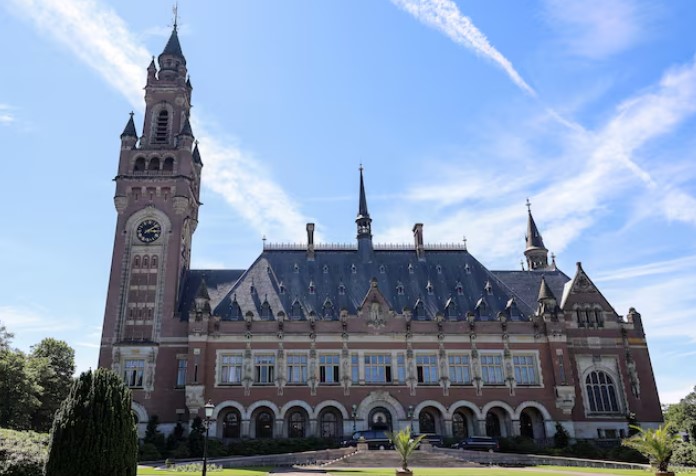
ISLAMABAD, Aug 31 (APP): Global news outlets have extensively reported on a landmark ruling by the Permanent Court of Arbitration (PCA) in The Hague, which dealt a major blow to New Delhi by declaring that the 1960 Indus Waters Treaty (IWT) remains in full force and ordering India to limit ongoing hydroelectric construction in Kashmir.
Major international publications and wire services have highlighted the court’s stance that India’s unilateral attempt to freeze the historic water-sharing agreement has no valid standing under international law.
Reporting on the tribunal’s findings, International news agency Reuters noted that the Hague-based court ruled India had “no justification for ending or suspending the agreement”.
The report emphasized that the court ordered New Delhi to restrict work on the 850 MW Ratle Hydro-Electric Plant on the Chenab River, capping construction levels until 90 days after a World Bank-appointed neutral expert delivers a technical evaluation by July 2027.
Highlighting the legal analysis of the decision, Spanish digital news publication Demócrata reported that the PCA specifically investigated whether India could justify its actions as a “countermeasure” or claim an ongoing international armed conflict.
The tribunal concluded no such conflict exists and ruled that India’s conduct “is not admissible either under the treaty or under other applicable norms of International Law,” warning that suspending the treaty directly compromises human rights and downstream safety.
Covering the strategic implications, Voice of Emirates emphasized that the PCA’s decision re-establishes the binding nature of bilateral treaties, stressing that adherence to the tribunal’s orders and the neutral expert’s forthcoming 2027 findings are vital for preventing regional escalation and ensuring uninterrupted water flow.
Outlining the operational impact on the ground, another digital publication Streamline Feed called the verdict a major hurdle for India’s energy ambitions in Kashmir, detailing how the PCA’s stop-work order forces New Delhi to pause key elements of the Ratle project to protect the unhindered flow of the Chenab River.
Indian media outlets The Hindu Business Line and Gujarat Samachar underscored India’s outright defiance of international legal norms.
The widespread international media coverage underscores a significant legal and diplomatic victory for Pakistan.
Pakistan has consistently maintained that India’s unilateral suspension of a treaty governing rivers supplying 80% of Pakistan’s agricultural land represents an aggressive act of hydro-hegemony.
Pakistani officials and legal experts welcomed the Hague tribunal’s decision, emphasizing that it completely dismantles India’s pretext of using regional security issues to weaponize water supplies.
By confirming that the Indus Waters Treaty has survived three major wars and remains unassailable, the PCA’s order validates Pakistan’s position that lower-riparian water rights cannot be revoked unilaterally by an upper-riparian neighbor.