Legal experts, diplomats and international researchers have warned that India’s decision to hold the 1960 Indus Waters Treaty (IWT) in abeyance constitute a breach of international law and pose serious threats to regional stability and security.
India’s move to hold IWT in abeyance breaches international law: Experts
ISLAMABAD, Aug 30 (APP): Legal experts, diplomats and international researchers have warned that India’s decision to hold the 1960 Indus Waters Treaty (IWT) in abeyance constitute a breach of international law and pose serious threats to regional stability and security.
The experts expressed these views during a webinar titled “Violation of the Indus Waters Treaty by India”, organized by the Islamabad Policy Research Institute (IPRI) here Sunday.
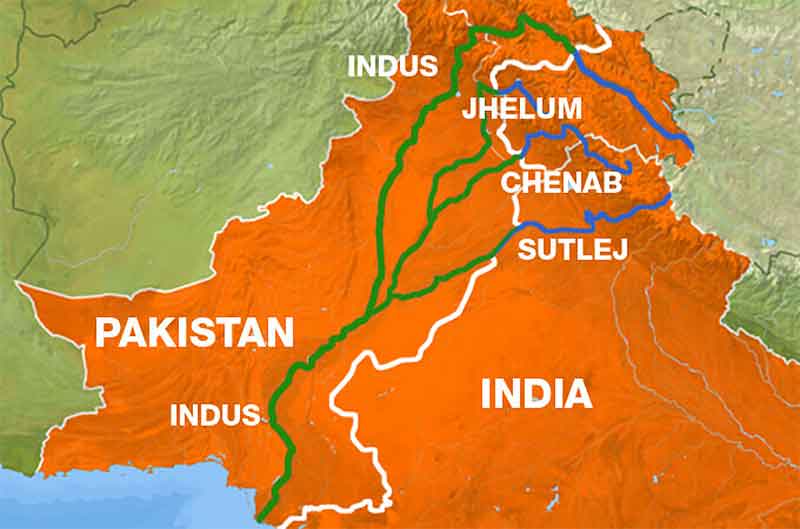
The panelists cautioned that the move, announced in the wake of the Pahalgam attack and reinforced by the closure of the Baglihar Dam’s sluiced gates on the Chenab River, amounts to the weaponisation of water and sets a dangerous precedent for transboundary rivers across South Asia.
According to figures cited during the session, the closure sharply reduced Chenab flows into Pakistan at the Marala measuring point, threatening the livelihoods of tens of millions of farmers in Punjab and Sindh and placing a significant share of regional crops at risk.
International law expert Ahmer Bilal Soofi argued that the IWT is a self-standing international instrument containing no provision for unilateral abeyance, suspension, or withdrawal. He said India’s attempt to tie the treaty to allegations of cross-border terrorism has no basis in its text, noting that Pakistan’s counter-terrorism compliance has repeatedly been assessed by bodies including the Financial Action Task Force and mechanisms of the UN Security Council. On that basis he described India’s action as a potential breach of its treaty obligations.
Advocate Feisal Naqvi examined Pakistan’s legal options. He observed that the existing Court of Arbitration may not, as currently constituted, carry a full mandate to rule on the question of abeyance, and suggested Pakistan seek an authoritative advisory opinion from distinguished international legal scholars and publish it to engage the global legal community. He also advised pursuing separate adjudication on the legality of the abeyance while constructively addressing India’s stated technical concerns, such as sediment management.
Ms. Margarida Gama, a PhD researcher in International Politics and Conflict Resolution at the University of Coimbra and the Centre for Social Studies and a Fellow of Portugal’s Foundation for Science and Technology, characterised the Baglihar closure as water weaponisation through deprivation. Drawing on her research into hydropolitics and India’s control of Chenab flows, she framed it as part of a longer “continuum of water violence,” warning that the precedent carries implications for India’s other shared basins with Bangladesh, Nepal, and Bhutan, and exposes a gap in international water law.
In concluding remarks, IPRI’s leadership stressed that Pakistan must mobilise the international community to raise the political and moral costs of India’s actions and reaffirm the sanctity of binding international treaties, describing the matter as a humanitarian and security concern warranting urgent global attention.