The Developing-8 Organization for Economic Cooperation (D-8) Secretariat, in collaboration with Malaysia’s Ministry of Investment, Trade and Industry (MITI), convened the D-8 Webinar on Industrial Cooperation under the theme “Leveraging Malaysia’s Industrial Experience for D-8 Cooperation.”
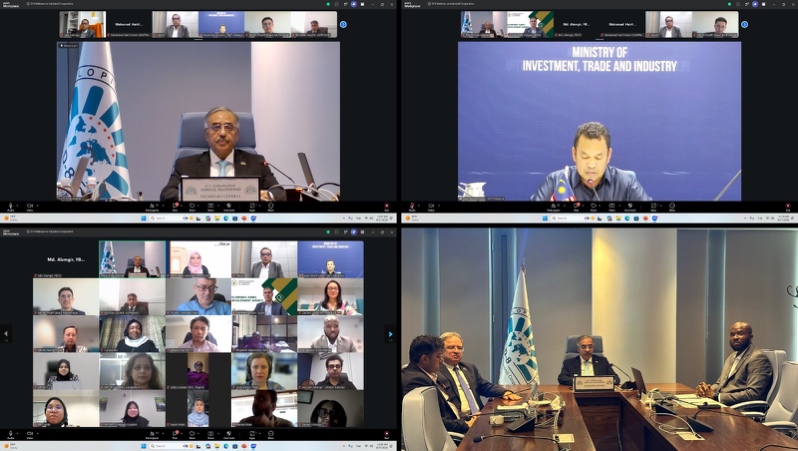
ISLAMABAD, Aug 28 (APP): The Developing-8 Organization for Economic Cooperation (D-8) Secretariat, in collaboration with Malaysia’s Ministry of Investment, Trade and Industry (MITI), convened the D-8 Webinar on Industrial Cooperation under the theme “Leveraging Malaysia’s Industrial Experience for D-8 Cooperation.”
The Webinar brought together over 70 participants from across D-8 member states, including senior government officials and representatives of investment and export promotion agencies, SME bodies, chambers of commerce, and the private sector, said a press release issued on Friday.
The strong and interactive participation testified to deep interest across the D-8 in advancing practical industrial partnerships and learning from successful experiences within the Organization.
In his opening remarks, Ambassador Sohail Mahmood, Secretary-General of the D-8, highlighted Malaysia’s transformation into a diversified, manufacturing and export-oriented economy and the relevance of its experience in industrial planning, investment, exports, technology, human-capital development and private-sector engagement for wider D-8 cooperation.
Highlighting the immense economic potential of the nine D-8 Member States, with a combined GDP of over US$5.19 trillion and merchandise exports of around US$1.09 trillion, the Secretary-General stressed the need to better connect their markets, productive capacities, investment opportunities, technologies and private sectors to advance the US$500 billion intra-D-8 trade target by 2030. Against the backdrop of changing global supply chains, the green transition and rapid technological transformation, he identified three priorities: (i) technology, innovation and industrial transformation; (ii) investment, trade and value-chain integration, with a central role for the private sector; and (iii) youth, skills and human-capital development.
As practical ways forward, Ambassador Sohail Mahmood proposed developing joint industrial and investment initiatives in priority sectors; strengthening cooperation in technology transfer, innovation, skills and emerging technologies; and building stronger linkages among D-8 industries, SMEs, research institutions and the private sector to support regional value chains. He also called for more effective use of existing and emerging D-8 mechanisms, including D-8 NPRI and D-8 TTEN for technology and innovation, D-8 CCI for business linkages, and the proposed D-8 Halal Economy Cooperation Platform for collaboration in the Halal sector.
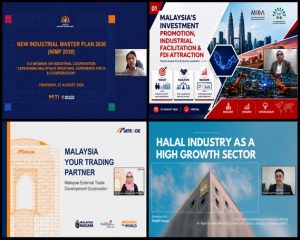
The Webinar focused on four inter-connected areas: industrial transformation and Malaysia’s New Industrial Master Plan 2030 (NIMP 2030); investment promotion and FDI attraction; export development and market access; and Halal industry development as a high-growth sector.
Senior Experts from the Ministry of Investment, Trade and Industry (MITI), Malaysian Investment Development Authority (MIDA), Malaysia External Trade Development Corporation (MATRADE) and Halal Development Corporation (HDC) made comprehensive and insightful presentations – sharing Malaysia’s policies, institutional experience and good practices across these areas.
The presentations offered sharp insights into Malaysia’s mission-based approach under NIMP 2030 to industrial upgrading and technological transformation; strategies for attracting quality and high-value investment; measures to strengthen export readiness, market access and the internationalization of Malaysian enterprises; and the development of an integrated Halal ecosystem encompassing industry development, standards, certification, investment and access to global
Halal markets.
The presentations also underscored the importance of coordinated government-industry engagement, digitalization and technology adoption, SME participation, skills development and stronger integration into regional and global value chains in sustaining industrial competitiveness.
The deliberations, including during the engaging interactive session, identified considerable scope for D-8 cooperation through stronger institutional linkages, investment and business partnerships, technology and knowledge exchange, and closer engagement among relevant agencies and the private sector. The importance of AI, smart manufacturing, digitalization, green technologies, technology transfer, SME development and stronger industry-research linkages was also highlighted as part of efforts to enhance industrial competitiveness across the D-8.
In his closing remarks, the Secretary-General expressed appreciation to the Government of Malaysia, particularly MITI, MIDA, MATRADE and HDC, as well as the speakers and participants from across the D-8 for their valuable contributions. He underscored the importance of moving from dialogue to implementation, with a stronger focus on new partnerships, practical projects, and measurable outcomes.
The Webinar marked another step in advancing the D-8 Decennial Roadmap 2020-2030, reinforcing the shared objective of harnessing the complementary strengths of the nine Member States to build stronger industrial linkages, more integrated value chains, and a more competitive D-8 economic space.