Barrister Danyal Chaudhry, Parliamentary Secretary for Information and Broadcasting and Secretary of the Parliamentary Forum on Energy and Economy, on Thursday called for a rethink of Pakistan’s long term energy contracts, saying the country must integrate solar power, LNG, the national grid and emerging technologies to ensure affordable, reliable and secure energy.
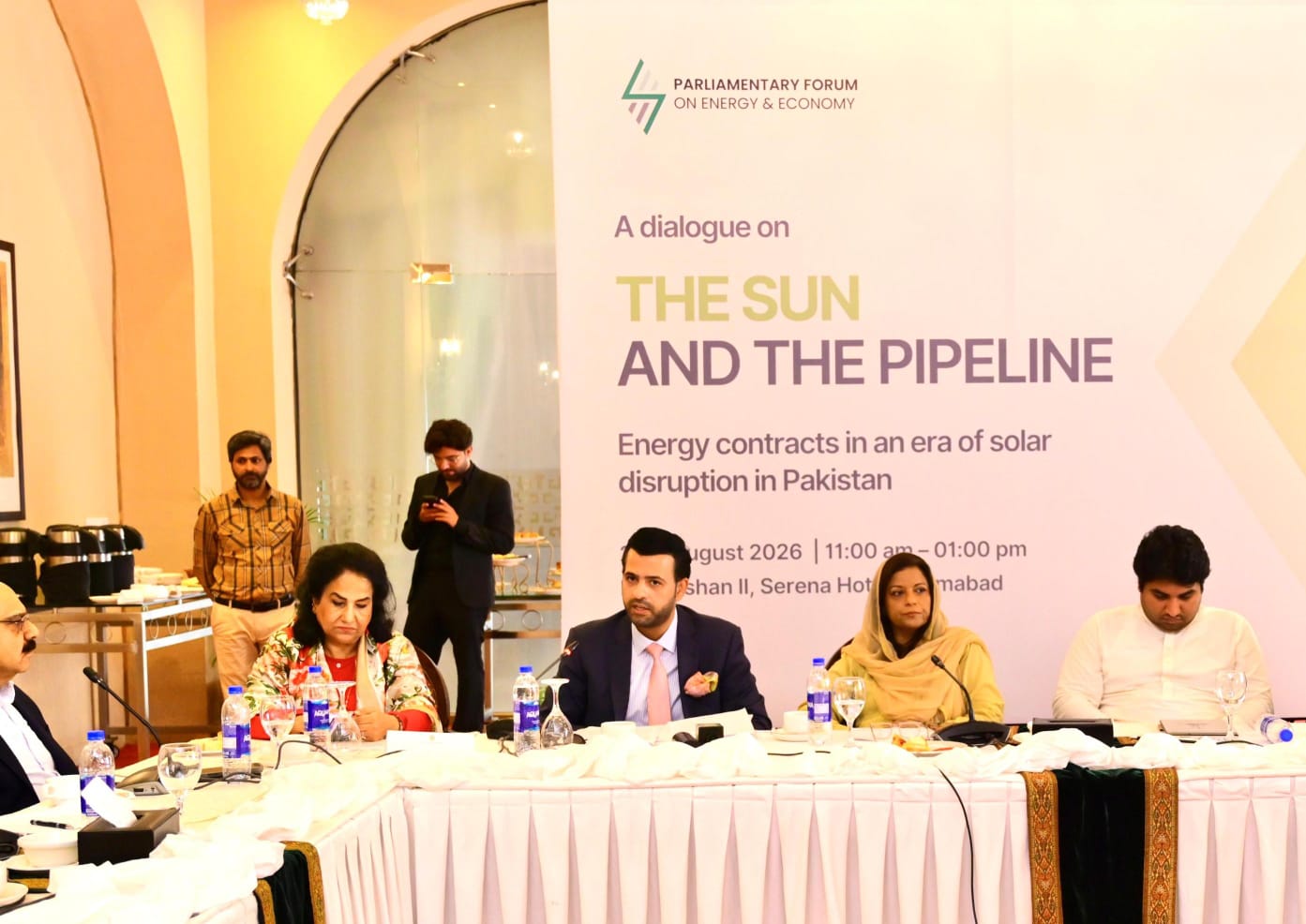
ISLAMABAD, Aug 27 (APP): Barrister Danyal Chaudhry, Parliamentary Secretary for Information and Broadcasting and Secretary of the Parliamentary Forum on Energy and Economy, on Thursday called for a rethink of Pakistan’s long term energy contracts, saying the country must integrate solar power, LNG, the national grid and emerging technologies to ensure affordable, reliable and secure energy.
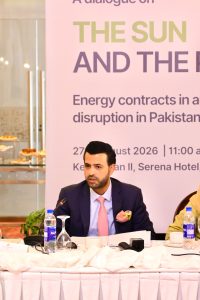
Speaking at a dialogue titled “The Sun and the Pipeline: Energy Contracts in an Era of Solar Disruption in Pakistan”, organised by the Parliamentary Forum on Energy and Economy at Islamabad, he said the debate should move beyond treating solar and gas as competing alternatives.
“We should not ask whether Pakistan chooses the sun or the pipeline. We should ask how the sun, the pipeline, the grid and emerging technologies can work together to provide Pakistan with affordable, reliable and secure energy,” he said.
The dialogue brought together parliamentarians and energy experts to discuss Pakistan’s changing RLNG requirements, geopolitical risks, global market volatility and policy options for protecting consumers while maintaining energy security.
Speakers called for greater flexibility in LNG and fuel imports, warning that rigid long term take or pay contracts could burden consumers with costly energy commitments and contribute to circular debt.
Pakistan has deployed an estimated 50 GW of solar capacity across utility scale, net metered, agricultural, off grid and behind the meter systems in just a few years, largely without public subsidy.
The capacity is estimated to generate around 54.75 TWh annually, equivalent on a gross energy basis to nearly 1,279 MMCFD of gas fired generation.
Dr Nafisa Shah, Convener of the Parliamentary Forum on Energy and Economy and Member of the National Assembly, said Pakistan’s energy policies and regulatory frameworks must reflect the rapid growth of solar power.
Muhammad Arif, former Member Gas at OGRA and petroleum law, policy and regulatory adviser, called for integrated energy governance and mechanisms to monetise surplus solar generation during periods of high output.
Asim Riaz, Energy Adviser at the All Pakistan Textile Mills Association, said Pakistan’s LNG challenge is increasingly about demand, flexibility, affordability and market design rather than simply securing supplies.
Energy journalist and Energy Flux founder Seb Kennedy said Pakistan is experiencing a consumer led energy transition faster than the state’s planning system could adapt, driven by high tariffs, unreliable supply and falling solar costs.
Huma Chughtai called for greater consistency and clarity in policy making and stronger representation of the Planning Division in decisions concerning energy supply and demand.
Mobeen Arif Jutt highlighted the burden of high electricity tariffs on ordinary citizens and called for structural reforms in the power sector, particularly to protect low income and vulnerable communities.
Syed Faizan Shah, Energy Expert and Adviser to the Power Minister, said Pakistan’s priority should be to build a more resilient and efficient energy system rather than simply adding generation capacity.
The dialogue was attended by parliamentarians, energy experts, civil society representatives and members of academia.