Muhammad Atif Ismail MULTAN, Aug 24 (APP)::A new kind of business in the form of services, namely "the digital middlemen," is emerging fast in almost every small town of backward but culturally rich south Punjab, though most people don't yet know it by that name. Sometimes, even those within the same household may not recognize their vital role. Shop by shop, they are quietly bridging …
Digital Middlemen bridging digital divide in rural South Punjab
Muhammad Atif Ismail
MULTAN, Aug 24 (APP)::A new kind of business in the form of services, namely “the digital middlemen,” is emerging fast in almost every small town of backward but culturally rich south Punjab, though most people don’t yet know it by that name.
Sometimes, even those within the same household may not recognize their vital role. Shop by shop, they are quietly bridging South Punjab’s digital divide, working behind the scenes as the unsung architects of a new era. Their efforts may go unnoticed by most but they are shaping a future which many cannot yet see.
People walk into these shops with identity documents, smartphones and a long list of questions. They seek help applying for jobs, submitting forms, registering for government schemes, checking applications, uploading documents, or finding the right website. For many, these simple online tasks are daunting.
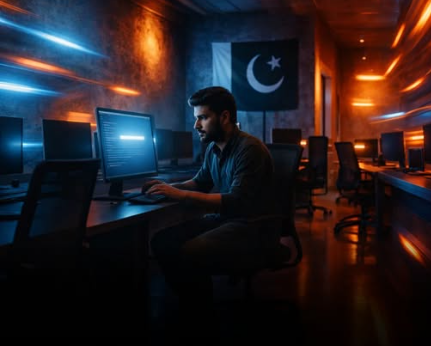
For them, the person sitting behind the computer is more than a shopkeeper. He is a digital middleman. Tanveer from Pipli is one such unassuming hero in the shadows.
As the world around him remains unaware, he silently weaves the threads of change bridging gaps, creating opportunities and shaping the future of his community. His story is a testament to the power of those willing to step into the unknown.
Tanveer runs a small digital-service shop where he helps locals complete online tasks. Students come to apply for jobs and educational programs. Farmers seek assistance with government schemes.
Others need help with forms, registrations, payments, or document submissions. “Many people visit my shop for online services,” Tanveer told APP.
“They verify welfare schemes, apply for jobs and more. I guide them and fill out their details online, charging a small fee.”
A similar example is Hamid Noori in Vehari, who provides digital services to people with smartphones and internet access but lacking the necessary knowledge to navigate online platforms. Their small businesses are part of a broader change sweeping across South Punjab.
As government departments, banks, educational institutions and private organizations shift more services online, many find themselves on the other side of the digital divide. They own phones and use social media but struggle to visit official websites, fill out forms, or upload documents.
This gap has fueled demand for digital middlemen. Teenagers and young adults often offer these services, bridging the divide among their communities.
Mr. Abdur Rauf, another provider, explained, “The work is simple but important. Customers bring information from WhatsApp or Facebook. I verify it, visit the relevant websites, and confirm whether schemes or services are genuine.” Verification has become crucial, as misinformation spreads rapidly online.
Commenting on this emerging business, Rauf added, “People often come claiming government jobs, subsidies, or schemes. Instead of accepting everything immediately, I check official sites and guide them through the correct process.” Their regular use of government portals gives these young providers knowledge that many ordinary citizens lack.
The role of digital middlemen becomes even more vital for elderly residents and those with limited education. They often find websites in English, passwords, verification codes and forms confusing. A young person familiar with smartphones can complete these tasks within minutes, but for an older farmer or laborer, the process can be overwhelming.
Abdul Rauf remarked, “That’s where we come in a bridge between citizens and the system.”
This business also offers income for many young people. A small shop requires modest investment just a computer, printer, internet connection and knowledge of online services.
Customers pay for applications, registrations and document uploads. For educated youth struggling to find formal employment, digital services open new earning opportunities.
Mr. Hamraz, a government employee, shared he had also used digital middlemen for applying to jobs. Across Multan, Vehari, Lodhran, Khanewal, Dera Ghazi Khan, Muzaffargarh, and beyond, many young people run these small digital centers, offering local residents help with services that once meant long visits to government offices or cities.
But this rise also highlights a serious challenge.
Digitalization aims to make services easier and more accessible. Yet many still cannot use these services without outside help. The world is moving fast toward a digital future, underscoring the urgent need for digital
literacy.
Government bodies, banks, agricultural agencies and educational institutions should collaborate with local digital-service providers to teach basic digital skills. These young entrepreneurs understand the community’s problems firsthand and can help teach how to identify official websites, complete forms, protect passwords, recognize online fraud, and verify information.
The goal is not to keep people dependent on middlemen but to use them as a bridge until more citizens can confidently manage online services themselves. For now, these small shops are crucial as they connect people feeling left behind by digital progress with a system that increasingly controls access to jobs, education, banking, and government services.
South Punjab’s digital transformation is not limited to offices and tech centers. It is happening inside small roadside shops, where young men sit behind computers, helping neighbors navigate the digital world. They are not just filling forms they are closing the gap between people and technology.
Acting as the vital bridge between tradition and technology, they are the digital middlemen, and their growing role tells a larger story about how South Punjab is adapting to a rapidly changing digital age.