PESHAWAR, Aug 21 (APP):A one-day symposium on “Role of Genetics in Modern Obstetrics: Opportunities and Challenges” stressed the need to expand genetic testing and counselling services and introduce specialized training programmes in Pakistan to address the growing burden of inherited disorders affecting patients, families and the healthcare system. The symposium was held at the Academic Enclave of Lady Reading Hospital (LRH), with Professor of Molecular Biology and Genetics, Institute of …
Symposium stresses specialized training on genetic counselling to address inherited disorders
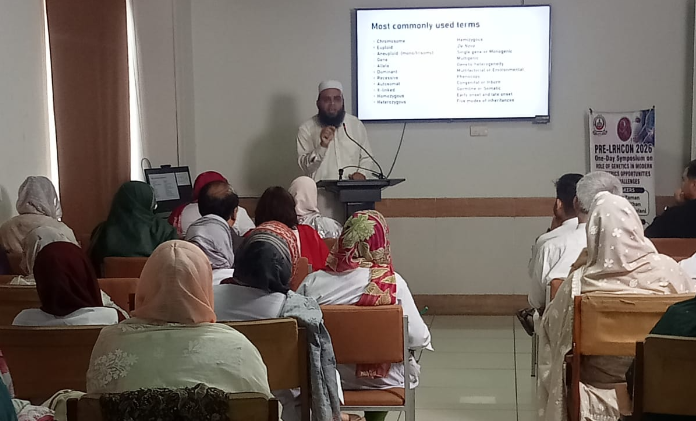
PESHAWAR, Aug 21 (APP):A one-day symposium on “Role of Genetics in Modern Obstetrics: Opportunities and Challenges” stressed the need to expand genetic testing and counselling services and introduce specialized training programmes in Pakistan to address the growing burden of inherited disorders affecting patients, families and the healthcare system.
The symposium was held at the Academic Enclave of Lady Reading Hospital (LRH), with Professor of Molecular Biology and Genetics, Institute of Basic Medical Sciences, Khyber Medical University (KMU), Dr. Musharraf Jelani, as the main speaker.
Dr. Qaiser Zaman, Assistant Professor, Higher Education Commission (HEC), Khyber Pakhtunkhwa, and molecular biologist also delivered a presentation on genetic disorders and their diagnosis.
A number of doctors, including gynaecologists, obstetrician as well as researchers working on genetic diseases, attended the symposium.
In his presentation on `Genetic Counselling as a Future Career’, Dr. Musharraf Jelani highlighted the importance of genetic counselling, pre-test and post-test counselling, pedigree analysis, genetic disease databases and the collection of comprehensive clinical histories for appropriate genetic studies.
He said Pakistan’s high prevalence of consanguineous marriages underscored the need for accessible, affordable and culturally sensitive genetic services.
Realizing threat of increase in inherited genetic disorders in the country due to population bulge and high percentage of cousin marriages, there is an urgent need to promote education and training in genetic counselling to help protect future generations from rare and inherited disorder, Dr. Musharraf added.
He suggested introducing educational programmes and specialized training courses at leading academic and medical institutions to prepare genetic counsellors, clinical scientists and clinical geneticists in the country.
He said these specializations could be offered to students from medical, non-medical and basic science disciplines, helping build a skilled workforce capable of raising public awareness about genetic disorders, their risk factors and preventive measures, as well as the importance of genetic testing and counselling.
Genetic testing could help identify inherited conditions, determine whether an individual was a carrier of a disease-causing genetic variant, support early diagnosis and, in some cases, guide more personalized treatment.
Dr. Jelani also suggested to establish dedicated clinics for patients with genetic disorders in the country to facilitate early diagnosis, appropriate counselling and management of rare diseases.
He said more than 6,000 genetic disorders had been documented in medical literature, while new conditions and genetic variations continued to be identified with advances in genomic research.
He said the human body contained more than 24,000 genes, but only a small proportion had been adequately explored due to limited knowledge, research and resources.
Regarding genetic risk assessment, he advised healthcare professionals to carefully analyse family histories, estimate genetic risks using probability methods and risk models, integrate clinical and laboratory findings into risk assessment and recommend appropriate genetic tests where necessary.
Speaking on genetic disorders, Dr. Qaiser Zaman said rare genetic or orphan diseases represented a significant but often overlooked health challenge in Pakistan.
He said around 80 percent of genetic diseases were classified as rare genetic disorders, while globally an estimated four to six percent of the population was affected by rare diseases.
He said genetic disorders could affect patients’ physical health, cognitive abilities and social well-being, besides imposing considerable financial and emotional burdens on affected families.
The participants held an interactive discussion and asked technical questions about genetic testing, including prenatal testing of foetuses, diagnosis of inherited disorders and the interpretation of genetic test results.
The speakers emphasized that strengthening genetic testing, counselling, research and diagnostic facilities could contribute significantly to early identification of inherited disorders and help families make informed healthcare and reproductive decisions.