Turkmenistan is preparing an ambitious agenda for the 81st session of the United Nations General Assembly, placing peacebuilding, preventive diplomacy, sustainable development, international security and multilateral cooperation at the center of its international efforts.
Turkmenistan sets out key priorities for 81st UN General Assembly session
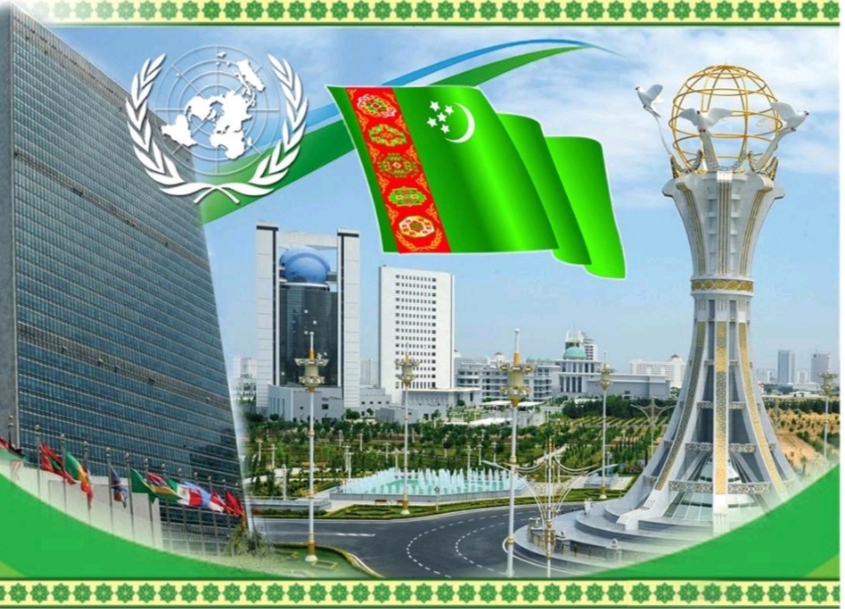
ISLAMABAD, Aug 20 (APP): Turkmenistan is preparing an ambitious agenda for the 81st session of the United Nations General Assembly, placing peacebuilding, preventive diplomacy, sustainable development, international security and multilateral cooperation at the center of its international efforts.
“Ashgabat Advances New Initiatives on Peace, Preventive Diplomacy, Sustainable Development and International Cooperation.”
Building on its policy of permanent neutrality, Turkmenistan intends to present a series of international initiatives designed to strengthen dialogue, trust and cooperation in addressing global and regional challenges, said a release issued on Thursday.
On Peace and Preventive diplomacy at the forefront, a central element of Turkmenistan’s agenda will be the promotion of a culture of peace, dialogue and preventive diplomacy. The country plans to organize, under the auspices of the United Nations, intergovernmental consultations on the development of a Strategy for Universal Peace, based on the principles of peace, security and prevention of conflicts.
Turkmenistan will also propose declaring 2027–2037 the United Nations Decade of Dialogue and Preventive Diplomacy.
Another proposed initiative is the establishment of a UN Group of Friends of Multilateralism and the Sovereign Equality of States, aimed at reinforcing multilateral cooperation and respect for the equality of states.
The country also plans to advance efforts toward establishing the proposed University of Peace and Neutrality, including consultations on an Academic Center for Peace, Neutrality and Preventive Diplomacy in Ashgabat.
On responsible artificial intelligence and digital trust, digital transformation and artificial intelligence will form another important component of Turkmenistan’s agenda.
Turkmenistan plans to initiate the development, under UN auspices, of an International Code on the Peaceful Use of Artificial Intelligence in International Relations and Diplomacy.
The country also intends to host an international expert dialogue in Ashgabat focusing on digital trust and the responsible use of artificial intelligence, highlighting the need for technology to contribute to peace, stability and constructive international relations.
Strengthening preventive diplomacy in Central Asia, Turkmenistan will continue supporting the work of the United Nations Regional Centre for Preventive Diplomacy for Central Asia, based in Ashgabat.
In this context, the country plans to submit a successive draft resolution on “The Role of the United Nations Regional Centre for Preventive Diplomacy for Central Asia,” reaffirming its commitment to preventive diplomacy as an effective instrument for regional stability.
On transport and Sustainable connectivity, sustainable development and international transport cooperation will remain major priorities.
Following the adoption during the 80th UN General Assembly session of the resolution on the UN Decade of Sustainable Transport 2026–2035, Turkmenistan plans to continue work on the Global Atlas of Sustainable Transport Connectivity.
The initiative is intended to serve as an analytical and informational tool for monitoring progress toward the goals of the Decade.
Turkmenistan will also continue participating in the implementation of the Awaza Program of Action for 2024–2034 and the Awaza Political Declaration.
Among other proposals, Ashgabat plans to advance consideration of an International Center for Sustainable Trade Logistics and Customs Cooperation under UN auspices.
The country will further promote the establishment of a trans regional transport corridor connecting South and Central Asia with Europe through the Caspian Sea, with the aim of expanding trade links and strengthening economic cooperation between regions.
On climate action and energy security, the climate change, environmental protection and sustainable energy will also feature prominently in Turkmenistan’s priorities.
The country plans to propose the establishment of the Ashgabat Climate Dialogue, envisioned as a multilateral platform for cooperation on climate change and international partnership.
Turkmenistan will also advocate stronger support for regions facing severe drought and water scarcity, with a focus on enhancing climate resilience.
In the energy sector, consultations are expected to continue on preparations for the high-level forum “Stable Energy for All,” in support of efforts to advance reliable and stable energy connectivity as a foundation for sustainable development.
Humanitarian cooperation and the participation of women and young people in international affairs represent another key area of Turkmenistan’s agenda.
The country plans to further develop the Dialogue of Women of Central Asian States and strengthen cooperation with the UN Peacebuilding Commission and UN Women under the Women, Peace and Security agenda.
At the same time, Turkmenistan intends to promote greater participation of young people in peacebuilding and international initiatives, including through the Central Asian Youth Dialogue and the Youth, Peace and Security agenda.
The 2028 proposed as year of international law and will also occupy a prominent place in Turkmenistan’s diplomatic priorities.
The country will continue promoting its proposal to declare 2028 the year of International Law, emphasizing the central role of the UN Charter and international legal norms in relations among states.
As part of preparations for the proposed year, Turkmenistan plans to advance an international forum addressing the links between international law, disarmament, neutrality, preventive diplomacy and sustainable development.
Turkmenistan will continue its work as a member of the UN Economic and Social Council (ECOSOC) for 2026–2028, while participating in the activities of other UN bodies, commissions and structures.
Preparatory efforts are also underway for Turkmenistan’s potential candidacy for election to the UN Security Council for the 2031–2032 term, alongside nominations to other UN elected bodies.
On a Consistent foreign policy agenda, the priorities outlined for the 81st session reflect Turkmenistan’s long-standing foreign policy principles of permanent neutrality, peaceful dialogue, preventive diplomacy, mutual trust and constructive international cooperation.
Through its proposed initiatives, Ashgabat aims to contribute to global efforts to strengthen international peace and security, expand sustainable economic and transport cooperation, address climate challenges, promote responsible technological development and increase the participation of women and youth in peacebuilding.
As the 81st session of the UN General Assembly approaches, Turkmenistan is positioning its diplomatic agenda around a broad message: dialogue, neutrality and multilateral cooperation should remain central instruments for addressing the challenges facing the international community and building a more peaceful and sustainable future.