
ISLAMABAD, Aug 19 (APP):A delegation of 217 Probationary Officers of the 54th Common Training Programme (CTP) of the Civil Services Academy, Lahore, visited the Benazir Income Support Programme (BISP) Headquarters to gain an in-depth understanding of the programme’s vision, mandate, institutional framework and flagship social protection initiatives. Chairperson BISP Senator Rubina Khalid and Additional Secretary Dr. Asmat Nawaz welcomed the probationary officers to BISP Headquarters. Addressing the delegation, Senator Rubina …
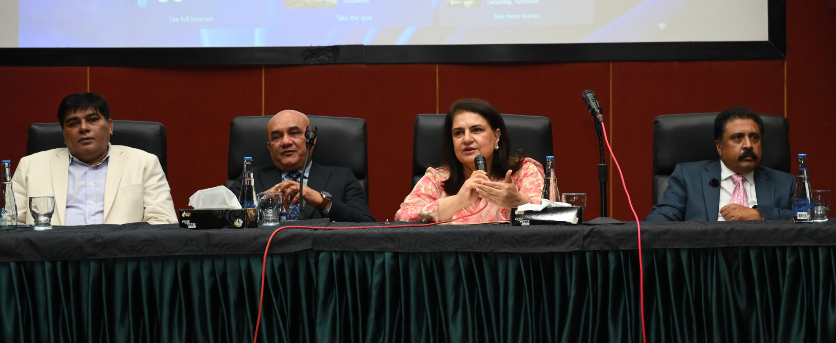
ISLAMABAD, Aug 19 (APP):A delegation of 217 Probationary Officers of the 54th Common Training Programme (CTP) of the Civil Services Academy, Lahore, visited the Benazir Income Support Programme (BISP) Headquarters to gain an in-depth understanding of the programme’s vision, mandate, institutional framework and flagship social protection initiatives.
Chairperson BISP Senator Rubina Khalid and Additional Secretary Dr. Asmat Nawaz welcomed the probationary officers to BISP Headquarters.
Addressing the delegation, Senator Rubina Khalid highlighted the evolution of BISP as Pakistan’s flagship social protection programme and its significant contribution to poverty reduction, women’s empowerment and financial inclusion.
The Chairperson said that BISP was conceived in accordance with the vision of Shaheed Mohtarma Benazir Bhutto, while its foundation was laid by President Asif Ali Zardari.
She highlighted that one of the distinctive features of BISP was the decision to recognize the woman of the household as the beneficiary, making women direct recipients of social protection support.
Senator Rubina Khalid said the requirement of a National Identity Card (CNIC) for BISP registration had played an important role in bringing millions of women into the national database and strengthening their recognition as citizens.
Explaining BISP’s life-cycle approach, she said the programme was not limited to providing cash assistance but was designed to support vulnerable families through different stages of life, including education, nutrition, financial inclusion and livelihood opportunities.
Addressing misconceptions about BISP, Senator Rubina Khalid said, “BISP does not make people dependent; rather, it protects vulnerable families from falling into destitution and enables them to live with dignity and self-respect.”
The Chairperson said BISP had emerged as one of the most acclaimed social protection programmes globally and continued to evolve in response to changing needs.
She highlighted President Asif Ali Zardari’s vision for ensuring transparency, dignity and convenience in payments to beneficiaries.
She briefed the officers on the introduction of Digital Wallets, describing the initiative as a landmark transformation in financial inclusion aimed at bringing around 10 million women beneficiaries into a more secure and convenient digital payment ecosystem.
She further informed the delegation that BISP was moving towards the introduction of interoperability, under which beneficiaries would be able to withdraw their payments from any location, at any time, through agents of participating partner banks. She said the initiative would further improve accessibility and convenience for beneficiaries.
Senator Rubina Khalid also highlighted BISP’s exit and recertification policy, explaining that families whose socio-economic conditions improve would gradually graduate from the programme. She said sustainable poverty reduction required creating opportunities for beneficiaries to become economically independent.
In this regard, she highlighted the Benazir Hunarmand Programme, emphasizing that imparting skills and creating livelihood opportunities was essential for improving the long-term socio-economic conditions of beneficiary families.
The Chairperson said BISP’s National Socio-Economic Registry (NSER) had become a major national asset for social protection planning. She stated that, after NADRA, BISP maintained one of the country’s largest databases, which was also being utilized by various organizations at the provincial level for designing and implementing social protection initiatives.
Earlier, Director General NSER/CCT Dr. Asim Ijaz provided a comprehensive overview of Benazir Kafaalat, Benazir Taleemi Wazaif, Benazir Nashonuma and NSER.
Briefing the officers on the Benazir Nashonuma Programme, he said the programme had contributed to a 6.4 percent reduction in child stunting, according to research by Aga Khan University, highlighting the positive impact of targeted nutrition interventions on maternal and child health.
The briefing was followed by an interactive question-and-answer session, during which the probationary officers shared their observations and sought further information about BISP’s institutional structure, operations, targeting mechanisms, payment reforms, digital transformation and future policy direction.
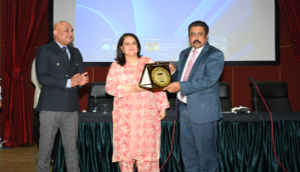
The visit concluded with the presentation of a commemorative shield to Chairperson BISP Senator Rubina Khalid by Dr. Faisal Zahoor, Director (PAS), on behalf of the Civil Services Academy, followed by a vote of thanks.

