
Pakistan’s Nexa Robots is strengthening its collaboration with Chinese technology and manufacturing partners as it develops local capabilities in software, artificial intelligence and systems integration for service robots, its founder said.
Pakistan’s Nexa Robots eyes deeper China ties in service robot push
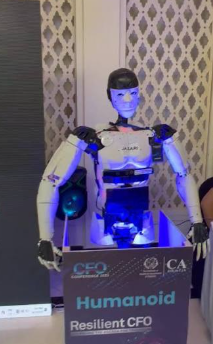
BEIJING, Aug 19 (APP):Pakistan’s Nexa Robots is strengthening its collaboration with Chinese technology and manufacturing partners as it develops local capabilities in software, artificial intelligence and systems integration for service robots, its founder said.
The company’s most immediate needs are deeper technology cooperation, access to key components and support for developing and localising solutions for the Pakistani market, H.M. Hafeez, founder and CEO of Nexa Robots, told China Economic Net (CEN) in an interview.
He also called for joint product development with Chinese technology partners. Access to investment or strategic financing could help the company expand and allow customers to lease robots or pay for them as a service.
The comments come as the World Robot Conference 2026 opens in Beijing on Aug. 19. The accompanying expo is expected to feature more than 300 exhibitors and over 2,000 exhibits, including robot applications in catering, retail, healthcare and logistics.
According to Hafeez, the company distributes products in Pakistan from Shenzhen-based Pudu Robotics.
One of its early installations is at Minhaj University Lahore (MUL), which said in September 2023 it had introduced service robots in its admissions office and library, supplied and technically supported by Nexa. MUL continued to promote the facility publicly in 2025, posting photographs of the robotic library and sharing videos about it.
Hafeez said Smart Service robots at MUL are used daily in both the admissions office and library, supporting reception, visitor guidance and information services.
Nexa has also moved beyond demonstrations and pilot projects to paid deployments with selected customers in hospitality, education and other service settings, according to Hafeez, who did not provide installation numbers or name other clients.
The market remains at an early stage. Hafeez cited low labour costs, economic uncertainty and reluctance to commit capital as reasons businesses remain wary of automation. Robots also need trained staff, maintenance, software integration and reliable local support.
“A robot has to work reliably in the customer’s actual environment, not just during a demonstration,” he said.
A restaurant or hotel making intensive use of a robot might target a one-to-two-year payback, Hafeez estimated. Less intensive use could mean a longer payback period.
Hafeez said Nexa had begun early-stage localisation work, initially focusing on software, AI and systems integration in Pakistan while sourcing key hardware and components from China. Once a prototype is developed and validated locally, the company expects initial production to take place in China. Assembly and selected components could then be localised in Pakistan if volumes and costs make that viable.

