Fakhar-e-Alam CHITRAL, Aug 19 (APP)::As the first light of dawn broke over the rugged valleys of Lower Chitral, the landscape bore scars of nature’s fury. The August floods had left behind a trail of destruction homes reduced to rubble, bridges washed away and livelihoods shattered. Yet amid the debris and despair, a quiet resolve was emerging. In the heart of Broze village, Nadir Shah, a 58-year-old man, was …
Broken homes and shattered dreams: flood victims in Chitral seek compassionate aid
Fakhar-e-Alam
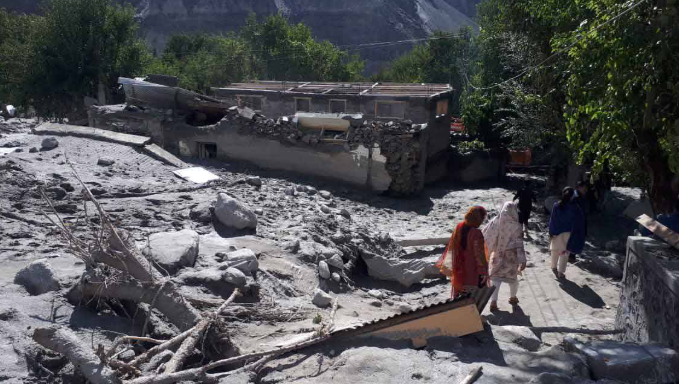
CHITRAL, Aug 19 (APP)::As the first light of dawn broke over the rugged valleys of Lower Chitral, the landscape bore scars of nature’s fury. The August floods had left behind a trail of destruction homes reduced to rubble, bridges washed away and livelihoods shattered.
Yet amid the debris and despair, a quiet resolve was emerging. In the heart of Broze village, Nadir Shah, a 58-year-old man, was already at work, determined to rebuild what was lost. His story is a powerful testament to resilience, hope and the human spirit’s unyielding drive to survive in the face of catastrophe.
With his two sons beside him, Nadir lifted stones, bricks and removed mud and debris from the site of his damaged house in Broze village, preparing the ground for a new stone-built structure.
Nearby, his wife quietly collected usable stones and bricks from the surrounding area to help with the rebuilding effort on a self-help basis before the harsh winter set in.
For Nadir, the work is more than clearing a construction site but a determined attempt to rebuild a life disrupted in a matter of hours by the flash floods that swept through Lower Chitral on August 11.
“The flash floods apparently caused by cloud-bursts badly affected the structure of our house and washed away our household belongings that increased our hardship immensely,” Nadir told APP while throwing debris with a hove to clear land for foundation.
Among the losses was furniture he had purchased for his daughter’s dowry. The belongings, bought with years of savings and family hopes, were swept away by the raging waters. Now, the poor family is living in a tent provided by a philanthropist organization while Nadir tries to construct a new stone-made home with whatever resources he can gather ahead of winter.
Broze village, located close to Chitral city along the Chitral-Peshawar Road, remains marked by the damages caused by last week’s floods. The devastation was compounded when another episode of intense rainfall and flooding struck the region within less than a week, increasing problems of flood victims in the mountainous region.
Nadir said the flood waters washed away a bridge over Gumbus Nullah and swept away several shops in the locality. A makeshift bridge over Broze Gol Nullah was also washed away, creating additional difficulties for
residents.
The torrents further damaged foundation work for a permanent bridge being constructed at the site, while a vital irrigation channel in Broze Gol was also destroyed. For a community dependent heavily on agriculture and fruits farming, the damage has gone beyond homes and roads in Lower Chitral.
Standing maize crops and fruit orchards especially peaches and appeal being an important source of household income of the residents were also badly affected.
“The people here have lost homes, crops, belongings and access routes while KP Govt assistance was like salt in flour,” he said, urging the PTI government to provide greater assistance to flood victims many of whom are living in
tents.
Yet amid the floods damages, Nadir’s family has chosen to begin again by believing in own strength.
Every stone collected from the debris in the flood hit village represents a small step towards a new home. His sons work alongside him, while his wife gathers construction material.
Their efforts reflect the quiet resilience of families across the flood-hit valleys who have little choice but to rebuild even before the scars of the disaster have faded.
Environmental experts said the growing frequency and intensity of extreme weather events in northern Khyber Pakhtunkhwa cannot be viewed only through the lens of individual floods. Prof Dr Shafiqur Rehman, former chairman of the Environmental Sciences Department at the University of Peshawar, attributed the worsening floods situation to a combination of climate change, deforestation and unlawful construction in riverbeds and other vulnerable areas.
He said ruthless cutting of forests in parts of northern Khyber Pakhtunkhwa in the past had weakened natural protection against floods and contributed to soil erosion, land degradation and changes in water flows.
Illegal construction, particularly hotels and other structures built in riverbeds in areas including Chitral and Swat, has also increased the exposure of communities and infrastructure to sudden flooding, he said.
Former KP Conservator of Forests Gulzar Rehman said deforestation was a global problem but had particularly serious consequences for countries such as Pakistan, where forests are already under considerable pressure.
He linked forest loss to population growth, poverty, dependence on wood and unregulated tree cutting, and warned that continued degradation of forests could make climate-related disasters more frequent and destructive.
He called for a green emergency to protect the country’s remaining forests and urged a shift towards alternative energy sources, including solar, hydro power, biomass and wind energy.
Former provincial minister for environment and forests Wajid Ali Khan also stressed the need for stronger action against illegal logging, encroachment in river beds and timber mafia, saying that vulnerable northern districts of KP had been increasingly exposed to floods and other climate-related hazards.
Forest Department officials said the provincial government has strengthened its forest protection mechanism under the KP Forest Ordinance 2002, giving the forest force powers to take action against timber smugglers and seize illegally transported timber.
They said forest check-posts had also been established in merged districts and along major roads to curb timber smuggling. Experts, however, called for stronger enforcement, special forest courts for speedy trials, improved communications and greater mobility for forest personnel.
They also stressed the importance of international climate financing, including funds agreed under UN climate mechanisms, to support developing countries in protecting forests and adapting to climate change.
For Nadir, however, the debate over climate change, forests and government policy has an immediate and deeply personal meaning.
His priority is the patch of land in Broze where his old house once stood. The flood took away his possessions, damaged his home and disrupted his family’s life but it did not take away his determination to start again from zero to a new house before harsh winter. Under the August sun, he and his sons continue clearing stones from the site while his wife keeps collecting whatever material can be reused.
There is no heavy machinery, no elaborate construction equipment and no certainty about when the new house will be completed. There is only a family, a pile of stones and the resolve to rebuild.
For Nadir, every stone placed on the foundation is a declaration that, despite the fury of the floods and the shortcomings of government aid, his family refuses to be uprooted.
They stand resilient, defying nature’s wrath and societal indifference, proving that even in the face of overwhelming devastation, the human spirit can forge a path to hope and that no force on earth can break the roots of a community determined to survive.