NEW YORK, Aug 16 (APP):Five years after the U.S. withdrawal, the Taliban regime is seeking to break international isolation by inviting Washington to reopen its embassy, maintain a diplomatic presence, and invest in Afghanistan's infrastructure and mineral wealth. “We consider the chapter of war to have come to an end, and from now on, we want relations based on mutual respect and a new chapter of positive engagement,” Afghanistan’s Foreign …
Five years after US withdrawal, the Taliban urge Washington to reopen Kabul embassy and invest
NEW YORK, Aug 16 (APP):Five years after the U.S. withdrawal, the Taliban regime is seeking to break international isolation by inviting Washington to reopen its embassy, maintain a diplomatic presence, and invest in Afghanistan’s infrastructure and mineral wealth.
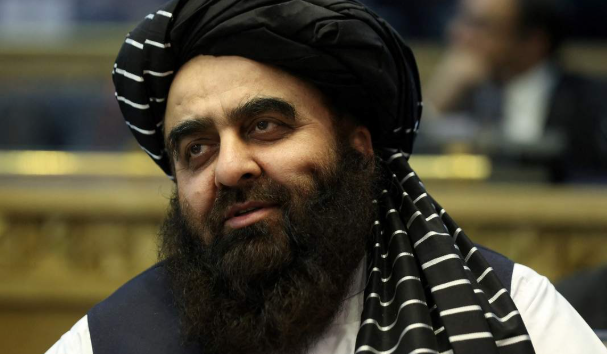
“We consider the chapter of war to have come to an end, and from now on, we want relations based on mutual respect and a new chapter of positive engagement,” Afghanistan’s Foreign Minister, Amir Khan Muttaqi, said in an interview with The New York Times in Kabul.
Muttaqi was quoted as saying that the United States could “reopen its embassy, maintain a diplomatic presence and invest” in Afghanistan’s vast mineral wealth, dams and roads.
The public overture, the first by such a high-ranking Taliban official in years, is the Afghan government’s latest push in a long effort to extract the country from isolation, with mixed results.
Over the past year, the Taliban administration has signed a defense partnership with Russia and secured dozens of trade agreements with Central Asian neighbors like Uzbekistan, the Times dispatch pointed out. Some of its officials regularly travel to Gulf countries and have met with Syria’s President, Ahmed al-Sharaa. It is also cooperating with European countries eager to deport Afghan migrants, the dispatch said.
“The government would see renewed engagement with the Trump administration, with its appetite for commercial diplomacy and little consideration for human rights, as the crowning achievement of its diplomatic efforts,” the Times said, citing five former U.S. and Afghan officials familiar with Kabul’s approach.
The Taliban claim that they have brought order and security across Afghanistan, cleaned its administration of corruption and created favourable conditions for foreign investment. But efforts to engage with the United States have stalled.
“There is no appetite in D.C.,” said Hassan Abbas, a U.S.-based scholar of Pakistani origin and the author of a recent book on the Taliban in power. “No one wants to touch this topic. Everyone wants to forget about Afghanistan.”
The U.S. has moved closer to Pakistan, and is embroiled in a conflict with Iran, one of the Taliban’s few steady partners, the dispatch pointed out. It has also designated the Taliban as a state sponsor of wrongful detention, paused issuing visas for Afghans and barred them from traveling to the United States.
The Taliban have also rebuffed President Donald Trump on the few things he has publicly asked for, including regaining control of Bagram Air Base, which U.S. forces occupied for 20 years; the return of U.S. weapons abandoned in Afghanistan; and the release of a U.S. prisoner whom the Taliban deny holding, according o the Times.
“No Afghan wants or can tolerate the military presence of another country on Afghan soil, as history has demonstrated,” Muttaqi told th Times at the foreign ministry this week, sitting in a plush armchair with the white flag of the Taliban behind him.
In a written response to questions, the U.S. State Department rejected the prospect of normalization. The response, attributed to “a department spokesperson,” said the Taliban had failed to make Afghanistan more stable and uphold counterterrorism commitments, instead allowing terrorist groups to use Afghanistan as a launchpad for attacks. It said the United States engages with the Taliban “only when it is in the interest of the American people.”
Muttaqi also said his administration wanted to reopen diplomatic missions in the United States, and was negotiating migration agreements with European countries.
“We have made progress in this area, and we hope to make significant further progress in the future,” Muttaqi said, without elaborating.
In recent months, the Afghan government held several bilateral meetings on migration with countries like Germany and France. A delegation of five Afghan diplomats also met more than 20 diplomats from 15 E.U. countries in Brussels in June to discuss repatriating rejected asylum seekers and convicted criminals, the Times said.
But no European country has recognized the Taliban administration as Afghanistan’s legitimate authority, and the government remains a pariah excluded from international bodies like the United Nations and the International Monetary Fund.
The Taliban’s ultraconservative leader, Sheikh Haibatullah Akhundzada, faces an arrest warrant from the International Criminal Court for crimes against humanity over the persecution of Afghan women and girls, the dispatch highlighted. And the United States has frozen billions of dollars from the Afghan Central Bank.
And yet, according to the Times, a growing chorus of analysts and former diplomats in the United States is calling for renewed U.S.-Afghan dialogue beyond counterterrorism cooperation against the Islamic State and prisoner negotiations.
Trump has the opportunity to do what President Joseph Biden could not, said Robin Raphel, a former U.S. diplomat with extensive experience in Afghanistan and Pakistan. Moving past the current paralysis, Ms. Raphel said, could create new access to minerals, strengthen relations with Afghanistan’s Central Asian neighbours, and counter China and Russia, which do trade and have diplomats in the country.
“But that requires hands-on engagement through a U.S. presence in Kabul, which remains a hard sell in Washington,” Ms. Raphel said.
In an initial exchange with The Times earlier this year, Muttaqi highlighted Afghanistan’s mines as a potential starting point for a “new chapter for the two countries.”
“I view President Trump’s deal-making ability, pragmatic approach and decisiveness as factors that can facilitate constructive engagement with his administration,” Muttaqi said.
Michael Kugelman, a senior fellow for South Asia at the D.C.-based Atlantic Council, said minerals were the right pitch to make to the Trump administration. Afghanistan holds vast untapped reserves of lithium, copper and iron ore, as well as rare earth elements that are on the U.S. Geological Survey’s list of critical minerals.
“Values-based considerations like brutality and the Taliban’s horrific treatment of women and girls would not necessarily keep this administration from engaging with the Taliban, particularly if that could help advance U.S. economic interests,” Kugelman said.
The United States spent nearly $1 billion between 2004 and 2021 to develop Afghanistan’s extractive industry but failed to accomplish any “tangible progress,” according to a 2023 report from SIGAR, the defunct U.S. government oversight agency for Afghanistan. The Taliban administration now holds mining investment deals with companies from China, Iran and Qatar, among others.
Beyond the United States, Mr. Muttaqi called on any country to invest in Afghanistan, where the Taliban administration is in desperate need of foreign capital. Half of its estimated 45 million people require humanitarian assistance dwindled by U.S. aid cuts last year, according to the United Nations. About four million Afghans have returned from neighbouring Pakistan and Iran since early 2025, in one of the largest episodes of reverse migration in decades.
During the interview, according to the Time, Muttaqi brushed aside a question about whether his government’s crackdown on women and girls was a barrier to international recognition. Earlier this year, he declared the government’s move to keep them out of secondary education was “temporary” — an argument the Taliban also used during their first rule, between 1996 and 2001, when Muttaqi served as education minister, and immediately after their return to power in 2021,mthe dispatch said.
Hassan Abbas, the academic, said he expected the Taliban to remain isolated as long as they refused to move on their most extreme policies — which are largely dictated out of the city of Kandahar, the group’s spiritual heartland and home to Sheikh Akhundzada.