
Federal Minister for Planning, Development and Special Initiatives, Professor Ahsan Iqbal on Wednesday called for treating nutrition and early childhood development as a national emergency and mission, stressing that the health, nutrition and early experiences of children would determine Pakistan’s human capital and national development in the coming decades.
Ahsan calls for national mission on nutrition, early childhood development
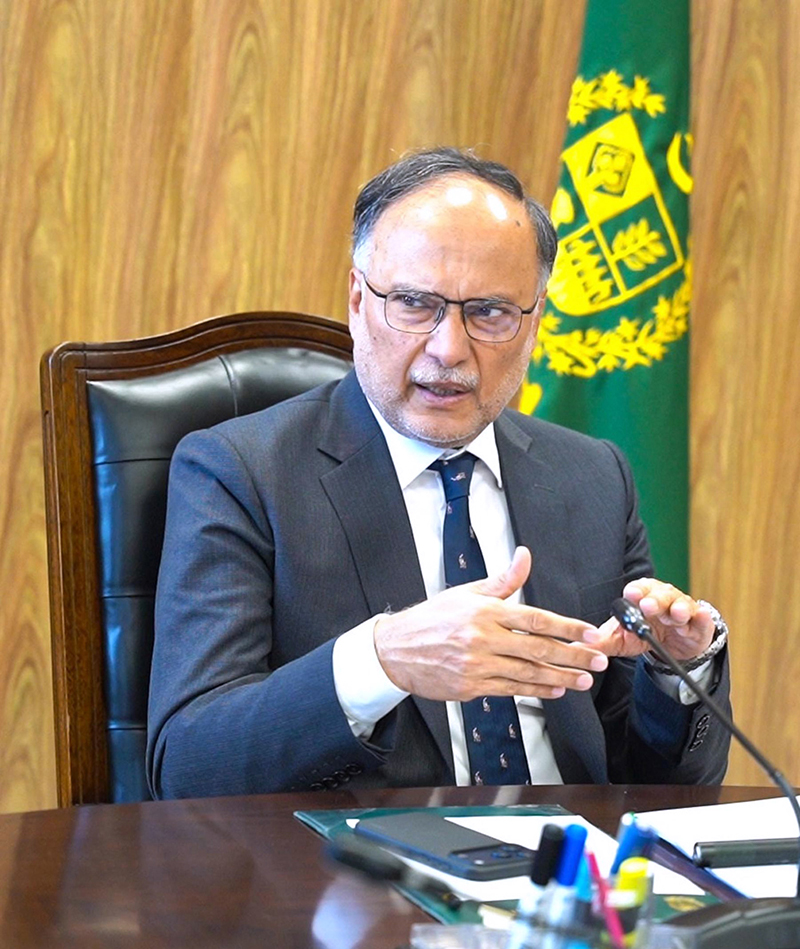
ISLAMABAD, Aug 12 (APP):Federal Minister for Planning, Development and Special Initiatives, Professor Ahsan Iqbal on Wednesday called for treating nutrition and early childhood development as a national emergency and mission, stressing that the health, nutrition and early experiences of children would determine Pakistan’s human capital and national development in the coming decades.
Addressing a policy dialogue on “Accelerating Multi-Sectoral Nutrition & Early Childhood Development in Pakistan: From Strategy to Scale & Impact,” the minister said nutrition and early childhood development were deeply interconnected and could not be addressed through isolated projects or a single sector.
He said around 40 per cent of children in Pakistan had been affected by stunting over the past four decades, describing it as a serious national concern requiring coordinated and sustained action.
“This is not a matter of a project, but a question of a national emergency and a national mission,” he said, stressing that the issue was directly linked with the country’s future capacity, productivity and national strength.
The minister said the world had entered an era in which the quality and creative capabilities of human resources were decisive factors in national success.
Inadequate nutrition and weak early childhood development, he noted, could adversely affect children’s physical and mental development, learning outcomes and future earning potential.
He said the early years of a child’s life were particularly important, as a major share of brain development took place during this formative period. The health, nutrition, environment and experiences provided to children would consequently have a lasting impact on their future.
He said the health, nutrition and environment in which children grew up would determine the country’s future over the next 20 to 22 years.
The minister said the government had placed nutrition, stunting and early childhood development among key challenges under the Equity and Empowerment dimension of the 5Es framework of URAAN Pakistan. He said the Ministry of Planning was spearheading the initiative in coordination with the provinces to move from repeated studies and recommendations towards practical implementation.
“We have no shortage of reports,” he said, adding that extensive research and donor-supported studies had already highlighted the seriousness of malnutrition and inadequate early childhood development. The real challenge, he added, was to bridge the “knowing-doing gap” by translating available knowledge into action.
Ahsan Iqbal called for a whole-of-government and inter-sectoral approach, saying nutrition was closely linked with maternal health, water, sanitation and hygiene. Without addressing these interconnected issues, he said, nutritional interventions alone could not produce the desired results.
He emphasized that a child’s development began even before birth, with the mother’s health and nutrition during pregnancy playing a critical role.
Early childhood development, he said, should not be viewed merely as pre-school education but as a process beginning from conception and continuing through the early years.
The minister also highlighted the importance of parenting, awareness and the home environment, saying effective early childhood development did not always require expensive resources or sophisticated facilities. Informed and caring parents, he said, could provide children with opportunities for learning, interaction and creative development even in poor households.
He proposed developing locally made learning materials and creative activity toolkits to provide children from low-income families with stimulating learning experiences without relying on expensive toys and equipment.
Ahsan Iqbal said the government must create an enabling environment, provide infrastructure and make necessary investments to improve the lives of mothers and children.
He said Pakistan needed to move beyond treating nutrition and early childhood development as conventional social-sector interventions and recognize them as investments in national human capital, productivity and long-term development.
The minister called for collective action by the federal government, provinces, communities, parents and development partners to ensure that children received the nutrition, care, stimulation and safe environment needed to reach their full potential.

