ISLAMABAD, Aug 10 (APP):Federal Minister for National Heritage and Culture, Aurangzeb Khan Khichi on Monday said language and cultural exchange were vital to strengthening people-to-people contacts and further deepening the enduring friendship between Pakistan and China. Addressing the opening ceremony of the Chinese Language and Chinese Culture Experience Course at the Department of Archaeology and Museums (DoAM), he said Pakistan and China enjoyed an all-weather strategic cooperative partnership and a …
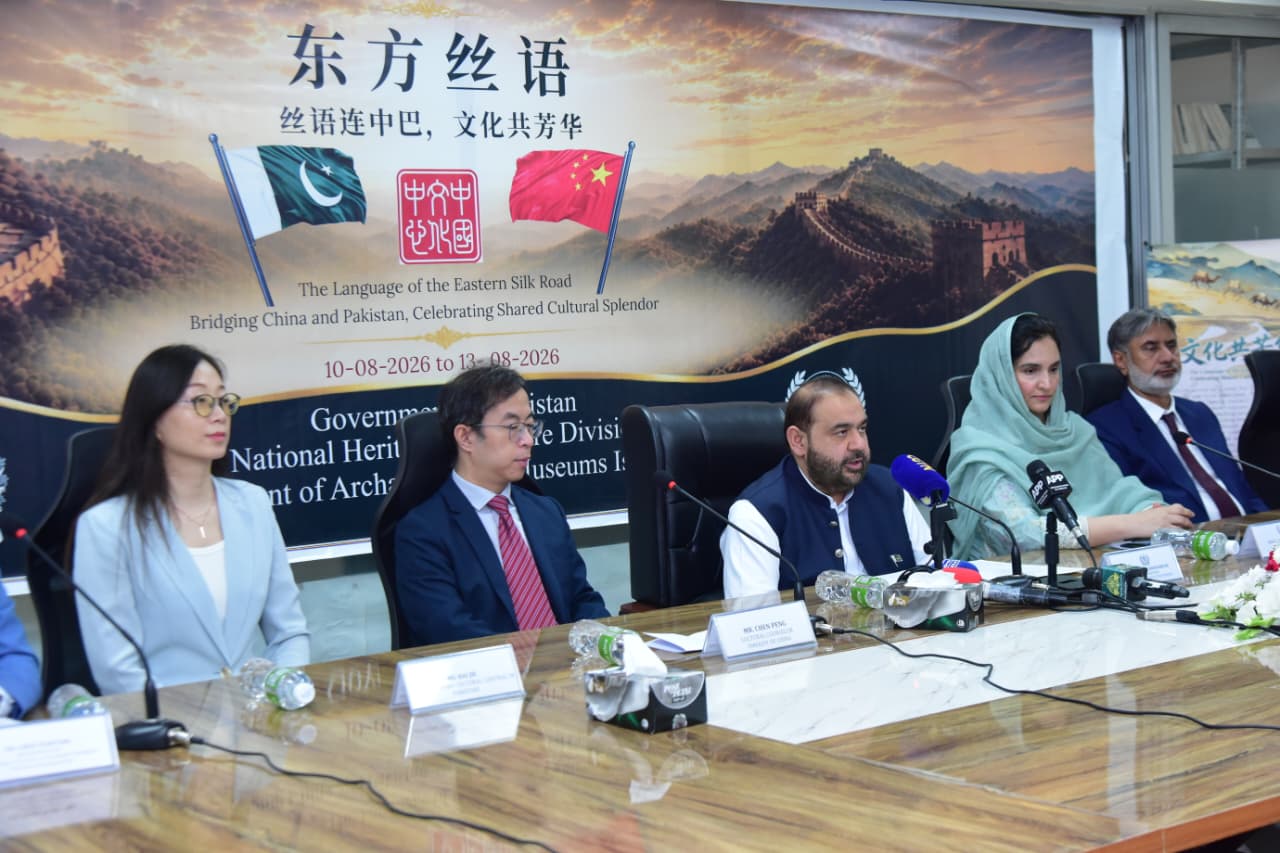
ISLAMABAD, Aug 10 (APP):Federal Minister for National Heritage and Culture, Aurangzeb Khan Khichi on Monday said language and cultural exchange were vital to strengthening people-to-people contacts and further deepening the enduring friendship between Pakistan and China.
Addressing the opening ceremony of the Chinese Language and Chinese Culture Experience Course at the Department of Archaeology and Museums (DoAM), he said Pakistan and China enjoyed an all-weather strategic cooperative partnership and a friendship “higher than the mountains, deeper than the oceans, and sweeter than honey.”
The course was being organized under the initiative “The Language of the Eastern Silk Road – Bridging China and Pakistan, Celebrating Shared Cultural Splendor” by the China Cultural Center in Pakistan and DoAM, with the Pakistan-China Cultural and Economic Promotion Association as co-organizer.
The federal minister said while political, economic and infrastructural cooperation, including collaboration under the China-Pakistan Economic Corridor (CPEC), remained strong, the true foundation of the bilateral relationship laid in people-to-people contacts and cultural exchange.
He said language served as a gateway to understanding the national character, traditions and culture of a country, adding that the Chinese Language and Chinese Culture Experience Course would provide a long-term platform for cultural exchange between Chinese and Pakistani youth.
Aurangzeb Khan Khichi said the programme would enable participants to learn basic Chinese greetings, self-introductions, numbers and everyday expressions, helping them communicate and engage more meaningfully with their Chinese counterparts.
He said the initiative went beyond language learning by offering participants opportunities to experience Chinese calligraphy, traditional festivals and cuisine, which would help develop a deeper appreciation of China’s rich heritage, history and vibrant culture.
“Culture unites hearts,” the Minister said, stressing that such initiatives promoted mutual respect and helped build lifelong friendships between the peoples of the two countries. He appreciated the Embassy of China in Pakistan, DoAM and the instructors for organizing the programme and urged young participants to make full use of the opportunity and become ambassadors of Pakistan-China friendship.
Speaking on the occasion, Cultural Counsellor of the Embassy of China in Pakistan, Chen Peng highlighted the importance of cultural exchange and mutual learning through the protection of cultural heritage.
He said Pakistan and China shared deep historical and cultural links, with the Silk Road serving as a powerful bridge between the two civilizations.
Chen Peng highlighted the cultural connections between Gandhara and Dunhuang, noting that Gandhara art represented an outstanding example of the integration of Eastern and Western civilizations, while the Mogao Grottoes of Dunhuang reflected the influence of diverse artistic traditions along the ancient Silk Road.
He said cooperation between Pakistan and China in archaeology and cultural heritage protection had produced encouraging results. He referred to the exhibition of 173 Pakistani cultural relics at the Forbidden City in Beijing in 2023, describing it as the largest Gandhara art exhibition to date.
He also highlighted ongoing cooperation between DoAM and Peking University, including plans for a joint laboratory focusing on the cultural preservation of Taxila.
The Chinese Cultural Counsellor said China believed in the principle of “harmony in diversity”, emphasizing respect for the unique value and traditions of every civilization. He said China was willing to share its experience and technologies in cultural heritage preservation with Pakistani counterparts while respecting Pakistan’s cultural traditions and learning from them.
Chen Peng said China had extensive experience in the preservation of cave temples, earthen sites and stone cultural heritage and expressed willingness to cooperate with Pakistani experts in areas including 3D scanning, digital modelling and digital preservation of museum collections.
He also highlighted the “Gandhara Guardians” project, jointly initiated by Chinese and Pakistani scholars, as an example of using education and community engagement to promote the protection of historical sites.
He expressed hope for enhanced cooperation between the archaeological and cultural heritage communities of China and Pakistan in joint archaeological excavations, conservation and restoration, heritage digitization, academic exchanges, and World Heritage nomination and management.
In her welcome remarks, Director General DoAM, Syeda Tanzeela Sabahat said the Department remained committed to strengthening cultural exchanges between Pakistan and China.
She welcomed the initiative as an opportunity to bring Chinese and Pakistani participants together through language and cultural learning and expressed hope that the programme would contribute to deeper mutual understanding and stronger people-to-people relations between the two countries.
The Chinese Language and Chinese Culture Experience Course is being held from August 10 to 13, with around 50 Chinese and Pakistani guests, students and staff participating.
Comprising six sessions, the programme aims to establish a long-term platform for cultural exchange between Chinese and Pakistani youth while introducing participants to Chinese language, calligraphy, traditional festivals, cuisine and other aspects of Chinese culture.
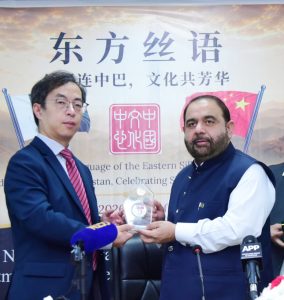
The ceremony concluded with the official opening of the course and an exchange of commemorative plaques between the Chinese and Pakistani sides.